


MARSEILLE, France, June 1 (AJP) — Artificial intelligence has emerged as the defining battleground for the global news industry as publishers, editors and policymakers gather in southern France this week to debate the future of journalism amid one of the most disruptive technological shifts in decades.
The 77th World News Media Congress, organized by the World Association of News Publishers (WAN-IFRA), will bring together more than 1,000 media executives, editors and innovators from over 60 countries in Marseille, including leaders from The New York Times, The Guardian, POLITICO and the European Commission.
While the annual gathering traditionally focuses on the future of journalism and media business strategies, this year's agenda is overwhelmingly shaped by artificial intelligence, reflecting the technology's growing influence on newsroom operations, audience engagement, content distribution and revenue models.
Generative AI has rapidly moved from a newsroom experiment to a strategic priority for publishers worldwide. At the same time, it has raised pressing questions about copyright, misinformation, editorial integrity and the long-term sustainability of professional journalism.
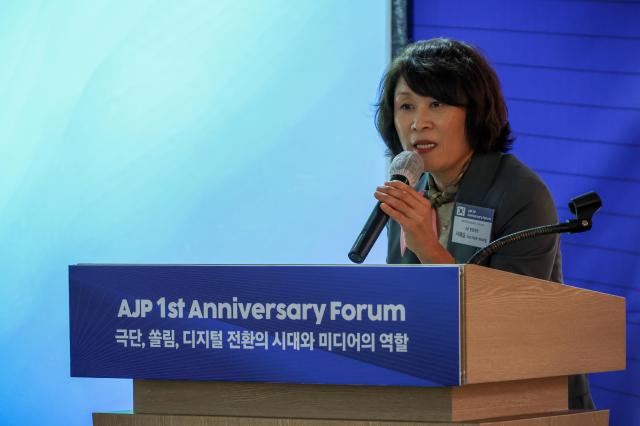
Among the invited speakers is AJP, the English-language news platform of Aju Media Group, which has emerged as one of South Korea's early adopters of AI-driven newsroom innovation in one of the world's fastest-moving digital media markets.
AJP Managing Editor Seo Hye-seung will participate in a session titled "How AI Is Transforming the News Experience," sharing how the organization has leveraged AI technologies to broaden its international reach, enhance content distribution and develop new audience experiences as a relatively young player in the global news industry.
A.G. Sulzberger, chairman and publisher of The New York Times, will open the congress with a keynote address titled "AI, Journalism and the Uncertain Future of the Public Square."
The speech is expected to explore how artificial intelligence is reshaping press freedom, public discourse and journalism's role in democratic societies at a time when AI-powered platforms are increasingly influencing how information is created, distributed and consumed.
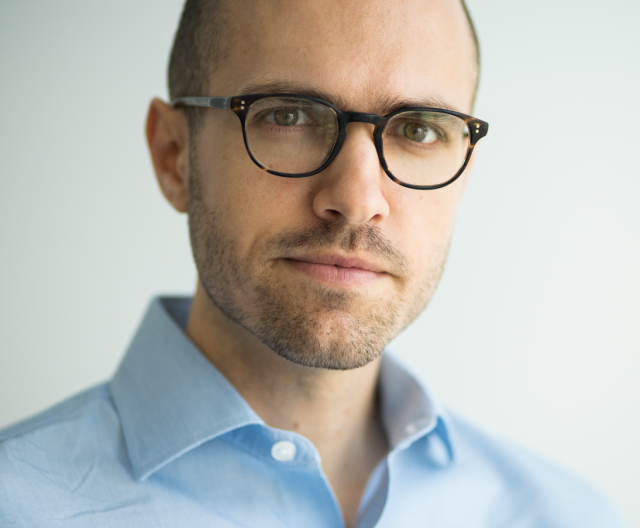
Sulzberger, a fifth-generation leader of the Ochs-Sulzberger family that has controlled the newspaper since 1896, has overseen one of the industry's most closely watched digital transformations.
Since becoming publisher in 2018, he has led the Times to more than 12.8 million subscribers by the end of 2025 through a subscription bundle that spans news, games, cooking and audio products.
He has also become a leading advocate for stronger copyright protections for publishers amid escalating disputes between news organizations and AI companies over the use of journalistic content to train large language models.
The congress will also bring together policymakers shaping the future of artificial intelligence regulation and digital governance.
Henna Virkkunen, Executive Vice-President of the European Commission for Tech Sovereignty, Security and Democracy, oversees the European Union's policies on artificial intelligence, digital regulation and cybersecurity.
A former Finnish education minister and member of the European Parliament, she will deliver the closing keynote outlining Europe's vision for technological sovereignty, democratic resilience and the role of journalism in the digital age.
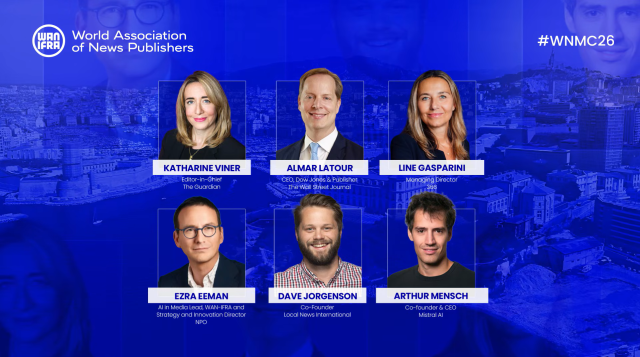
Another prominent participant is Katharine Viner, editor-in-chief of The Guardian, who has spearheaded the publication's reader-revenue strategy while overseeing its expansion across Australia, the United States and Europe.
At the plenary session "In Conversation," she will join AFP Global News Director Phil Chetwynd to discuss digital transformation, reader-supported journalism and the future of news organizations in the AI era.
Goli Sheikholeslami, chief executive of POLITICO Media Group, will also address how publishers are adapting their business strategies to the AI age.
Since taking the helm in 2022, Sheikholeslami has overseen POLITICO's expansion across North America and Europe. She previously held senior leadership positions at New York Public Radio, Chicago Public Media and The Washington Post.
At the plenary session "Redefining Media Strategies in an AI-Transformed World," she will discuss how publishers are rethinking newsroom operations, business models and long-term growth strategies as generative AI reshapes the media landscape.
As news organizations confront declining traditional revenues, changing audience habits and growing competition from AI-powered information platforms, the debates in Marseille are expected to provide an early glimpse into how journalism intends to defend its value while harnessing the opportunities of the technology transforming it.
For many publishers, the question is no longer whether AI will change journalism, but whether journalism can adapt quickly enough to shape how AI changes the public's relationship with news.

Copyright ⓒ Aju Press All rights reserved.
