

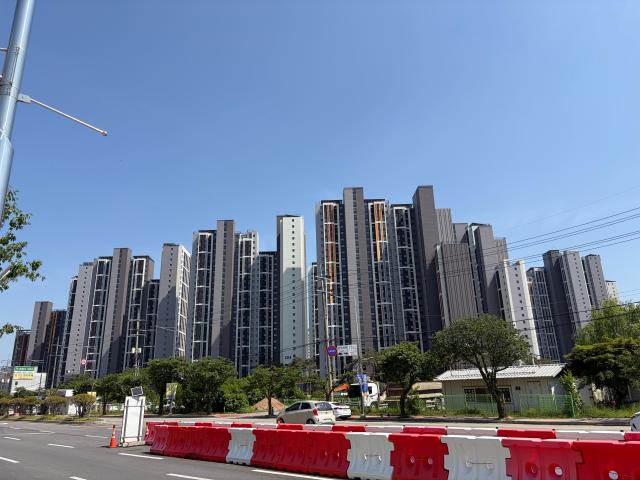
In the Gyeonggi housing market, buyers in their 30s have emerged as the most active group. Factors such as high housing prices in Seoul, lending restrictions, and a shortage of rental properties have led to increased demand for housing in areas adjacent to the capital.
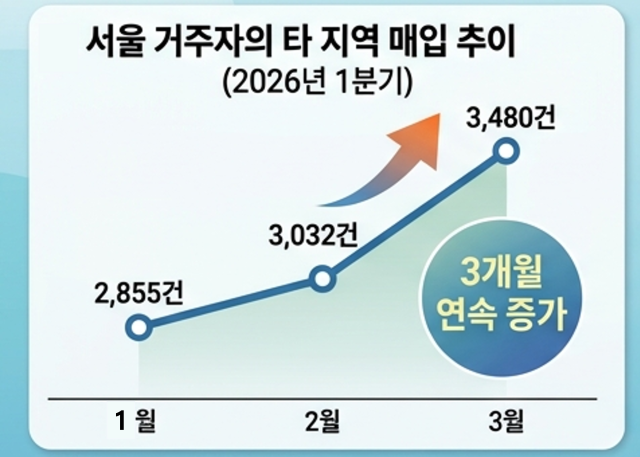
Analysis of data from the National Statistical Portal on June 2 revealed that the number of apartment purchases by Seoul residents in other regions reached 3,480 in March. This marks an increase from 2,855 in January and 3,032 in February, showing a consistent upward trend over three months. A significant portion of this so-called "Seoul-exit" demand has shifted towards Gyeonggi and Incheon, which accounted for 84.3% of purchases by Seoul residents in March.
In March, purchases of apartments in Gyeonggi by Seoul residents totaled 2,637, a 26.3% increase from the previous month. Incheon saw 298 purchases, up 35.5% during the same period. Overall, apartment purchases in the metropolitan area (Gyeonggi and Incheon) by Seoul residents reached 2,935, a 27.2% rise from the previous month.
In absolute numbers, Goyang led with 269 transactions, followed by Namyangju with 247, Yongin with 193, Anyang with 176, and Guri with 174. Areas with anticipated improvements in transportation, such as the GTX line and subway extensions, are seeing concentrated demand.
In Incheon, the influx of Seoul residents has also risen. In March, purchases of apartments by Seoul residents in Incheon reached 298, a 35.5% increase from the previous month. The highest number of transactions occurred in Seo-gu with 104, followed by Bupyeong-gu with 77, both showing relatively high proportions of Seoul residents at 13.4% and 13.0%, respectively.
As of March, the share of apartment purchases by Seoul residents in non-metropolitan areas remained low at 15.7%, indicating that most demand is concentrated in the metropolitan area. In terms of regions, purchases were recorded at 96 in Gangwon, 93 in South Chungcheong, and 55 in North Chungcheong.
Additionally, buyers in their 30s are the most active segment in the Gyeonggi housing market. In March, 6,060 of the 16,895 apartment transactions in Gyeonggi were made by this age group, accounting for 35.9% of the total. This figure is 12.7 percentage points higher than the 40-somethings at 23.2%, and exceeds the national average of 31.6% and Incheon’s 30.8%.
The scale of transactions in Gyeonggi also significantly surpasses that of Seoul. During the same period, 2,794 apartment purchases by 30-somethings in Seoul were recorded, only half of Gyeonggi's total. While the proportion of 30-something buyers in Seoul was higher at 43.4%, the actual number of transactions in Gyeonggi was approximately 2.2 times greater.
Kim In-man, head of Kim In-man Real Estate Economic Research Institute, stated, "Due to the rental crisis and high housing prices in Seoul, young couples and other actual buyers in their 30s are turning their attention to the outskirts of Seoul or the Gyeonggi area. With the burden of living costs and improvements in transportation conditions, it is likely that the buying trend in Gyeonggi will continue for the foreseeable future."
* This article has been translated by AI.

Copyright ⓒ Aju Press All rights reserved.