

One act of kindness can be an event, but over 30 years of practice becomes a philosophy.
Recently, the Booyoung Group announced it would offer discounts on resorts, hotels, and golf courses to families with a history of military service, drawing attention. Some view this as a meaningful social contribution, while others question whether it serves as corporate promotion. Regardless, the discount itself is not the main focus; what truly deserves attention is the long-standing philosophy of honor demonstrated by Booyoung Group Chairman Lee Joong-geun.
Corporate social contributions often end up as one-time events. Donations made on anniversaries, sponsorship of specific events, and distribution of promotional materials mark the conclusion. While these actions hold significance, a philosophy is characterized by repetition and sustainability. A single act of kindness may be an event, but decades of practice form a philosophy. Chairman Lee's veteran support cannot be explained by the discount for military service families alone; it must be understood as part of a long history of various activities, including support for national merit holders, honoring veterans, sponsoring military personnel, aiding veteran organizations, and promoting historical education.
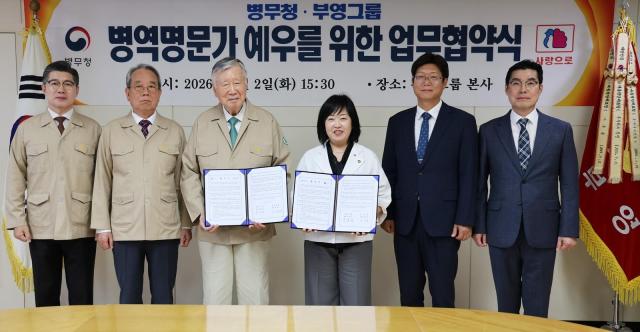
Honoring veterans is not just about remembering the past; it is about safeguarding the future.
In our society, veteran support is often viewed through the lens of welfare, understood primarily as helping those who sacrificed for the nation. While this role is important, the essence of veteran support extends beyond that.
Veteran support reflects a community's choice about what to remember and respect. A society that fails to honor those who sacrificed for the nation inevitably weakens the values of responsibility and dedication that sustain the community. Conversely, a society that respects sacrifice and dedication fosters stronger solidarity and a sense of responsibility, even in times of crisis.
This is why major developed countries honor veterans and military personnel. A strong military derives from weapons and budgets, but robust security is rooted in culture and values. Veteran support is not merely a commemoration of the past; it is an investment in preparing for the future.
In this context, support for military service families carries significance beyond simple discounts. It symbolizes society's respect and recognition for families where three generations have faithfully fulfilled their military duties. While this alone may not strengthen national security or enhance K-defense competitiveness, it undeniably contributes to fostering a societal atmosphere that respects those who have dedicated themselves to the nation.
Today, businesses share the responsibility of the community.
Modern corporations are not just profit-generating entities; they are members of a community with social influence. They create jobs, pay taxes, and transform local communities. Therefore, they are expected to fulfill both legal and social responsibilities.
In the realm of veteran support, companies may find it challenging to anticipate promotional benefits. This area differs from sectors like environmental initiatives, cultural arts, or sports sponsorships, which enjoy greater public exposure. Nevertheless, Chairman Lee's long-standing interest in veteran support is commendable.
When corporate social contributions evolve from one-time events into a management philosophy, social trust grows. The same applies to Chairman Lee. Support for military service families should not be seen as a sudden idea but rather as a facet of a long-standing philosophy of honor.
While veteran support and defense industries may seem like different paths, they ultimately lead to the same destination.
Aju Economy deeply resonates with this awareness. The organization has been hosting a literary contest to commemorate the lives, sacrifices, and spirit of those who dedicated themselves to the nation. Additionally, through defense forums, it has continuously highlighted the future of K-defense and the importance of national security.
If the literary contest serves to reflect on the spiritual values of security, the defense forum can be seen as a platform to discuss the industrial foundation of security. Although veteran support and defense may appear as distinct areas, they converge on the same question: how to inherit and develop the strength that protects the nation.
Remembering those who have dedicated themselves to the nation and fostering industrial capabilities to safeguard it are both efforts to sustain the community. In this regard, Aju Economy views Chairman Lee's actions not merely as corporate marketing but as a practice of community values that society must collectively contemplate.
South Korea is currently emerging as a top 10 global economy and a leading defense powerhouse. However, national strength cannot be completed solely through economic and military power. A culture that remembers and respects those who have dedicated themselves to the nation is essential for sustaining community strength.
Businesses grow through profit, but respect arises from values, not numbers. The discount for military service families may be a small initiative, but the philosophy and practice behind it over the past 30 years are anything but insignificant.
Chairman Lee's message to our society is clear: veteran support is not a cost but an investment in the community. This message is a question that today’s South Korea must reflect upon once again: Are we truly remembering those who have dedicated themselves to the nation?
* This article has been translated by AI.

Copyright ⓒ Aju Press All rights reserved.