

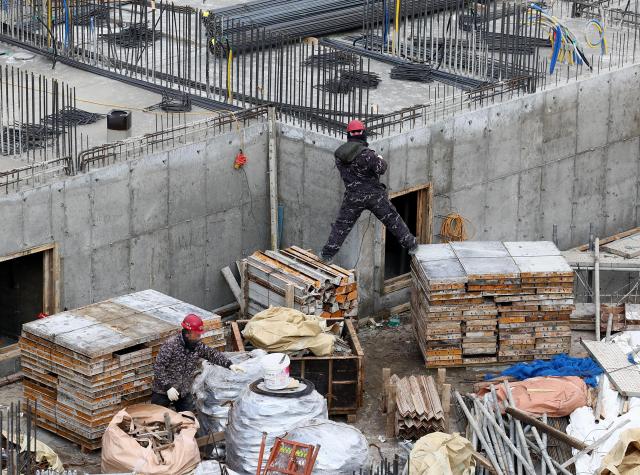
Civil construction costs have risen sharply this year, with the construction cost index surpassing 140 for the first time since records began. After three years of stability, costs have surged again, creating a widening gap between the estimated prices set during budget planning and actual market costs. Concerns are growing that a 'contracting cliff' will deepen, as construction firms are reluctant to bid despite record SOC budgets.
According to the construction industry on June 4, the civil construction cost index reached 142.04 in April, a 6.48% increase from the same month last year (133.39). This marks a 3.29% rise over just four months, from January (137.51) to April (142.04). This is the largest increase since the raw material shock caused by the Russia-Ukraine war in 2022, with a cumulative increase of 41.6% compared to January 2020 (100.29).
The civil construction cost index had shown signs of stabilization after the raw material shock in 2022. In April 2023, the index rose by 4.40 points compared to the previous year, but the increase slowed to 2.84 points in April 2024 and 1.43 points in April 2025. However, in April this year, the index jumped by 8.65 points compared to the same month last year, indicating a complete reversal in trend. This surge is attributed to disruptions in raw material supply due to factors such as the Iran conflict.
Analysts predict that the rise in construction costs will inevitably have a negative impact on the execution of public civil works budgets. The government has allocated a record 27.5 trillion won for the 2026 SOC budget, a 7.9% increase from the previous year. However, concerns are mounting that the gap between the budgeted construction costs and actual market prices could lead to a situation where projects cannot be initiated despite having funds.
The issue of public project failures is already surfacing. According to a report from the National Assembly's Social Dialogue Construction Issues Committee, the failure rate for technical bids, primarily used for large public projects that bundle design and construction, soared from 39% in 2021 to over 70% in the first eight months of last year. This increase is due to the inability to adequately reflect rising costs at the bidding stage, leading to a reluctance among construction firms to take on contracts. With the additional surge in civil construction costs this year, the situation is expected to worsen.
The Korea Construction Industry Institute also noted in a report published in February that the surge in construction costs is stifling the industry's profit model beyond mere inflation. The analysis of cost increases from 2020 to 2025 revealed that material costs accounted for the highest contribution at 49.8%, significantly surpassing labor costs (29.2%) and service costs (21.0%).
Despite the recurring surge in material costs, the current contract system has failed to keep pace. The adjustment system for contract amounts based on price fluctuations primarily operates on a post-settlement basis, meaning that actual cost increases are not reflected in a timely manner during periods of rapid material price hikes. In public projects, this leads to increased budget uncertainty and heightened risks of audits and disputes, while in private projects, it results in deteriorating project viability and financing difficulties.
The Ministry of Land, Infrastructure and Transport has decided to immediately reflect the construction cost index for March in the standard market prices for the second half of 2026. The standard market price serves as the basis for estimating public project costs, and raising it is necessary to align the estimated prices of contracting agencies with market realities. However, industry experts argue that this measure is insufficient to close the gap with market prices.
A construction firm representative from the Chungcheong region stated, "If construction costs continue to rise at this pace and the adjustment of estimated prices does not keep up, the failure rate will only increase. No matter how much the budget is increased, the cycle of not executing it on-site will repeat."
* This article has been translated by AI.

Copyright ⓒ Aju Press All rights reserved.