

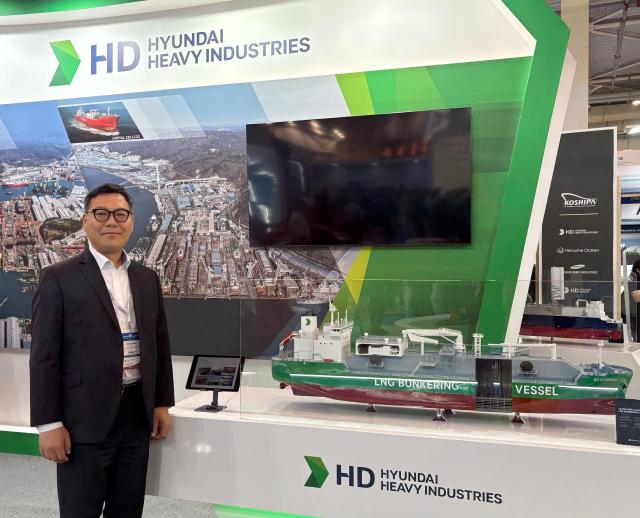
The ongoing conflict in the Middle East is rapidly reshaping the global shipping and shipbuilding market. Disruptions in energy supply chains have led to increased demand for energy carriers, presenting new opportunities for the shipbuilding industry.
Executives from Korea's three major shipbuilders participating in Posidonia 2026 identified energy transport, eco-friendliness, and digital technology as key factors determining future competitiveness amid these changes.
While past competitiveness in shipbuilding was largely dependent on construction capabilities and order volumes, the future will hinge on energy security, eco-friendly vessel technology, and AI-driven digital innovation capabilities.
◇ Turning Crisis into Opportunity: Energy Security Creates New Demand
Jeong Ihyo, Executive at HD Hyundai Heavy Industries, stated, "The ongoing geopolitical risks, such as the situation in the Middle East, have significantly reduced predictability in the shipbuilding and shipping markets. We expect the second half of the year to maintain a solid trend based on energy security and eco-friendly transitions."Yoon Jae-kyun, Vice President and Head of Sales at Samsung Heavy Industries, noted, "The war in the Middle East has caused global energy prices to surge, leading to increased volatility in the shipbuilding sector, including rising prices for second-hand vessels and charter rates."
However, they emphasized that this market uncertainty represents an 'opportunity, not a crisis.' Jeong added, "Uncertainty does not necessarily lead to reduced demand. Ultimately, what matters is our agility in responding to changes."
Kang Sang-don, Executive Director at Hanwha Ocean, also highlighted that recent geopolitical risks are driving new demand. He explained, "The prolonged war has led to increased orders for very large crude carriers (VLCCs) and very large gas carriers (VLGs), particularly centered around U.S. liquefied natural gas (LNG) export projects, which are expected to ramp up in the future."
Yoon further elaborated, "The conflict in the Middle East is prompting countries worldwide to diversify their energy supply sources. The decrease in LNG production in the region could lead to increased transportation distances and project investments, as well as long-term supply contracts."
◇ Shared Vision for the Future, Yet Diverse Survival Strategies
While the executives shared a common outlook on the future of the shipbuilding industry, their proposed solutions varied. HD Hyundai emphasized AI and digital technology, Samsung Heavy Industries focused on eco-friendly initiatives, and Hanwha Ocean highlighted LNG value chain competitiveness.Jeong noted, "At Posidonia, global shipowners showed significant interest not only in existing physical energy-saving devices (ESDs) but also in AI-based digital ESDs. The combination of eco-friendly technology and digital solutions is enhancing market confidence in vessel performance."
Indeed, HD Hyundai has garnered considerable interest and trust from global shipowners through its autonomous navigation solution, HiNAS Control, which has secured over 350 orders, including a contract for 40 vessels with domestic shipowner HMM, proving its commercial viability.
At Posidonia, HD Hyundai achieved the highest collaboration outcomes among Korea's three major shipbuilders, signing over 10 global agreements.
Yoon stated, "Samsung Heavy Industries is solidifying its competitiveness in the global market as a leader in the LNG value chain, from floating liquefied natural gas (FLNG) facilities to LNG carrier terminals (FSRUs) and LNG carriers. Recently, we are also developing a floating data center business in response to the growing demand for AI."
Hanwha Ocean emphasized its LNG competitiveness. Kang remarked, "We have a portfolio that can secure profitability across various vessel types, focusing on LNG carriers and VLCCs. We will expand our value chain from LNG trading to transportation in collaboration with our group companies, including Hanwha Shipping, to secure a competitive edge."
◇ China's Pursuit Remains Intense: Success Depends on Technological Competitiveness
The biggest variable in the market is identified as China. However, the executives agreed that by prioritizing technological capabilities and trust over price competition, they can maintain a competitive edge.Jeong acknowledged, "It is true that China poses a significant threat, but we will maintain our competitiveness in high-value markets based on our technological capabilities, software expertise, and delivery reliability."
Yoon also emphasized, "Ultimately, technological competitiveness is key. As new energy sources such as ammonia, hydrogen, and small modular reactors (SMRs) emerge, it is crucial to proactively secure related technologies."
Kang added, "While it is a fact that Chinese shipyards are increasing their market share, this is due to their price-focused order strategy. Korean shipyards maintain competitiveness in high-value markets based on quality, delivery, and profitability."
[This article was supported by the (Foundation) Sea's Gift and the (Association) Korean Maritime Journalists Association.]
* This article has been translated by AI.

Copyright ⓒ Aju Press All rights reserved.