

A pioneer has transformed the financial industry landscape, and Bae Jae-kyu, president of Korea Investment Trust Management, is a key figure in the story of Korea's ETF market. He opened a new era in the Korean capital market by introducing the country's first ETF, KODEX200, in 2002. Subsequently, he launched Asia's first leveraged and inverse ETFs, laying the foundation for the growth of the ETF industry.
Today, it is no exaggeration to say that the domestic ETF market, which has surpassed 500 trillion won, has grown on the spirit of challenge embodied by Bae Jae-kyu. His entrepreneurial spirit in finance has not only created products but has also democratized investment, allowing individual investors to achieve diversification similar to that of institutional investors. The history of Korea's asset management industry is divided into the era before and after ETFs, with Bae Jae-kyu at the center.
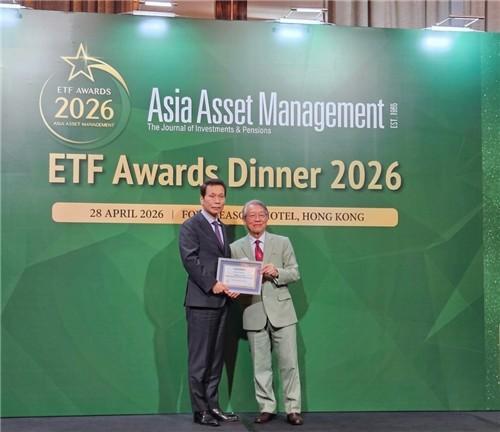
A Pioneer in the Korean ETF Market
The essence of entrepreneurship lies in the ability to foresee a future that others cannot see. Bae Jae-kyu recognized this future over 20 years ago when the Korean asset management market was dominated by active funds, where the stock-picking abilities of fund managers determined returns. However, after encountering John Bogle's index investing philosophy in the U.S., he reached a different conclusion: "In the long run, low-cost index investing outperforms active funds."
At that time, this assertion was quite unfamiliar in the domestic financial market. Nevertheless, he was convinced and took action. He persuaded financial authorities and exchanges about the necessity of introducing ETFs and actively participated in establishing related systems. Ultimately, the KODEX200, Korea's first ETF, was born in 2002. Today, ETFs have become a core tool for personal finance.
Individual investors can now invest in the U.S. Nasdaq, S&P 500, semiconductor stocks, AI, dividend stocks, gold, and bonds with just a click. However, at that time, no one could have predicted the growth of ETFs.
Bae Jae-kyu's entrepreneurial spirit is evident here. Entrepreneurs look at future markets rather than current ones. While investors seek visible opportunities, entrepreneurs create invisible ones. ETFs are not merely financial products created by Bae Jae-kyu; they represent a new infrastructure for the Korean capital market. He is not just an operator but a market designer, which is why he is often referred to as the "Father of ETFs" and the "Evangelist of ETFs."
Creating a Culture of Investment, Not Just Products
Bae Jae-kyu's entrepreneurial spirit extends beyond product development to the innovation of investment philosophy. He has long emphasized that "investment is not about prediction but diversification." Most investors try to predict which stocks will rise, but Bae Jae-kyu believes that investing in entire industries rather than specific companies is more rational in the long term. ETFs are the result of this philosophy.
During his time at Samsung Asset Management, he successively launched Korea's first overseas ETF, the first gold ETF, and Asia's first leveraged and inverse ETFs. At that time, financial companies viewed launching new products as risky.
However, Bae Jae-kyu embraced change rather than fearing risk. As a result, KODEX became the leading ETF brand in Korea, and Samsung Asset Management emerged as a dominant player with over 50% market share in the ETF sector.
Interestingly, he has also played an educational role, giving lectures, participating in interviews, and appearing in YouTube content. He has continuously explained why ETFs are necessary, why long-term investing is important, and why diversification is essential.
He believes that the essence of the financial industry lies not in selling products but in educating investors. This distinction is crucial in differentiating between ordinary financial professionals and financial entrepreneurs. Financial entrepreneurs are not just sellers of products; they are creators of investment culture. Bae Jae-kyu has fundamentally changed the investment habits of Koreans through ETFs.
Leading the Transformation of Korea Investment Trust Management
In 2022, Bae Jae-kyu left Samsung Asset Management to become the president of Korea Investment Trust Management. At that time, Korea Investment Trust Management was a latecomer in the ETF market, with a significant gap in ETF net assets compared to the top players.
However, Bae Jae-kyu clearly outlined his direction immediately upon taking office: "We will maintain the strengths of active funds while growing ETFs, TDFs, and OCIOs as future growth pillars." He first completely rebranded the ETF line from KINDEX to ACE. A brand is not just a name; it is a declaration of corporate strategy.
ACE signifies the ambition to become the ace in the ETF market. He also restructured the organization, establishing a digital ETF marketing team and strengthening product strategy functions, viewing product development and marketing as core competencies in asset management.
The results were swift. Korea Investment Trust Management significantly expanded its ETF market share, entering the top three in the industry. ETF net assets surpassed 16 trillion won, and flagship products like ACE U.S. S&P 500, ACE U.S. Nasdaq 100, and ACE Global Semiconductor TOP4 Plus gained market attention. Notably, the semiconductor ETF strategy reflects his insights into future industries.
He emphasizes that semiconductors and power are key infrastructures in the AI era. Indeed, the ACE Global Semiconductor TOP4 Plus ETF has achieved high returns and emerged as a flagship product.
Preparing for the Future of Pensions and Asset Allocation in the AI Era
Bae Jae-kyu's recent focus extends beyond ETFs to pensions and AI. He believes that the future of investing lies not in simply selecting stocks but in asset allocation. In an era where AI reduces information asymmetry, how one constructs a portfolio becomes more important than what stocks to buy.
This philosophy is evident in the expansion of TDF and OCIO businesses. Since his appointment, he has nurtured TDF and OCIO as core growth areas, particularly enhancing long-term asset management services in line with the expansion of the retirement pension market.
Recently, he also launched 'KimRobo,' an AI-based retirement pension asset management service. This service uses AI algorithms to suggest asset allocations tailored to investors' preferences and goals. It is not just a digital service; it illustrates the future direction of asset management. While traditional financial companies once sold funds, the future will see AI providing personalized portfolios.
Bae Jae-kyu is already preparing for this change. He describes investing as "the act of deferring current consumption for future consumption." This philosophy aligns with the essence of financial entrepreneurship.
Finance is not merely an industry for gathering money; it is an industry for designing people's futures. Bae Jae-kyu created the ETF market and is now preparing for the era of AI-based asset management. His entrepreneurial spirit in finance can ultimately be summarized in one sentence: "Making it easier, cheaper, and safer for investors to invest." This has been the essence of his financial innovation for over 20 years.
SWOT Analysis:
- Strengths: A symbolic figure who created the domestic ETF market, introducing Korea's first ETF and Asia's first leveraged and inverse ETFs. A rare CEO with deep understanding of product development, marketing, and asset allocation.
- Weaknesses: The strong symbolism of the ETF field may overshadow the presence of active management and alternative investments. Korea Investment Trust Management's ETF market share still lags behind Samsung and Mirae Asset.
- Opportunities: The domestic ETF market will continue to grow beyond 500 trillion won. The expansion of retirement pensions, TDFs, OCIOs, and AI-based asset management are areas where Bae Jae-kyu has significant strengths.
- Threats: Intensifying competition in ETF fees, market share competition with Samsung, Mirae Asset, and KB, and the potential reduction of traditional asset managers' roles due to the emergence of AI investment platforms are major risks.
* This article has been translated by AI.

Copyright ⓒ Aju Press All rights reserved.