

"Governor, Gyeonggi Province is the world's largest semiconductor production base. However, in the age of AI, the winners will not be the producers but the regions that create ecosystems. Will you have Gyeonggi remembered as a 'semiconductor factory' or as the 'heart of AI innovation'?" (ABC AI Era's Question)
Where is the heart of South Korea's economy in the 21st century?
In the past, it was Ulsan, known for its automotive and shipbuilding industries. In the 1990s, it was Yeouido in Seoul, the hub of finance and home to major corporations. But now, the world has entered a completely different competition. It is no longer about how many cars are produced, but how well AI is utilized. It is no longer about how many factories are built, but how much data is secured.
The AI revolution is redrawing the industrial map, with Gyeonggi Province at its center. Samsung Electronics is located in Pyeongtaek, and SK Hynix is in Icheon. Yongin hosts the world's largest semiconductor cluster, while Pangyo is home to South Korea's top digital companies. Gyeonggi Province is where the seeds of the country's AI industry have been most widely sown.
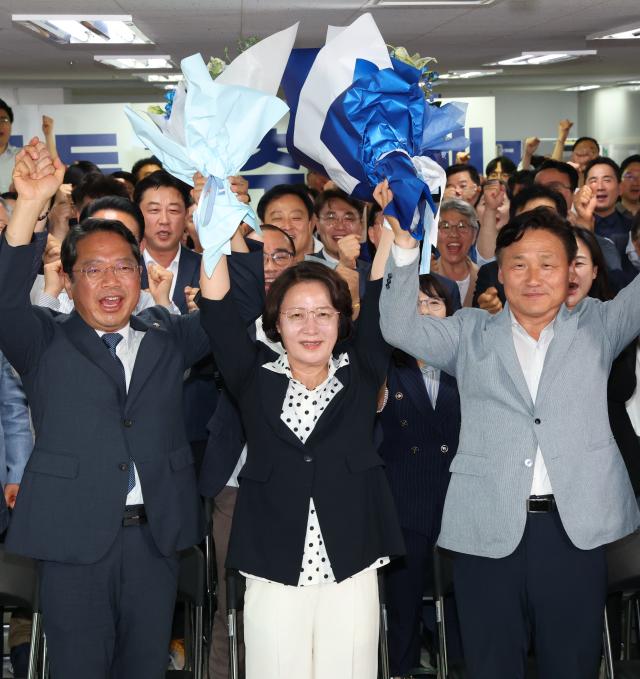
The 'Gyeonggi Transformation' proposed by newly elected Governor Choo Mi-ae ultimately leads to the same question: Can Gyeonggi Province become the heart of South Korea's AI industry, beyond just being part of the metropolitan area?
Semiconductor power and AI power are not the same.
South Korea is a global semiconductor powerhouse.
Samsung Electronics and SK Hynix lead the global market and maintain unmatched competitiveness in the memory semiconductor sector. However, it must be acknowledged that being a semiconductor powerhouse is not the same as being an AI powerhouse.
In the 20th century, industrial competition was about production volume. The country that produced more and cheaper won. But competition in the AI era is different. The outcome is determined by who secures more data, who creates stronger algorithms, and who attracts more talent.
NVIDIA is not a company with many factories. OpenAI is not a manufacturing company either. They dominate the world because they control the AI ecosystem.
This presents an opportunity for Gyeonggi Province.
Gyeonggi is already South Korea's top semiconductor production base. The question is whether it will remain just a production base or become the center of the AI ecosystem.
If the Yongin semiconductor cluster is merely an industrial complex, its significance is limited. However, if it evolves into an innovation city where AI researchers, startups, investors, and universities come together, the narrative changes.
The world is currently competing for AI supremacy. Gyeonggi Province must lay the foundation for an AI civilization.
Can Pangyo become South Korea's Silicon Valley?
The strength of Silicon Valley is not in its buildings.
It is in its people.
The world's top engineers gather there, along with the best investors. There is a culture that encourages retrying after failure. Universities and companies are interconnected, as are research institutes and markets.
Pangyo is the closest place in South Korea to Silicon Valley.
Naver and Kakao are located there, along with thousands of startups. The gaming and platform industries have flourished, and recently, AI companies have been rapidly increasing.
However, there is still something lacking.
Global reach.
Silicon Valley attracts talent from around the world. Pangyo still primarily attracts talent from South Korea. Silicon Valley draws global capital, while Pangyo is still centered on domestic investment. Silicon Valley aims to solve global market issues, while Pangyo has yet to fully break away from a domestic market mindset.
For Gyeonggi Province to become the heart of AI, Pangyo must be developed into a global innovation city.
Pangyo, Seongnam, Suwon, Yongin, Icheon, and Pyeongtaek must be connected into a single AI belt. Only when the semiconductor production base meets the startup ecosystem and universities connect with research institutes can new innovations emerge.
Competitiveness in the AI era lies in connectivity.
Who connects more talent?
Who connects more data?
Who connects more ideas?
That will determine the future.
Gyeonggi Province's competitor is not Seoul.
Many people view Gyeonggi Province as a satellite city of Seoul. However, such thinking is outdated in the AI era. Gyeonggi's competitor is not Seoul; it is Silicon Valley.
AI is ushering in an era of urban competition. The strength of the United States lies in Silicon Valley. The strength of China lies in Shenzhen. For South Korea to become an AI powerhouse, Gyeonggi Province must be at the forefront. Gyeonggi must become the center of industry and technology.
If Seoul and Gyeonggi can be united into a single AI mega-cluster, South Korea can establish the strongest AI ecosystem in Asia.
This is where the role of Governor Choo Mi-ae becomes crucial.
In this election, Choo presented semiconductors and AI as key growth engines.
What matters now is not the promises made, but their execution.
The AI industry thrives on speed. Five years from now may be too late. Ten years from now, opportunities may vanish.
This is why Choo must act now.
: SWOT Analysis :
Strength
Gyeonggi Province has a world-class semiconductor production base. Pyeongtaek's Samsung Electronics, Icheon's SK Hynix, and the Yongin semiconductor cluster form a strong axis. Pangyo and Seongnam host the largest IT and AI ecosystems in the country. A massive market of 14 million people, along with excellent universities and research institutions, is also a strength.
Weakness
Despite its semiconductor production capacity, there is a lack of global AI platform companies. While Pangyo is among the best domestically, it has not achieved the international stature of Silicon Valley. The north-south gap and transportation issues remain burdensome.
Opportunity
The AI revolution presents a historic opportunity for Gyeonggi Province. As AI and semiconductors converge, Gyeonggi can leap from a manufacturing-centered economy to an AI-centered economy. The Lee Jae-myung government's AI national strategy is also a favorable factor.
Threat
The United States has companies like NVIDIA and OpenAI. China is expanding its national-level AI investments. Global competition is extremely fierce. The reorganization of the semiconductor supply chain and the competition for technological supremacy also pose ongoing risks.
ABC asks Governor Choo Mi-ae
* This article has been translated by AI.

Copyright ⓒ Aju Press All rights reserved.