

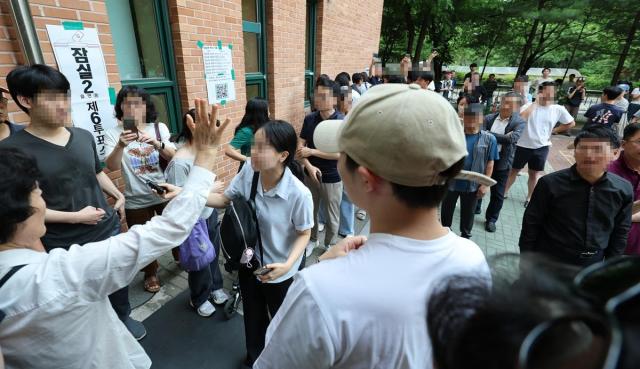
In a democratic nation, a shortage of ballots has led to voting disruptions. The June 3 local elections have become a significant event due to this issue. How could such a situation occur?
Elections are among the most critical and fundamental administrative tasks carried out by the state. For democracy to function, elections must be conducted fairly, allowing citizens to accept the results. This is why the Election Commission is granted a high status and authority, as specified by the constitution as an independent body.
However, there was a shortage of ballots, the most basic requirement for an election. In certain polling stations in Songpa-gu, Gangnam-gu, and Gwangjin-gu, voting was delayed due to a lack of ballots, forcing voters to wait in long lines. In some areas, voting continued even after exit poll results were announced. The Election Commission has apologized, but an apology alone is insufficient.
This incident is not merely an administrative error; it indicates a failure in the election management system. Ballots are essential for conducting elections. Situations where there are no ballot boxes, marking tools, or ballots should never occur. This is akin to a hospital operating room lacking surgical instruments or an airport control tower without communication equipment.
The more serious issue lies in the Election Commission's response. When this situation arose, the Central Election Commission pointed to the responsibility of local election commissions. However, this does not appear credible to the public. The Central Election Commission oversees national elections, and the ultimate responsibility for election management lies with it. If problems arise on the ground, and the central body claims no responsibility while blaming local commissions, whom should the public trust?
Controversies surrounding the Election Commission are not new. During the 2022 presidential election, there was a scandal involving 'basket voting,' where ballots were transported in baskets and shopping bags for COVID-19 positive voters, shocking the public. In 2023, allegations of preferential hiring for children of former and current officials emerged, with substantial evidence revealed during audits.
Now, the ballot shortage incident has occurred. While one incident might be seen as a coincidence, repeated controversies of a similar nature cannot be dismissed as mere chance. This is why the public feels uneasy. Mistakes can happen once, but if problems persist within the same organization, the public will begin to question the very operation of that organization.
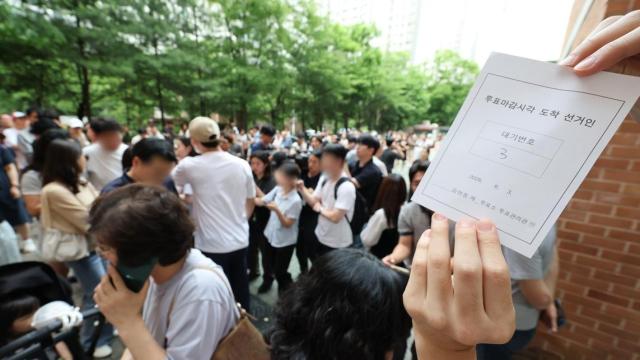
The Election Commission has historically rejected external interference, citing its independence and political neutrality. While the independence of election management bodies is crucial, it cannot serve as a basis for evading responsibility. In fact, the stronger the independence, the greater the accountability should be. If an independent body operates without external oversight, lacks accountability when issues arise, and repeatedly encounters problems, public trust will inevitably erode.
This incident has reignited discussions about the role of the Election Commission chairperson. Currently, the chair of the Central Election Commission is a non-permanent position held by a Supreme Court justice. Traditionally, a Supreme Court justice appointed by the Chief Justice has served as chair. However, the fact that the highest official responsible for overseeing elections has a primary job elsewhere has long been criticized. Many argue that the day-to-day operations of the Election Commission are often managed by the Secretary-General, leaving the chair in a largely symbolic role.
While it cannot be definitively stated that having a Supreme Court justice as chair is the direct cause of this incident, it is clear that the current system has failed to earn public trust. Citizens want to know who is responsible after the election concludes. They seek clarity on who prepared, who received reports, who made final decisions, and who will be held accountable. However, finding those answers within the Election Commission is currently challenging.
Democracy operates on trust. Trust in election results ultimately stems from confidence in the electoral process. The danger of the ballot shortage incident lies not merely in the lack of a few pieces of paper. It raises concerns about the fairness and reliability of elections, potentially increasing the number of citizens questioning the integrity of the process.
Whether claims of electoral fraud are true or not is a separate issue. However, when the Election Commission repeatedly generates controversies, it creates an environment where such claims gain traction. This is even more dangerous. Democracy functions on trust, not conspiracy theories. Preserving that trust is the very reason for the existence of the Election Commission.
This incident cannot be brushed aside as a simple administrative error. A thorough investigation is necessary to determine who made what decisions, why there was a ballot shortage, whether the reporting system functioned correctly, and what actions the Central Election Commission took. Those responsible must be held accountable. If an election management body cannot uphold the basics of its duties, it must question its own existence.
Elections are the flowers of democracy, and the Election Commission is the gardener tending to them. If the gardener fails to perform their role, the flowers will inevitably wilt. This incident is not just about a shortage of ballots; it is a warning signal for the entire election management system in South Korea.
* This article has been translated by AI.

Copyright ⓒ Aju Press All rights reserved.