

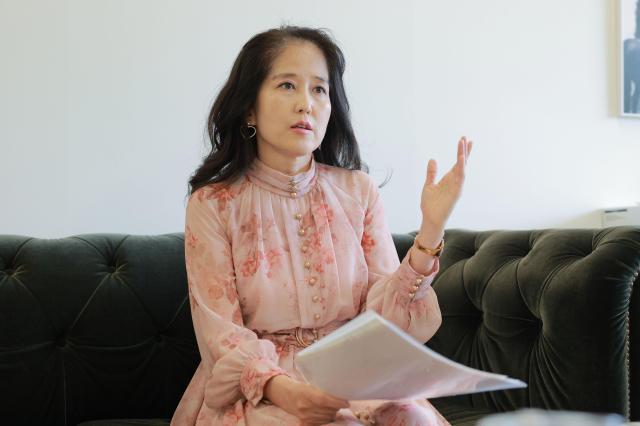
Amid rising global long-term interest rates and a soaring won-dollar exchange rate, the Korean economy faces significant uncertainty. Lee Jong-eun, President of the Korean International Finance Association and a professor at Sejong University, stated that the current issues in the Korean economy cannot be resolved through monetary policy alone, emphasizing the need for fiscal reform and recovery of potential growth rates as top priorities.
The Korean economy is experiencing high inflation, interest rates, and exchange rates, a phenomenon referred to as the 'three highs.' Despite repeated verbal interventions from foreign exchange authorities, the won has been trading in the mid-1500s against the dollar, indicating severe weakness. While some attribute this to increased private preference for overseas assets and capital outflows, Lee cautioned against oversimplifying the issue as merely a result of capital flight or aging demographics.
"Capital outflow is merely a symptom; the fundamental issue is the declining attractiveness of the Korean economy," Lee said. He pointed out that excessive corporate regulations, high tax burdens, and restrictions on real estate transactions are significant factors. He stressed the need to lift burdensome regulations, such as the 'Yellow Envelope Law' and the 'Serious Accident Punishment Act,' and to stop infringing on property rights through taxation to revitalize the Korean economy.
Regarding the adequacy of foreign exchange reserves, he noted that while they are sufficient according to International Monetary Fund (IMF) standards, they may not be adequate in the face of structural capital outflow pressures. He expressed support for a Korea-U.S. currency swap agreement, stating that while it could provide immediate relief by lowering the won-dollar exchange rate by 30 to 50 won, it would not address the underlying structural issues.
Having experience as an advisor for the Organization for Economic Cooperation and Development (OECD) and domestic policy, Lee called for market-friendly structural reforms based on the values of liberal democracy. He argued that citizens must have access to quality information and opportunities for wealth creation to strengthen democracy, benefiting both the populace and the ruling class in the long run.
He diagnosed the current crisis in the Korean economy as a clear 'structural risk signal.' The country is facing pronounced 'K-shaped' polarization. The government has also emphasized the need for structural reforms to enhance potential growth rates. Lee identified tax and fiscal reform as key tasks for recovering potential growth rates. He advocated for reducing and simplifying taxes while also cutting expenditures, suggesting that unnecessary task forces and committees be eliminated and that approximately 80 trillion won in tax credits be converted to cash support for vulnerable groups to maximize the government's role in providing a social safety net and improving fiscal health.
He referenced the success of the Earned Income Tax Credit (EITC) in the U.S. and the U.K., which helped lift 4.4 million people out of poverty, as a model worth considering. Additionally, he highlighted the need to legislate fiscal rules to keep national debt below 60% of GDP and fiscal deficits below 3% of GDP.
On necessary policies for the Korean economy, he suggested reducing taxes and fiscal spending while gradually lowering the benchmark interest rate. Given the current inflationary pressures, there is an increased likelihood of two interest rate hikes within the year. However, he noted that considering potential growth rates, measures to stimulate the overall economy should also be explored. Lee remarked, "While the current benchmark interest rate of 2.5% can be seen as nominally neutral, it remains a burden for the Korean economy, which has a growth rate of only 1.7%. The cost of financing at past levels is being imposed on a weakened economy. Relying solely on monetary policy without addressing fiscal issues is not a viable solution."
In this context, the U.S. Federal Reserve is undergoing a leadership transition. Lee identified the reduction of the Fed's balance sheet as a key change under Kevin Warsh's leadership. He explained that the Fed's assets, including approximately $2 trillion in mortgage-backed securities, will be gradually reduced, and that a runoff approach, where liquidity is absorbed internally rather than reinvested, is the least disruptive method for the market.
He anticipates that the trend of a strong dollar and rising Treasury yields will continue for the time being. He noted that the simultaneous rise in Treasury yields in major countries, including Korea, the U.S., and Japan, is influenced by both geopolitical factors and fiscal issues. Lee stated, "While geopolitical factors, such as wars in the Middle East, are indeed stimulating inflation, fiscal issues are also at play. Some suggest that the ratio of inflation factors to Treasury issuance factors in the U.S. is about 4 to 1." He emphasized that countries should not merely blame external factors but should actively work on improving their fiscal situations.
In light of the importance of energy security due to the Middle East conflict, Lee offered his perspective on energy security and diplomatic trade strategies. He argued that national security should be viewed as a higher priority than economic policy. Referring to the long-term blockade of the Strait of Hormuz, he suggested that if oil transport from the Middle East becomes difficult, the Arctic route could serve as an alternative. He emphasized that Korea's geographical advantage for utilizing the Arctic route should prompt investment in related infrastructure and proactive negotiations for favorable prices on U.S. crude oil. He added, "Strengthening the Korea-U.S. alliance goes beyond military security and directly relates to economic opportunities and price negotiation power," and noted positively that domestic companies are participating in the construction of natural gas pipelines in the U.S.
* This article has been translated by AI.

Copyright ⓒ Aju Press All rights reserved.