

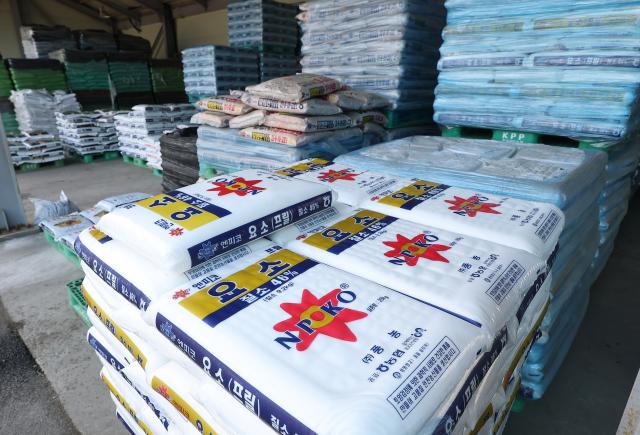
As the Middle East conflict continues, fertilizer prices have risen, prompting the South Korean government to announce on June 8 that it will provide 11.5 billion won in price subsidies to alleviate the financial burden on farmers.
The supply of mineral fertilizers is predominantly managed through the National Agricultural Cooperative Federation (Nonghyup), which determines prices through bidding and negotiations with producers. Due to the ongoing conflict, the price of urea, a key ingredient in fertilizers, has surged by 37.7% compared to a year ago, increasing anxiety among farmers and stakeholders.
Starting today, Nonghyup will raise the selling price of fertilizers by an average of 3,440 won per 20-kilogram bag. However, considering the additional subsidy of 2,560 won provided through this year's supplementary budget, the actual increase in costs for farmers will average around 880 won per bag, according to the Ministry of Agriculture, Food and Rural Affairs. This support will be limited to agricultural management entities that did not utilize the subsidies allocated at the beginning of the year.
The ministry plans to link Nonghyup's fertilizer sales system with fertilizer usage information to help reduce farming costs and improve soil health. Additionally, it aims to expand support for utilizing livestock manure as an alternative to mineral fertilizers.
Lee Si-hye, director of agricultural innovation policy at the Ministry of Agriculture, Food and Rural Affairs, stated, "We have worked to minimize the financial burden on farmers by securing supplementary budget funds in response to rising fertilizer prices. We will closely monitor the fertilizer supply situation to ensure that it remains stable despite the ongoing crisis in the Middle East."
The supply of mineral fertilizers is predominantly managed through the National Agricultural Cooperative Federation (Nonghyup), which determines prices through bidding and negotiations with producers. Due to the ongoing conflict, the price of urea, a key ingredient in fertilizers, has surged by 37.7% compared to a year ago, increasing anxiety among farmers and stakeholders.
Starting today, Nonghyup will raise the selling price of fertilizers by an average of 3,440 won per 20-kilogram bag. However, considering the additional subsidy of 2,560 won provided through this year's supplementary budget, the actual increase in costs for farmers will average around 880 won per bag, according to the Ministry of Agriculture, Food and Rural Affairs. This support will be limited to agricultural management entities that did not utilize the subsidies allocated at the beginning of the year.
The ministry plans to link Nonghyup's fertilizer sales system with fertilizer usage information to help reduce farming costs and improve soil health. Additionally, it aims to expand support for utilizing livestock manure as an alternative to mineral fertilizers.
Lee Si-hye, director of agricultural innovation policy at the Ministry of Agriculture, Food and Rural Affairs, stated, "We have worked to minimize the financial burden on farmers by securing supplementary budget funds in response to rising fertilizer prices. We will closely monitor the fertilizer supply situation to ensure that it remains stable despite the ongoing crisis in the Middle East."
* This article has been translated by AI.

Copyright ⓒ Aju Press All rights reserved.