

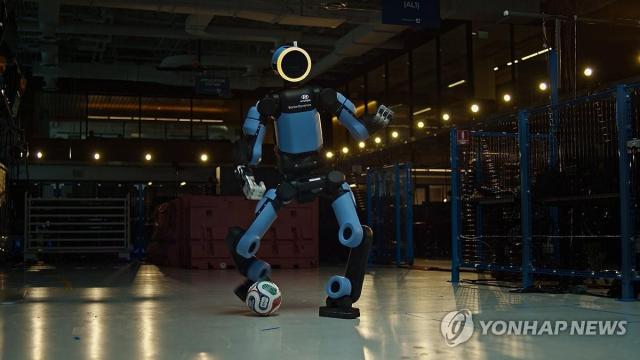
In a collaborative effort, the public and private sectors have successfully dismantled over 83% of the regulatory barriers affecting the establishment of an artificial intelligence (AI) smart city in Saemangeum within the past two months. The remaining ten or so issues, including farmland acquisition and environmental assessments, are expected to be resolved by the end of the year.
Hyundai Motor Group has decided to invest approximately 9 trillion won to develop Saemangeum into a hub for physical AI, indicating strong government support for this ambitious project. If the public-private partnership strategy proves successful, Saemangeum could emerge as a new growth engine in the southwestern region of the country, complementing existing hubs in Pangyo (platforms), Yongin (semiconductors), and Ulsan (automobiles and shipbuilding).
A senior government official stated on the 8th, "Hyundai has lifted about 50 significant regulatory barriers that were holding back its investment in Saemangeum, which had previously numbered over 60." The official added that the remaining issues, related to property rights and environmental impact assessments, will be addressed in the upcoming fourth meeting of the Saemangeum-Jeonbuk Innovation Task Force (Saemangeum TF).
The fourth meeting is likely to take place in mid-July, following the completion of the confirmation process for Han Seung-sook, the nominee for Prime Minister. The official emphasized, "The government is committed to removing any regulations that hinder the establishment of Saemangeum as a K-Physical AI base."
In late February, Hyundai Motor Group signed a memorandum of understanding with the Jeonbuk Special Self-Governing Province to foster advanced industries in robotics and hydrogen and to create an AI hydrogen city. The group plans to invest 9 trillion won in Saemangeum incrementally starting this year, which represents about 10% of its pledged investment of 125 trillion won by 2030, focused on a single region.
The government has also acted swiftly, establishing a comprehensive Saemangeum TF led by the Prime Minister's Office in early March. In an unprecedented move, the task force has resolved 83% of the total regulations in just two months. Kim Min-seok, who chaired the third TF meeting on May 15, reportedly urged, "Since speed is crucial for physical AI competitiveness, we need to resolve the remaining regulations as soon as possible."
With the easing of regulations, the development of co-location facilities—where data centers are built alongside power plants—has become more feasible. Co-location enhances development efficiency but has faced challenges in South Korea due to strict permitting processes and differing interpretations of added value among government, public, and corporate entities. Direct power trading is also a strong possibility. If realized, Saemangeum could evolve into a cradle for AI, where data centers and robots continuously learn powered by eco-friendly energy.
Particularly, with the Lee Jae-myung administration prioritizing regional balanced development as a key national agenda, the development of Saemangeum is expected to gain further momentum. Han Seung-sook, the newly nominated Minister of Small and Medium Enterprises and Startups, is likely to face her first policy test in Saemangeum. President Yoon Suk Yeol recently met with Chung Eui-sun, chairman of Hyundai Motor Group, and stated, "The government will respond to the bold decisions of businesses with even bolder support, ensuring that Hyundai's investments yield greater benefits for both the company and the region by significantly lowering regulatory and administrative barriers."
* This article has been translated by AI.

Copyright ⓒ Aju Press All rights reserved.