

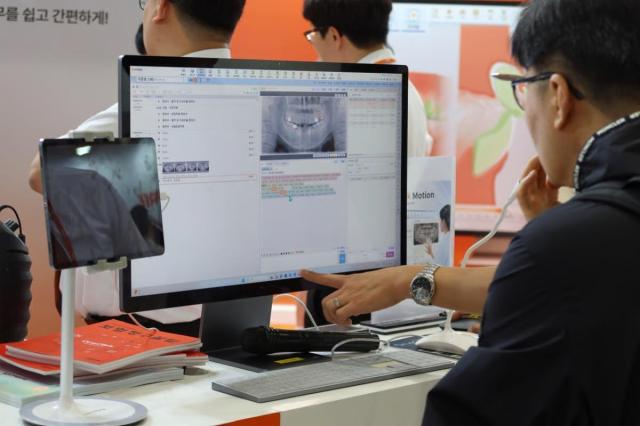
Osstem Implant is accelerating the digital transformation of dental care by expanding the AI capabilities of its OneClick electronic chart. The aim is to reduce the workload of medical staff by allowing them to manage patient records, image interpretations, and patient interactions all within a single chart.
On June 11, Osstem Implant announced enhancements to OneClick, including improved panoramic diagnostic features and the integration of AI technologies such as motion detection and speech-to-text (STT). The company emphasized that these upgrades focus on practical functionalities needed in clinical settings.
The electronic chart system manages patient information, medical history, images, and questionnaires in digital format. It addresses limitations of paper charts, such as handwriting recognition issues and information omissions, thereby alleviating the burden on clinical staff. Osstem Implant has been refining OneClick since its beta version was launched in 2020.
Among the newly added features, the most notable is the AI capability to analyze the risk of cavities. The company plans to introduce a system later this year that will assess diagnostic images and analyze the risk of cavities. This system is designed to assist medical staff in identifying areas they might overlook and to facilitate more intuitive explanations during patient consultations based on the big data the company has accumulated.
Convenience features tailored to the clinical environment are also being enhanced. Motion detection technology allows for searching and inputting information without the need for mouse clicks or keyboard typing, enabling staff to interact with the system using hand gestures even while wearing gloves. The STT feature distinguishes between the dentist's and patient's conversations, automatically extracting key information and recording it in the electronic chart.
An Osstem Implant representative stated, "Expanding AI-based clinical support functions is an effort to enhance the accuracy and efficiency of dental care. We will continue to introduce digital solutions that both medical staff and patients can benefit from."
Meanwhile, the adoption of AI in the pharmaceutical and bio sectors, as well as in hospitals, is accelerating the digital transformation of the medical field. AI is playing a supportive role in various areas, including image interpretation, medical record management, prescription processing, and implant procedures, leading to improvements in diagnostic accuracy and efficiency.
Industry insiders noted, "The impact of AI adoption by major companies is evident in improved diagnostic accuracy, reduced patient consultation times, and decreased workload for medical staff."
On June 11, Osstem Implant announced enhancements to OneClick, including improved panoramic diagnostic features and the integration of AI technologies such as motion detection and speech-to-text (STT). The company emphasized that these upgrades focus on practical functionalities needed in clinical settings.
The electronic chart system manages patient information, medical history, images, and questionnaires in digital format. It addresses limitations of paper charts, such as handwriting recognition issues and information omissions, thereby alleviating the burden on clinical staff. Osstem Implant has been refining OneClick since its beta version was launched in 2020.
Among the newly added features, the most notable is the AI capability to analyze the risk of cavities. The company plans to introduce a system later this year that will assess diagnostic images and analyze the risk of cavities. This system is designed to assist medical staff in identifying areas they might overlook and to facilitate more intuitive explanations during patient consultations based on the big data the company has accumulated.
Convenience features tailored to the clinical environment are also being enhanced. Motion detection technology allows for searching and inputting information without the need for mouse clicks or keyboard typing, enabling staff to interact with the system using hand gestures even while wearing gloves. The STT feature distinguishes between the dentist's and patient's conversations, automatically extracting key information and recording it in the electronic chart.
An Osstem Implant representative stated, "Expanding AI-based clinical support functions is an effort to enhance the accuracy and efficiency of dental care. We will continue to introduce digital solutions that both medical staff and patients can benefit from."
Meanwhile, the adoption of AI in the pharmaceutical and bio sectors, as well as in hospitals, is accelerating the digital transformation of the medical field. AI is playing a supportive role in various areas, including image interpretation, medical record management, prescription processing, and implant procedures, leading to improvements in diagnostic accuracy and efficiency.
Industry insiders noted, "The impact of AI adoption by major companies is evident in improved diagnostic accuracy, reduced patient consultation times, and decreased workload for medical staff."
* This article has been translated by AI.
Copyright ⓒ Aju Press All rights reserved.