

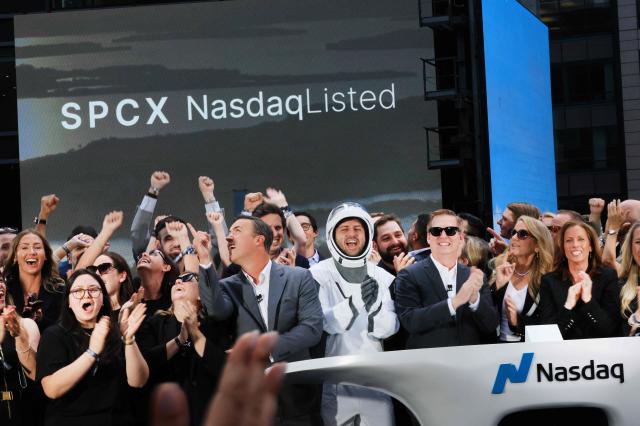
SEOUL, June 15 (AJP) — South Korea's second-largest brokerage house Mirae Asset Securities is under fire after failing to secure any shares in the blockbuster initial public offering of SpaceX, leaving Korean investors empty-handed in one of the world's most coveted listings.
"Pathetic," one investor wrote on Mirae Asset's online forum. "Run before you get burned," another wrote Monday, referring to Mirae Asset Securities' own share price, which fell about 2 percent despite a 5.5 percent rally in the benchmark KOSPI.
The backlash has quickly widened into a regulatory issue. The Financial Supervisory Service has launched an inspection into why Mirae Asset failed to receive shares that had been expected for Korean investors and whether the brokerage properly warned clients that final allocations could be reduced or canceled.
According to investment banking sources, SpaceX had initially been expected to allocate 2,314,815 Class A common shares to Mirae Asset out of 555,555,555 shares sold in the offering. But Goldman Sachs, the lead underwriter, reportedly excluded Mirae Asset and some other syndicate members from the final distribution.
The failure stunned Korean investors, who have become among the world's most aggressive retail buyers of U.S. stocks and had viewed SpaceX as a rare chance to enter a global AI, defense and space infrastructure play at the IPO stage. As of June 11, South Koreans owned $190.2 billion in U.S. equities, of which Tesla shares make up $24.1 billion worth.
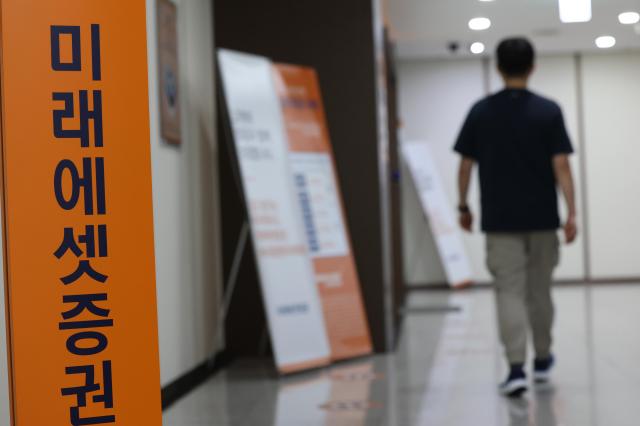
Mirae Asset has refunded subscription deposits in full, but investors may still have suffered losses from currency conversion, overseas remittance and refund procedures. Some deposits were converted into dollars when the won-dollar rate was around 1,530, while refunds were returned when the rate had moved closer to 1,510, raising the possibility of foreign-exchange losses.
The FSS is also examining whether Mirae Asset sufficiently disclosed allocation risks, whether there was exaggerated marketing, and whether the brokerage had understood in advance that it might fail to receive any shares.
A key issue is regulatory approval. Industry officials said Mirae Asset's failure to obtain clearance from Korean financial authorities may have made global underwriters reluctant to allocate shares to the brokerage. Korea requires securities registration documents to be submitted at least 15 business days before a public offering to general investors, but SpaceX followed U.S. IPO rules and filed roughly a week before listing.
Mirae Asset later shifted the subscription from a public offering for general investors to a private placement for professional investors, but industry officials said the change may not have been fully coordinated with global advisers.
In contrast, Mizuho Securities, which secured approval from Japanese regulators, reportedly received about $2.2 billion worth of SpaceX shares, or roughly 3 percent of the offering.
The controversy has also spread to exchange-traded funds. Some asset managers had promoted plans to include SpaceX IPO shares secured through Mirae Asset in their ETFs.
When the allocation failed, at least one fund reportedly bought SpaceX shares in the market on listing day, potentially at prices well above the $135 IPO price.
Regulators are expected to examine whether ETF investors were disadvantaged as a result.
The FSS is also expected to review possible conflict-of-interest issues after reports that Mirae Asset Group affiliates participated separately with proprietary capital and received SpaceX shares through a U.S.-based institutional channel.
Those shares were separate from the failed client subscription, but the situation has raised questions over whether group interests and client interests were properly managed.
Mirae Asset apologized to clients for failing to meet expectations.
"We apologize for the inconvenience and for failing to meet the expectations of customers who waited a long time for the subscription results," the company said in a notice.
The case is drawing heightened attention because it comes before a possible wave of U.S. mega-listings involving artificial intelligence companies such as Anthropic and OpenAI. Financial authorities see the SpaceX failure as a test case for how Korean brokerages should handle overseas IPO access for local investors.
An FSS official said the regulator needs to thoroughly examine what happened because investor protection will become increasingly important as more Korean capital seeks access to global IPOs.

Copyright ⓒ Aju Press All rights reserved.
