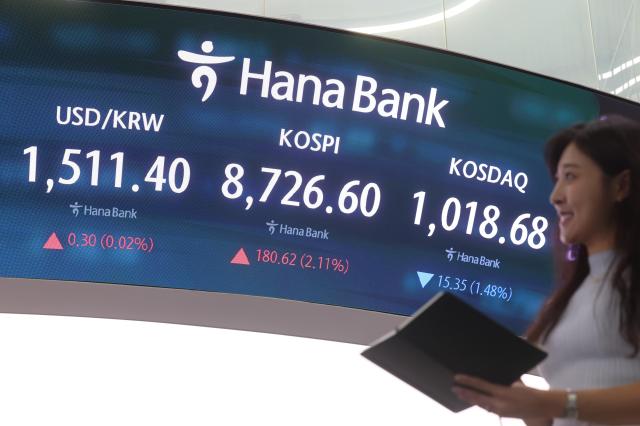
The won closed at 1,513.5 per dollar, little changed from the previous session.
Korean government bond yields fell. The three-year yield dropped 2.7 basis points to 3.717 percent, while the 10-year yield declined 0.8 basis point to 4.110 percent.
Unsecured three-year corporate bond yields also fell 1.9 basis points to 10.178 percent.
The decline was smaller than the fall in three-year government bond yields, meaning the credit spread widened slightly.
Corporate bond yields also fell, but by less than government bond yields, leaving credit spreads slightly wider - suggesting that lower-rated credit did not fully join the government bond rally, as investors remained cautious after default and rehabilitation concerns at JoongAng Group affiliates.
The move came after JTBC failed to repay 20.6 billion won in securitized borrowings, triggering rehabilitation filings by five JoongAng Group affiliates, including JoongAng Holdings, JTBC, Contentree JoongAng, Megabox JoongAng and JoongAng P&I.
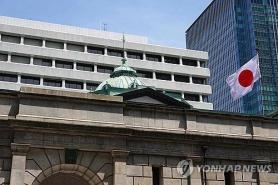
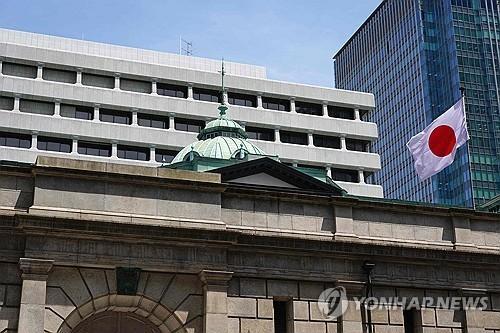
The Japanese central bank raised its short-term policy rate by 25 basis points to 1 percent from 0.75 percent, taking Japanese rates back into the 1 percent range for the first time since September 1995.
The current short-term policy rate is not directly identical to the official discount rate used at the time, but the move marks Japan’s return to a rate level not seen in more than three decades.
The BOJ also said it would reduce government bond purchases as planned through the January-March period of 2027, before keeping monthly purchases at around 2 trillion yen from April.
The rate hike marked the BOJ’s fifth increase since it ended negative rates in March 2024, and its fourth 25-basis-point hike in the current normalization cycle.
Still, the decision did not deliver a major hawkish surprise, with no signal of a faster tightening path or a sharper reduction in bond purchases.
Before the meeting, TD Securities had described a June hike as a foregone conclusion, while Wells Fargo expected only a limited immediate currency reaction, saying energy prices and Federal Reserve policy remained bigger drivers for the yen.
The yen also showed a limited reaction after the decision, reducing spillover pressure on other Asian currencies, including the won.
The benchmark KOSPI briefly slipped into negative territory during intraday trading, but extended gains after the BOJ announcement and traded more than 2 percent higher around the 8,720 level.
The BOJ decision also came as Governor Kazuo Ueda missed the meeting after being hospitalized for treatment of an infected liver cyst, according to the central bank.
Attention is now turning to the Federal Reserve, where Chair Kevin Warsh is set to lead his first Federal Open Market Committee meeting on June 17 local time.
The Fed is widely expected to keep its benchmark rate unchanged at 3.50 percent to 3.75 percent, with investors watching Warsh’s first post-meeting press conference and updated economic projections for clues on whether U.S. rates could still rise later this year.
Copyright ⓒ Aju Press All rights reserved.