

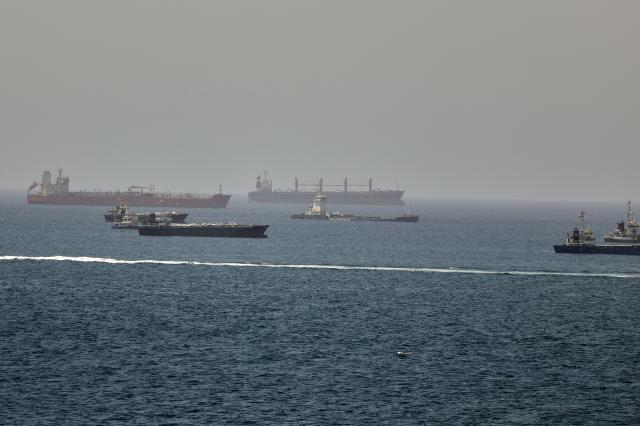
On June 17, Mohammad Bagher Ghalibaf, head of the Iranian negotiating team and Speaker of Parliament, stated in an interview with state television, "The Hormuz Strait will not return to a pre-war state," confirming that tolls will be reinstated following the expiration of the free passage period outlined in a memorandum of understanding (MOU).
Ghalibaf emphasized, "Iran has the right to exercise sovereignty over the Hormuz Strait and will naturally charge for the services we provide."
However, he added, "This does not mean we will act in a manner contrary to international law or maritime navigation principles."
His comments come amid growing uncertainty about how the management and toll issues of the Hormuz Strait will be resolved after the 60-day negotiation period.
Article 5 of the MOU states, "Iran will do its utmost to ensure that commercial vessels navigating from the Persian Gulf to Oman and vice versa can pass safely without any cost for 60 days only." This limits the free passage period to just 60 days.
Another provision indicates that "Iran will engage in discussions with Oman and others to define future management and maritime services in the Hormuz Strait," suggesting Iran's intention to maintain some level of control over the Strait's management.
Consequently, Iran is likely to assert its position to charge tolls for civilian vessels after the grace period, citing the MOU's stipulation of '60 days only for free passage.'
* This article has been translated by AI.
Copyright ⓒ Aju Press All rights reserved.