

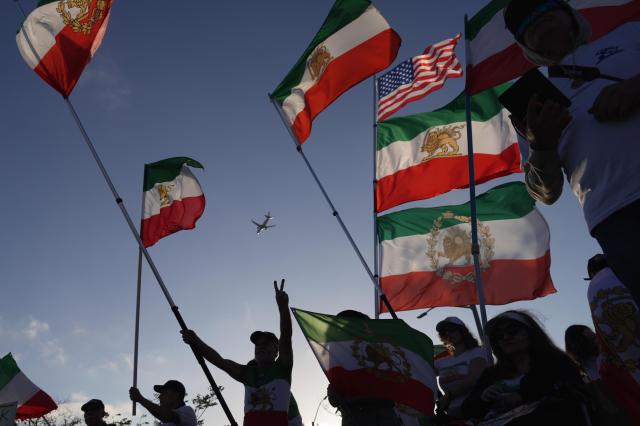
The document calls for an immediate halt to hostilities, the reopening of the Strait of Hormuz and negotiations toward a final agreement. It also outlines sanctions relief and a proposed $300 billion investment fund to rebuild Iran's economy.
Yet the document postpones rather than resolves the most contentious issues.
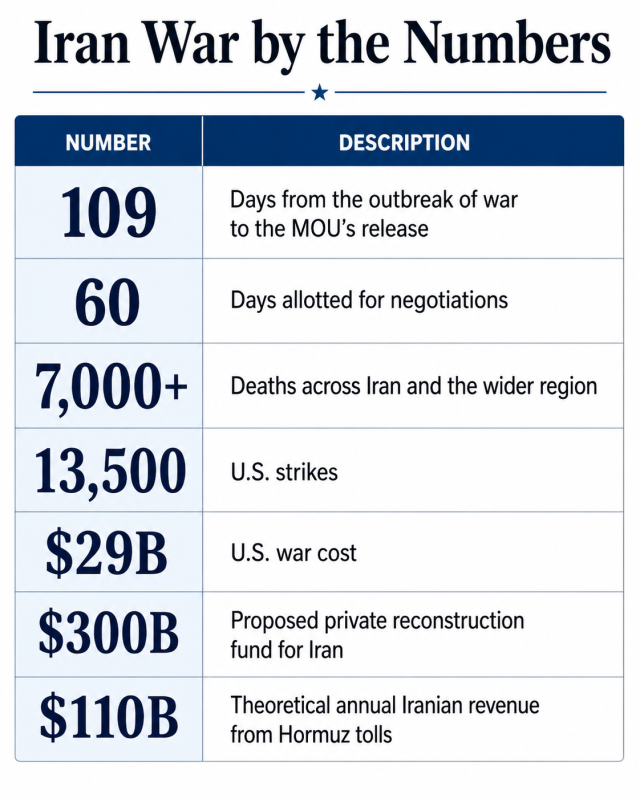
The two sides have given themselves 60 days to reach a final deal. Passage through the Strait of Hormuz will remain toll-free during that period, while Iran has suggested it could impose charges afterward. U.S. President Donald Trump has also warned that military action could resume if Tehran fails to meet its commitments.
The war may have lasted 109 days, but the next 60 could prove more consequential.
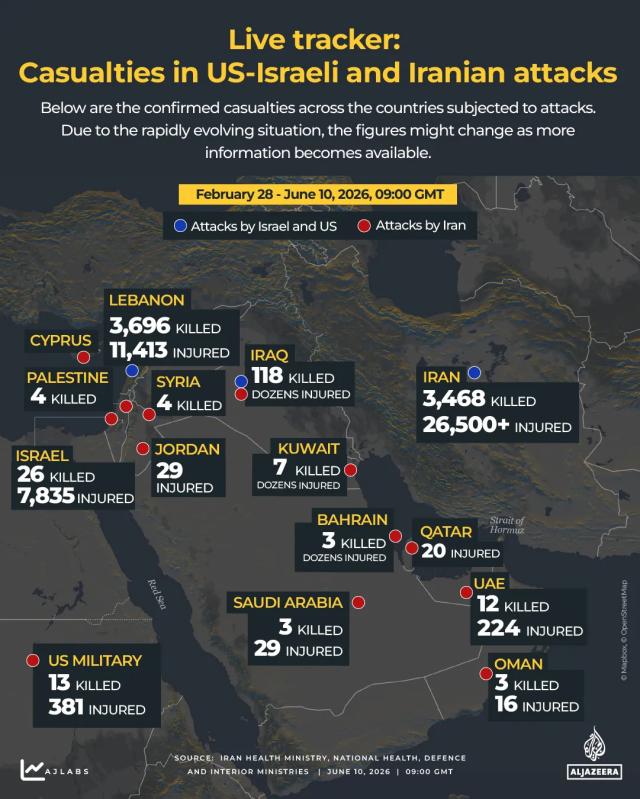
More than 7,000 people were killed across Iran and the wider region during the conflict, according to figures compiled from governments, health authorities and rights groups.
Iranian casualties rose sharply during the hostilities, with reports indicating nearly 3,500 deaths inside Iran alone.
The precise breakdown remains disputed. The total includes civilians and combatants killed in Iran, Lebanon and other countries drawn into the fighting, making direct comparisons with other wars difficult.
Still, the pace of the campaign illustrates how much violence was compressed into just over three months.
U.S. Central Command said American forces flew more than 10,200 sorties and carried out over 13,500 strikes during the first 38 days of major combat operations.
The 1991 Gulf War air campaign lasted a similar 43 days but involved more than 100,000 sorties by a U.S.-led coalition that included Britain, France and Saudi Arabia.
By contrast, the 10,200 sorties and 13,500 strikes reported during the Iran war covered U.S. military operations alone and excluded Israel's separate campaign.
The figures are therefore not directly comparable, but they show that Washington conducted a substantial air campaign even without a Gulf War-sized coalition.
The contrast with Ukraine is equally striking.
Russia's full-scale invasion had entered its 1,570th day when the Iran memorandum was released. The United Nations had verified more than 15,000 civilian deaths in Ukraine by early 2026 while stressing that the actual toll was likely far higher.
The war there continues. In May alone, the United Nations verified 274 civilian deaths and 1,763 injuries, bringing the monthly casualty toll to 2,037, the highest since April 2022.
The Ukraine figures count verified civilian deaths, while the Iran war tally includes combatants and casualties across multiple countries. Even so, the comparison highlights the intensity of a conflict that produced thousands of deaths in just 109 days.
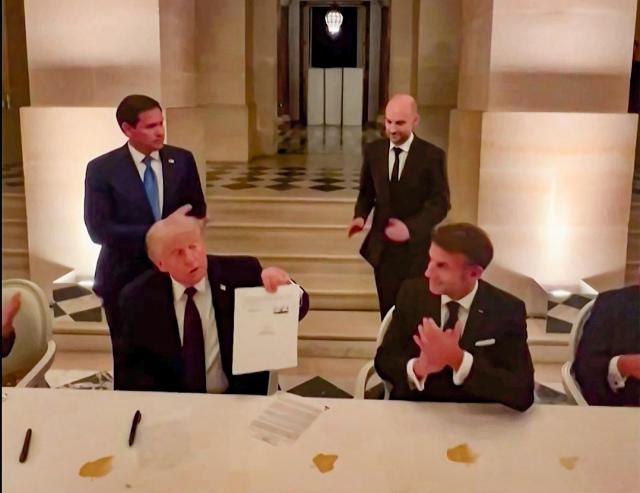
The memorandum's largest figure is a proposed $300 billion Reconstruction and Development Fund for Iran.
The arrangement raises an obvious question: Why would Washington help rebuild a country it helped bomb?
The answer is that it would not.
The fund is not a U.S. government aid package and would not be financed by American taxpayers. Instead, it is designed to attract private investment from companies in the Gulf, Asia and other regions, giving Tehran an economic incentive to comply with a final agreement.
Iran initially sought about $400 billion in compensation for war damage, but Washington rejected paying reparations. The proposed investment fund emerged instead as a compromise.
The plan also extends beyond repairing physical destruction.
Investments would target energy, transportation, logistics and manufacturing, meaning the $300 billion figure represents a broader effort to revive Iran's economy rather than an estimate of wartime damage.
For Washington, the returns would be strategic rather than financial.
Iran has reaffirmed that it will neither produce nor acquire nuclear weapons and has agreed to discuss reducing its stockpile of highly enriched uranium under international supervision.
The agreement could also restore shipping through the Strait of Hormuz, ease pressure on global energy prices and reduce the risk of another costly U.S. military campaign.
The Iran war was not only a contest of firepower but also a contest of cost.
The Pentagon said by mid-May that the conflict had already cost the United States at least $29 billion, including operational expenses and the repair or replacement of equipment.
The first six days alone accounted for $11.3 billion, illustrating how heavily the campaign was concentrated in its opening phase.
The financial burden was magnified by an unfavorable cost exchange.
Iranian Shahed drones were estimated to cost between $20,000 and $50,000 each, while a Patriot interceptor costs roughly $4 million. U.S. and Gulf forces also deployed fighter aircraft and air-to-air missiles, some costing around $1 million, to destroy much cheaper drones.
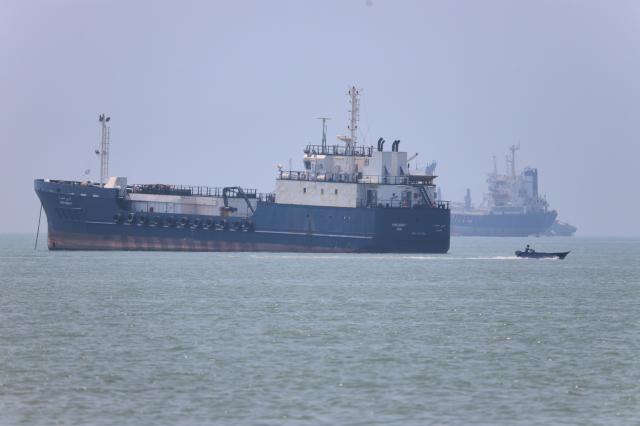
The memorandum does not specify how much Iran could charge ships after the initial 60-day toll-free period.
It says only that Tehran will discuss the future administration of the Strait of Hormuz and maritime services with Oman and other Gulf states.
Iranian officials have suggested that any future fee could vary depending on vessel type, cargo and other conditions.
During the war, at least one ship was reported to have paid $2 million for passage, although Reuters could not independently verify the payment.
At that rate, the potential revenue could be enormous.
With about 150 ships passing through the strait each day before the war, a flat $2 million charge could theoretically generate around $110 billion a year.
That figure, however, is purely hypothetical.
It assumes every vessel pays the same amount and that traffic fully returns to prewar levels. Actual revenue would likely be far lower, particularly because the United States and Gulf states oppose blanket fees on commercial shipping.
Washington says it expects toll-free navigation to become part of a final agreement.
Iranian officials, however, have indicated that Tehran could impose charges after the initial 60-day period and have raised the possibility of jointly managing the waterway with Oman and other Gulf states.
Iran's deputy ambassador to South Korea previously told AJP that he had no information indicating vessels were currently required to pay tolls while passing through Iranian waters.
"I don't know about the technical limitations. I don't know any details," he said.
The two sides have therefore agreed on temporary access without settling the long-term rules.
"That strategy reflected Iran's ability to identify and exploit the economic and political vulnerabilities of a militarily superior opponent," said Jeong Kyung-woon, a research fellow at the Korean Association of Military Studies.
The memorandum also leaves the door open for both sides to walk away. The 60-day negotiating period can be extended by mutual consent, U.S. forces are expected to maintain their regional posture during the talks and Trump has openly threatened to resume bombing if Iran does not comply.
Graphic generated with ChatGPT and edited by AJP
Whether that becomes peace or merely an intermission will determine whether this war has truly ended at all.

Copyright ⓒ Aju Press All rights reserved.
