

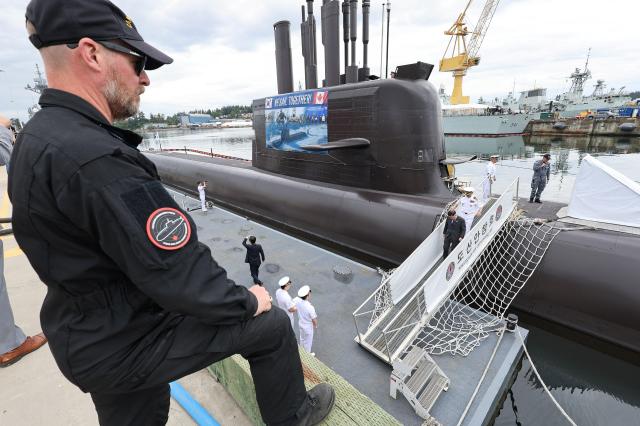
On June 17, the Financial Post reported that foreign bidders for Canada’s next-generation submarine program are pursuing investment and partnership agreements linked to key Canadian industries to secure contracts.
The Canadian submarine program aims to procure up to 12 new submarines for the Royal Canadian Navy. The current contenders are South Korea's Hanwha Ocean and Germany's ThyssenKrupp Marine Systems (TKMS). The Canadian government is expected to select a contractor by the end of this month.
The significance of this bidding war lies not only in the submarines themselves but also in the substantial industrial investments associated with them. Under Canada’s Industrial and Technological Benefits (ITB) policy, defense contractors must reinvest 100% of the contract value back into the Canadian economy. Given that the submarines are likely to be built overseas initially, bidders are emphasizing domestic investments to highlight their economic impact.
Hanwha Highlights $146 Billion Economic Impact
Hanwha claims that through various economic collaborations during the submarine construction process, it can generate over $96 billion (approximately $146 billion) in value for Canada’s GDP.
The company is actively promoting its bid across Canada while pursuing more than 70 investment and partnership agreements with industrial and technology firms, universities, and government departments. In the automotive sector, Hanwha has agreed to establish a joint venture with the Automotive Parts Manufacturers' Association (APMA) to produce battery-powered military vehicles, with APMA holding a 51% stake and Hanwha owning the remainder.
In the steel sector, Hanwha plans to invest $275 million (approximately 419 billion won) in Algoma Steel in Sault Ste. Marie, Ontario, to support the construction of Canada’s first structural steel beam factory. The company is also looking to purchase about $70 million (approximately 106 billion won) worth of Algoma Steel products for submarine-related infrastructure.
LNG and energy sector collaborations are also part of Hanwha's strategy. The company signed a memorandum of understanding (MOU) with Perpetua Energy to jointly pursue LNG development projects in Newfoundland and Labrador. There are expectations that South Korea will increase its purchases of Canadian crude oil following the elimination of tariffs, which aligns with the bidding process. Hanwha asserts that these collaborative efforts could yield over $96 billion (approximately $146 billion) in economic benefits for Canada’s GDP.
TKMS Claims $131 Billion Economic Impact
Competitor TKMS is also making its case. The company has signed a maintenance and repair cooperation agreement with Seaspan in North Vancouver and is working with Ellicott to design and construct maintenance and training facilities on both coasts. Additionally, TKMS has entered into a partnership with E3 Lithium in Calgary to utilize lithium in submarine batteries.
TKMS has proposed building a factory for medium torpedoes and torpedo defense systems in Canada, supporting carbon capture and storage facilities in Alberta, and investing in infrastructure at the Port of Churchill in Manitoba. The company claims these initiatives could create $86 billion (approximately $131 billion) in value for the Canadian economy.
However, there are concerns about the feasibility of these investment promises. Many agreements are contingent upon the companies winning the submarine contract. Collaborations in the automotive, steel, and energy sectors also depend on actual orders and government procurement plans.
Philippe Lagasse, a professor at Carleton University, noted, "Without an aggressive export strategy, it is unclear how many companies can truly thrive even with increased spending. This aspect is often underestimated."
The Financial Post highlighted that the submarine procurement process is not just about selecting a model but is also about Canada choosing a long-term economic and geopolitical partner. If Hanwha wins the contract, Canada would become the first NATO country to operate the KSS-III Batch II submarine. Conversely, TKMS's proposed Type 212CD submarine, developed jointly by Germany and Norway, would enhance defense cooperation with European NATO allies.
Darren Hoko, a former Royal Canadian Navy rear admiral, stated, "From the government's perspective, this is a larger issue than simply choosing the right submarine; it’s about selecting a long-term economic and geopolitical partner."
* This article has been translated by AI.
Copyright ⓒ Aju Press All rights reserved.