

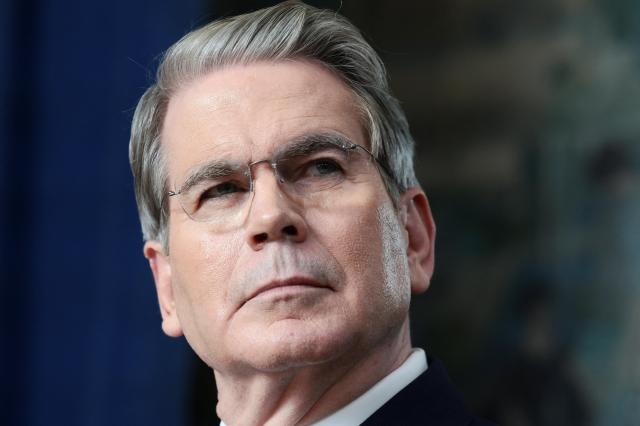
Analysts suggest that the Bank of Japan's (BOJ) decision to raise its benchmark interest rate to 1% for the first time in 31 years was influenced by pressure from the United States and market forces. While the rate hike was a response to rising inflation and a weakening yen, it appears that the cautious stance of Prime Minister Sanae Takaichi's administration and the BOJ's hesitance were pushed by comments from U.S. Treasury Secretary Scott Besant and market pressures. Some foreign market participants have even referred to Besant as the "shadow governor of the Bank of Japan."
The Nikkei reported on June 18 that during his visit to Japan on May 11, Besant told Japanese Finance Minister Satsuki Katayama, "Now is the time to raise rates to avoid larger increases later." He warned that the longer the BOJ hesitated to raise rates, the more inflation would accelerate, potentially leading to a more abrupt increase that could shock the economy and markets.
Citing multiple Japanese government officials, the Nikkei noted that Besant's comments reflected concerns about the BOJ's reluctance to raise rates amid the cautious approach of the Takaichi administration. A week later, during an international conference in Paris, Besant met directly with BOJ Governor Kazuo Ueda. Following their meeting, he expressed confidence on social media that Ueda would lead Japan's financial policy to success. A senior official from Japan's Ministry of Finance interpreted this as pressure on the BOJ to take action on interest rates.
Besant, known for his ties to Japan, did not make these remarks out of mere goodwill. He has previously expressed concerns that rising long-term interest rates in Japan, driven by inflation fears, could lead to a return of Japanese investment funds to their home country, resulting in the sale of U.S. Treasury bonds and rising U.S. interest rates. The Nikkei suggested that he exerted pressure on Japan to prevent instability in the U.S. Treasury market and the broader U.S. economy.
The Takaichi administration, aware of U.S. sentiments, also took action. On May 22, Takaichi and Ueda met at the Prime Minister's residence for the first time in three months. After the meeting, Ueda stated, "We were able to exchange beneficial opinions on various aspects." The BOJ reportedly confirmed the government's position during this meeting, which laid the groundwork for its decision to prepare for a rate hike at the monetary policy meeting on June 16.
At the previous meeting in late April, there were many cautious voices within the government regarding a rate hike. Concerns were raised that increasing rates amid geopolitical instability in the Middle East could further dampen corporate investment and consumer spending. However, a senior Japanese government official noted that voices advocating for a rate hike, considering global trends, emerged around the time of the Takaichi-Ueda meeting.
In fact, central banks in major countries are shifting their focus back to inflation control. The European Central Bank (ECB) raised rates on June 11 for the first time in nearly three years, and more officials from the U.S. Federal Reserve are mentioning potential rate hikes. If the BOJ falls behind in raising rates, it may struggle to control inflation, leading to further depreciation of the yen and rising long-term interest rates. A wait-and-see atmosphere regarding rate hikes has spread within the government. In the foreign exchange and bond markets, pressures for yen depreciation and rising interest rates have intensified, urging the BOJ to respond.
The Nikkei analyzed that while the BOJ has raised its policy rate to 1% for the first time since 1995, this decision was influenced by "two external pressures"—the market and the United States. U.S. research firm SGH Macro Advisors remarked, "Now Besant is the 'shadow governor of the Bank of Japan.'"
However, the Japanese government remains cautious about rate hikes, and the BOJ is still mindful of this dynamic. On June 16, Minister of Economic and Fiscal Policy Minoru Kiuichi, who attended the monetary policy meeting as a government representative, emphasized that the BOJ must adequately explain the burdens and side effects of rate hikes to the public and markets. Kiuichi has stated to those around him, "If we raise rates, we will reap the benefits," and he coordinated response strategies with Takaichi ahead of the decision meeting. The Nikkei reported that he views the BOJ's decision to halt reductions in government bond purchases next spring as a government achievement.
While the market is already pushing for the next rate hike, it remains uncertain when the BOJ will act again. The ongoing pressures of yen depreciation and rising prices highlight the limitations of this recent hike, which was implemented under external pressure, according to the Nikkei.
* This article has been translated by AI.
Copyright ⓒ Aju Press All rights reserved.