

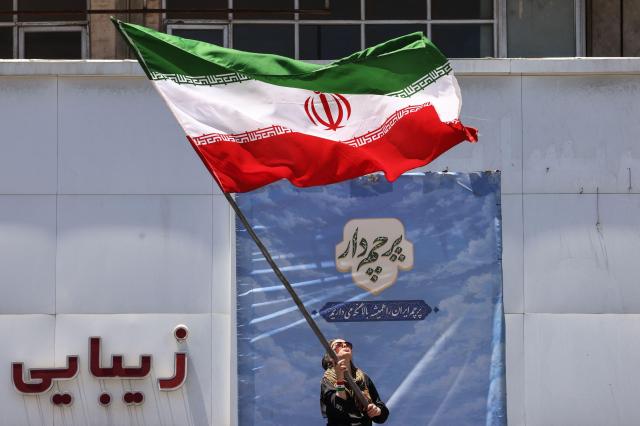
The war between the United States and Iran, which has shaken the world for the past three and a half months, is finally nearing its conclusion. Although both sides continue to engage in psychological warfare, the likelihood of a peace agreement being signed in Switzerland on June 19 appears to be quite high. The White House has confirmed that President Donald Trump has already signed a memorandum of understanding (MOU) for the ceasefire, accelerating the negotiation process.
However, the signing of the ceasefire MOU does not mean that all issues will be resolved. The Iranian nuclear issue remains unresolved, and the situation in the Strait of Hormuz, a vital artery for the global energy market, is still uncertain. Iran has hinted at the possibility of imposing tolls or maritime service fees after a 60-day period of free passage. The U.S. insists on permanent free access, but it remains uncertain whether Washington, facing war fatigue, can maintain this position.
What deserves more attention now is not the end of the war, but what comes after. When the fighting stops, it does not mean the end of conflict; rather, it marks the beginning of financial flows.
The U.S. is already working to establish a $300 billion fund for Iran's reconstruction. If investment funds from Gulf oil-producing countries, boosted by high oil prices, along with capital from international financial institutions and global corporations, are added, the Middle East is likely to see a massive influx of funds in the coming years. While the war has left devastation, a significant economic project aimed at rebuilding that destruction is set to begin.
History has shown us similar experiences. After the oil shock in the 1970s, Middle Eastern oil-producing countries amassed vast wealth due to soaring oil prices. South Korea capitalized on this opportunity rather than viewing it as a crisis. Domestic construction companies built roads, ports, refineries, and power plants in the middle of the desert, sending numerous workers to the region. The foreign currency earned became a crucial seed for South Korea's economic growth.
During the Iran-Iraq War in the 1980s, South Korean companies also maintained a presence in the region. For instance, Daelim Industrial continued construction amid falling bombs, earning the trust of the Iranian government, which later contributed to the high regard for South Korean firms in the Middle Eastern market. This was one of the symbolic moments of the South Korean economy finding opportunities in crises.
Today's Middle East is different from that of the past. While previous Middle Eastern nations sought infrastructure such as roads and ports, their focus has now expanded to advanced industries like artificial intelligence (AI), semiconductors, defense, nuclear power, and smart cities. Fortunately, South Korea is one of the few countries capable of meeting this demand.
Cooperation with the United Arab Emirates (UAE) exemplifies this potential. By building the Barakah nuclear power plant, South Korea has established trust and recently expanded its cooperation into defense and AI sectors. Saudi Arabia is also pursuing industrial diversification through its 'Vision 2030' initiative, actively fostering advanced manufacturing and digital industries. The alignment between what the Middle East desires and what South Korea can provide is increasingly evident.
While the situation in the Middle East remains unstable, instability does not equate to a lack of opportunities. In fact, global capital seeks new markets during the reconstruction process following war. The key is to recognize and act on these trends early. Just as during the oil shock, South Korea must read the changing dynamics of the Middle East and seize new opportunities.
* This article has been translated by AI.
Copyright ⓒ Aju Press All rights reserved.