

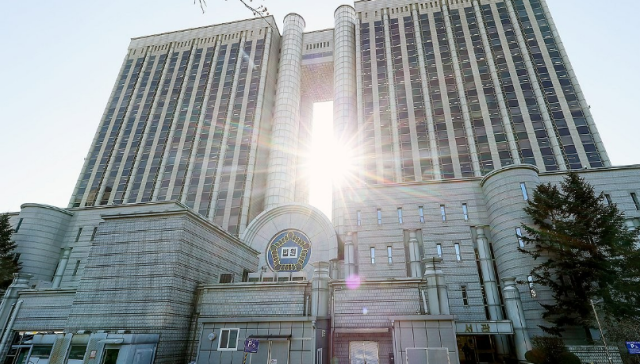
The Seoul High Court ruled on June 18 that the Korea Fair Trade Commission's (KFTC) decision to impose a fine on Kakao for failing to adequately inform users about the cancellation feature of its subscription-based music service was unjustified.
The court, led by Chief Judge Yoon Kang-yeol, stated, "We cancel the order to pay the fine." The ruling emphasized that fines can only be imposed when a business causes significant inconvenience to consumers under the Electronic Commerce Act, and that the circumstances of Kakao's business restructuring rendered the fine inappropriate. This decision follows a Supreme Court ruling from November of the previous year.
The KFTC had fined Kakao 98 million won in January 2024, claiming that from May 2017 to May 2021, the company failed to sufficiently inform users about the cancellation feature while providing subscription-based music services through platforms like Melon and KakaoTalk.
Despite receiving a corrective order, Kakao allegedly repeated the same violations, initially justifying the grounds for a business suspension. However, after Kakao split its digital music division to establish Melon Company, which was later absorbed by a Kakao affiliate, the situation became complicated.
The KFTC decided to impose a fine instead of a business suspension, reasoning that Kakao could continue operations through Melon. Kakao contested the decision, and the Seoul High Court ruled in January of the previous year that the KFTC's actions were valid.
However, the Supreme Court found in November that the KFTC's process for imposing a fine in lieu of a business suspension was unlawful, leading to the cancellation of that part of the ruling.
According to Article 34, Section 1 of the Electronic Commerce Act, fines can only be imposed if a business suspension is deemed to cause significant inconvenience to consumers, and the court determined that Kakao did not fall under this provision.
The Supreme Court stated, "Interpreting the law to include cases where a business suspension becomes ineffective due to company restructuring exceeds the possible meanings of the regulation and violates the principle against analogical interpretation."
Nonetheless, the court upheld the original ruling regarding the corrective order, dismissing Kakao's appeal.
* This article has been translated by AI.
Copyright ⓒ Aju Press All rights reserved.