

Historian Jared Diamond, in his book "Guns, Germs, and Steel," posits that environmental and geographical factors have determined inequalities in human history. He argues that it is not inherent superiority of certain races or nations, but rather geographical advantages that allowed societies with surplus food to dominate history. Regions with abundant food and active East-West exchanges saw population density increase and immunity to deadly pathogens develop. Scientific advancements also emerged from necessity. While not all of Diamond's theories apply to modern societal imbalances, the consensus remains that resource-rich nations have historically influenced global events.
Humanity is currently navigating a civilizational shift driven by AI, following the agricultural, industrial, and information revolutions. If geographical conditions once spurred surplus food production and modern societal structures, the AI era now prioritizes data, computing power, and energy infrastructure as new resources.
AI represents more than just software evolution; it is reshaping the future landscape of civilization, akin to a "digital Guns, Germs, and Steel." This is why countries are investing astronomical sums to secure a competitive edge. Hundreds of billions of dollars are funneled annually into developing next-generation large language models (LLMs) and AI-specific semiconductors.
Just as ancient civilizations mobilized armies to control fertile crescent territories, today’s capital war is fought over the monopolization of super-large AI resources.
This battle is ruthless. The U.S. Department of Commerce has imposed export controls on Anthropic's security-focused AI model, "Mitos 5," and its consumer version, "Fable 5," barring access to all foreign nationals and even foreign employees of Anthropic within the U.S. for national security reasons.
The U.S. government, which has already controlled the export of advanced AI semiconductor equipment and physical chips, now regards AI models themselves as strategic national assets. This underscores that AI is not merely a tool for enhancing corporate productivity but a new measure of national power that influences security and hegemony. AI is indeed the key weapon of the digital age.
The implications of the U.S. government's actions are significant. Countries that fail to establish independent AI ecosystems and rely solely on foreign AI models risk crippling their core infrastructures due to policy changes or regulations from specific nations. This echoes the historical exploitation of weaker nations by imperial powers during the colonial era, who used emerging technologies like steam engines and railroads to extract resources.
Moreover, just as indigenous populations in the New World faced catastrophic declines due to their lack of immunity to deadly Eurasian bacteria, nations without their own AI infrastructure may find themselves subservient to powerful countries that dominate AI or, more narrowly, to the algorithms of global tech giants. This scenario mirrors the colonial era, where nations may appear sovereign but risk becoming technologically and culturally subjugated.
Beyond international disparities, the potential for "destructive polarization" within societies is a growing concern. If a nationwide transition to AI is not achieved swiftly, inequality among social classes could deepen to irreversible levels.
In the future, access to AI will be sharply divided by capital. The wealthy will monopolize highly sophisticated and costly premium AI models, maximizing their intellectual and economic productivity. In contrast, economically disadvantaged individuals may be excluded from AI technology altogether or forced to rely on inferior models provided for free by companies.
A small elite will monopolize all the benefits and resources of this new AI-driven civilization. Thus, a "Sovereign AI" that can compete in the global market is essential at the national level. Fortunately, South Korea has recognized this importance and has been pursuing relevant policies since last year.
Sovereign AI signifies more than just technological independence. It serves as a bulwark for protecting our cultural identity and values, and it is a necessary public good to prevent national-level polarization and promote balanced development among social classes. When the state leads the way in providing infrastructure that allows all businesses and citizens to universally benefit from high-performance AI models, it can effectively prevent resource monopolization by the wealthy and achieve true digital democracy and balanced growth.
Additionally, the South Korean AI industry has a counter-strategy that could disrupt the global power dynamics: "Physical AI."
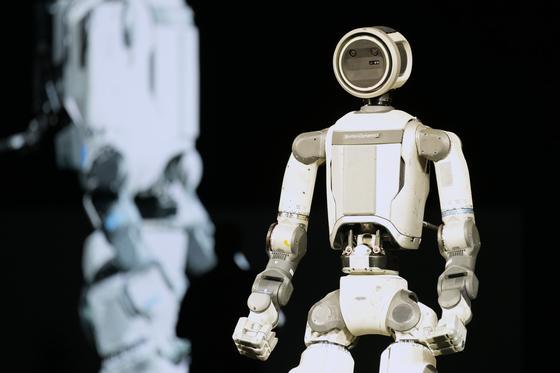
The evolution of AI can be broadly categorized into two stages. The first is "Software AI," which exists solely on screens. The second, often referred to as the final form of AI, is "Physical AI," which possesses a physical body and interacts with the real world. Just a year ago, we applauded robots that could dance and tumble like humans.
Now, we no longer celebrate such events. We aspire to robots that can physically perform essential tasks in daily life, such as household chores and caregiving. South Korea is home to two of the world's largest global appliance manufacturers, excelling in producing a wide range of household devices like refrigerators, washing machines, air conditioners, vacuum cleaners, and televisions that dominate living rooms worldwide.
The ability to control appliances and robots in the physical world and enable human interaction is not achieved overnight by training large language models. It requires decades of accumulated hardware manufacturing expertise, precision processing technology, and a global supply chain. South Korea possesses an overwhelming infrastructure for manufacturing top-tier memory semiconductors and AI chips, as well as the capability to translate this into physical forms, encompassing the entire value chain. We are among the few countries capable of creating both the "brain" and "body" of technology simultaneously.
Thus, this moment is crucial for determining South Korea's future. Based on our robust hardware manufacturing capabilities and infrastructure, we must establish an independent AI ecosystem that embodies our sovereignty and values.
Historically, nations that failed to recognize the shifts brought about by powerful empires wielding guns and steel have either disappeared from history or become subjugated. The same applies to AI, the digital "Guns, Germs, and Steel" of the 21st century. Securing our own Sovereign AI and creating a significant advantage in the realm of Physical AI is the only path for South Korea to thrive as a leader in future civilization. To avert a dystopian future and lead humanity toward a balanced future, we must mobilize our national capabilities now. History favors the prepared.
* This article has been translated by AI.
Copyright ⓒ Aju Press All rights reserved.