

As the era of eco-friendly vehicles unfolds, the competition among automakers over driving range is intensifying. Initially, affordable lithium iron phosphate (LFP) batteries were popular to lower the entry barrier for electric vehicles, but as the market matures, there is a trend toward diversification with plug-in hybrids (PHEVs) and extended-range electric vehicles (EREVs). Vehicles boasting a single-charge range of up to 1000 kilometers are emerging rapidly.
According to industry sources, BYD plans to introduce its first plug-in hybrid, the mid-size SUV 'Sea Lion 6,' in South Korea this coming fall. Equipped with its proprietary PHEV technology, 'Dual-Mode Intelligent (DM-i),' this model allows the electric motor to lead the drive while the engine plays a supporting role. It automatically switches to electric mode at low speeds and engages the engine when battery levels are low or during high-speed driving, achieving a maximum range of 1100 kilometers on a single charge.
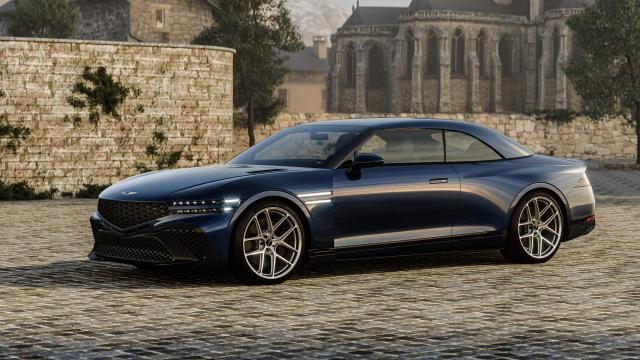
Genesis is also set to launch its first hybrid models, the G80 and GV80, along with the GV70 EREV, later this year. The EREV developed by Hyundai will drive the wheels with an electric motor, and when the battery is depleted, the internal combustion engine will act as a generator to recharge the battery. The goal is to achieve a range of approximately 900 to 960 kilometers on a single charge by reducing the battery capacity to less than half that of existing electric vehicles, thereby enhancing price competitiveness and alleviating charging concerns. Additionally, KG Mobility is reportedly developing an EREV model under the concept of a 'non-charging electric vehicle.'
Geely Auto and Xiaomi, both preparing to enter the South Korean market, are also engaged in the range competition. Geely's Galaxy recently launched the M7, a mid-size SUV equipped with PHEV technology, boasting a maximum range of 1730 kilometers. It surpassed 10,000 sales within half a day of its release. The M7 is considered a successor to the 7X mid-size SUV from ZK Korea. Xiaomi has also announced plans to release a large SUV as its first EREV, with a maximum range of 1000 kilometers.
The benchmark of '1000 kilometers on a single charge' for eco-friendly vehicles is seen as a technical standard for fully replacing internal combustion engine vehicles, as the average range for such vehicles is between 800 and 900 kilometers. Despite advancements in battery technology, electric vehicles typically achieve only about 500 kilometers on a single charge. This range can drop by 20 to 30 percent in winter, leading to charging stress during long-distance travel. This is why automakers are actively developing PHEVs and EREVs.
An industry insider stated, "PHEVs and EREVs combine the convenience of internal combustion engines with the cost-effectiveness of electric vehicles. As battery manufacturers also develop dedicated cells for high-performance PHEVs and EREVs, the related market is expected to emerge as a mainstream segment for eco-friendly vehicles for the foreseeable future."
* This article has been translated by AI.
Copyright ⓒ Aju Press All rights reserved.