

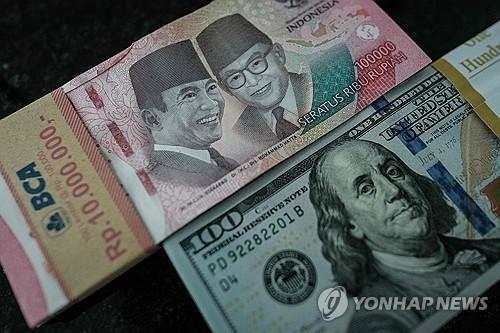
Indonesia's central bank (BI) has implemented another interest rate hike, aimed at defending the value of the rupiah against the US dollar.
On June 18, local time, BI announced during its regular monetary policy meeting that it raised the seven-day reverse repurchase rate by 0.25 percentage points from 5.50% to 5.75%.
This marks the third interest rate increase in the past month and the highest level since May of last year.
Previously, BI surprised markets by raising rates by 0.50 percentage points on May 20, followed by a 0.25 percentage point increase on June 9, continuing its tightening stance. A survey conducted by Reuters indicated that out of 35 economic experts, 20 anticipated the additional 0.25 percentage point hike.
In a statement, BI emphasized that this rate increase is a proactive measure to stabilize the rupiah and attract foreign investment. Indonesian authorities have been actively defending the currency since it plummeted to historic lows last month.
The rupiah has been hitting record lows since the end of March, reaching 18,190 rupiah per dollar on June 8. So far this year, the currency has depreciated by over 7.5%, making it the worst-performing currency in Asia, falling nearly 6% behind the Indian rupee.
The surge in international oil prices due to the prolonged conflict in the Middle East has significantly impacted the rupiah, alongside ongoing concerns about the transparency of Indonesia's stock market and debates over the independence of its central bank, which have contributed to capital outflows.
However, following the series of interest rate hikes and as the situation in the Middle East appears to be stabilizing, the exchange rate has shown signs of calming. On the same day, the rupiah traded at around 17,725 rupiah per dollar.
Perry Warjiyo, the Governor of BI, expressed optimism during a press conference, stating, "With the strong measures taken by the central bank to address the situation and Indonesia's solid economic fundamentals, the rupiah is expected to enter a path of sustained stability in the future."
* This article has been translated by AI.
Copyright ⓒ Aju Press All rights reserved.