

Sejong is the youngest city in South Korea. Just over a decade ago, it was a barren land, but it has since grown into an administrative capital housing central government ministries and national research institutions. However, Sejong is still considered an incomplete city. While there are many civil servants, there is a lack of businesses, and although administrative functions have expanded, the self-sustaining economy remains weak.
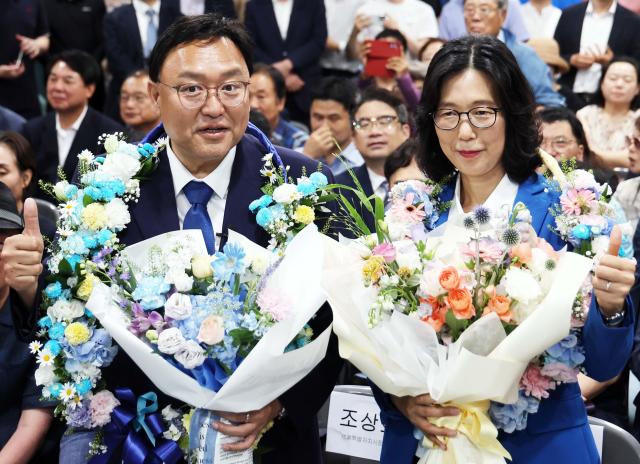
In the recent local elections, Jo Sang-ho, the newly elected mayor, pointed out these limitations directly and presented a vision to transform Sejong into an 'AI government capital.' He aims to develop Sejong into an AI hub and a practical economic city, creating a cycle of industry, jobs, and innovation. He also set a goal of investing 8.2 trillion won and creating 100,000 jobs by 2040.
The question is clear.
Can Sejong, South Korea's first administrative capital, become the country's first AI government capital?
Why should Sejong become an AI government capital?
Sejong's greatest asset is not its factories or ports, but its government.
Key central ministries, including the Ministry of Economy and Finance, the Ministry of Trade, Industry and Energy, the Ministry of Land, Infrastructure and Transport, and the Ministry of the Interior and Safety, are located here. Numerous policies are formulated in this city, and national budgets and industrial strategies are determined here. While other regions plan their futures around businesses, Sejong must design its future around government.
The problem is that being an administrative city alone limits growth. A high number of civil servants does not guarantee urban growth. Jobs, businesses, research and development, and an investment ecosystem must be created together. This is why Sejong has long faced debates about being a self-sufficient city.
Mayor Jo aims to address this issue through AI. He has announced plans to transform Sejong from a simple administrative city into an AI hub city. His vision is to change the administrative center into an economic city where industry, jobs, and investment create a virtuous cycle.
In fact, the government may be the first area that needs to change in the AI era. AI is not just a technology that innovates industries; it is a technology that changes how policies are created and how administration is executed. If Sejong is the heart of the South Korean government, it is likely to also be the starting point for the AI government revolution.
The era of AI transforming government is approaching.
In the past, government competitiveness was derived from the number of civil servants.
Later, it came from expertise.
However, in the AI era, the ability to utilize data is likely to determine government competitiveness.
Countries around the world are already entering the competition for AI administration. They are applying AI not only to automate simple civil complaints but also to policy design, budget analysis, disaster response, and welfare services. In the future, governments will need to create more accurate policies at lower costs.
Jo Sang-ho's proposal for 'AI City Sejong' aligns with this context. During his campaign, he held a press conference with former KT CEO Koo Hyun-mo, announcing plans to develop Sejong beyond a smart city into an AI city. He also proposed establishing a special AI committee directly under the mayor's office.
If Sejong transforms into an AI-based administrative city, what could happen?
Civil complaint processing could become faster. Policy effect analysis could become more precise. Identifying welfare blind spots could become possible. Urban operations could be conducted much more efficiently in areas such as transportation, energy, and safety.
Sejong already has experience as a smart city. It is now entering a phase of integrating AI into that foundation. While other cities experiment with AI industries, Sejong will be experimenting with AI governance.
Sejong's second challenge: becoming an AI hub and a self-sufficient economic city.
While it has the symbolic status of an administrative capital, its industrial base is weak. Concerns have been raised that when civil servants leave work, spending flows out of the city, and there is a lack of space for young entrepreneurs to start businesses.
To address this, Jo Sang-ho has proposed 'AI Hub, Practical Economic City Sejong.' He aims to invest 8.2 trillion won by 2040 to create 100,000 jobs.
His vision is not just about attracting businesses.
He aims to create an ecosystem that connects AI companies, startups, research institutions, and investment capital. Sejong is already adjacent to government-funded research institutions and national research organizations. If AI companies and a startup ecosystem are added, it could become a new type of innovative city.
Sejong's strength lies particularly at the intersection of policy and industry. The closer the government, which designs regulations, is to the companies developing technology, the faster innovation occurs. While Washington D.C. is the capital of policy, Sejong aspires to be a city where policy and technology converge in the AI era.
The future of Sejong is not about choosing between being an administrative city or an industrial city. It lies in connecting administration and industry.
Can Sejong become a testbed for South Korea's AI government?
In the AI era, national competitiveness is ultimately linked to government competitiveness.
While companies can create innovations, it is the government that creates the systems. The rules for data utilization, AI ethical standards, and digital transformation policies are ultimately determined by the government.
In this regard, Sejong is a unique city.
It is the most concentrated area of South Korea's policy-making system. Policies that succeed in Sejong are likely to spread nationwide.
Jo Sang-ho's vision for an AI city embodies this essence. He views AI not merely as an industrial policy but as a fundamental infrastructure for urban management. He aims to create a structure where AI assists administration, improves citizen services, and supports business activities.
If Sejong succeeds, it will not just be a case of regional development.
It could serve as a national model demonstrating how the South Korean government can effectively utilize AI.
If it fails, Sejong may remain just another administrative city.
Sejong is the latest metropolitan local government in South Korea.
However, in the AI era, it could become the first city to showcase the future.
Jo Sang-ho has declared his intention to make Sejong an AI hub city and an AI government capital. He aims to create a new urban model that connects administration and industry, policy and technology.
While Seoul dreams of becoming the world’s AI capital and Daejeon aspires to be the AI research capital, Sejong dreams of being the AI government capital.
If this challenge succeeds, Sejong could be recorded not just as an administrative capital but as the starting point of South Korea's digital government revolution.
Jo Sang-ho, a politician with a background in law, has advocated for the completion of the administrative capital and the expansion of its self-sufficiency since the early days of Sejong's establishment. In this local election, he presented 'AI Hub, Practical Economic City Sejong' as his core vision, promising to transform the administrative center into a self-sufficient city where industry, jobs, and investment create a virtuous cycle.
He has also pledged to establish a special AI committee under the mayor's office and promote AI-based administrative innovation. He has set a goal of investing 8.2 trillion won and creating 100,000 jobs by 2040, envisioning Sejong as South Korea's AI government capital.
* This article has been translated by AI.
Copyright ⓒ Aju Press All rights reserved.