

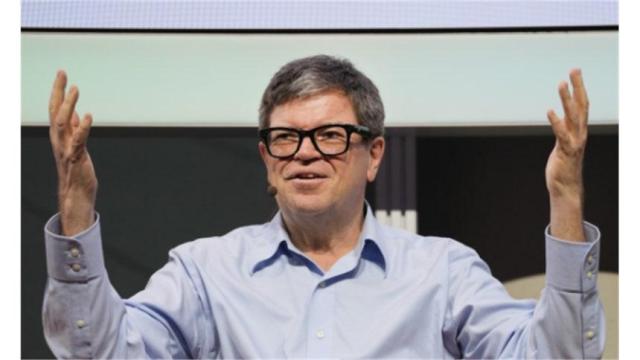
In an interview with CNBC on June 18, LeCun stated that xAI is "honestly a kind of failure" due to the departure of several founding team members. He expressed skepticism about Musk's ability to attract top talent back to the company.
LeCun, a Turing Award winner and former chief AI scientist at Meta, recently established AMI Labs after leaving the tech giant.
He also expressed doubts about xAI's expansion of its large server facilities, suggesting that leasing these facilities to external companies is a strategy to recover significant investment costs. According to Reuters, SpaceX has signed a contract to lease xAI's Colossus data center to Anthropic, while SpaceX's AI division reported a loss of $2.5 billion in the first quarter of this year.
LeCun's criticism extends to the AI industry as a whole. He noted that while fees for AI services are rising, the burden of server and energy costs is increasing, leaving many companies struggling to achieve profitability. He warned that if the current model of covering losses with investor funds continues, even leading firms like OpenAI and Anthropic could face pressure. "If they cannot raise prices or reduce operating costs enough to cover expenses, there could be a 'massive bubble burst' in the AI sector," he cautioned.
The industry is currently investing heavily in data centers, graphics processing units (GPUs), and power infrastructure. However, questions are growing about whether generative AI services are generating sufficient revenue to cover server operating costs. LeCun's comments highlight that the primary risk in expanding investments lies in profitability rather than technological performance.
He also addressed the limitations of large language models (LLMs), which predict the next word or sentence based on vast amounts of data. LeCun believes that this structure alone will not lead to the development of general AI capable of understanding the principles and causal relationships of the real world.
He sees the 'world model'—which comprehends the physical world and the consequences of actions—as a key technology for the next generation. According to Reuters, AMI Labs has secured $1.03 billion in funding for development in this area. LeCun envisions this technology being applicable in complex industries such as manufacturing, aerospace, and pharmaceuticals.
His remarks also carry implications for the semiconductor industry, which has benefited from increased investment in AI infrastructure. If the pace of service monetization does not keep up with investments in data centers and operating costs, there may be downward pressure on demand for GPUs, high-bandwidth memory (HBM), and server semiconductors.
* This article has been translated by AI.
Copyright ⓒ Aju Press All rights reserved.