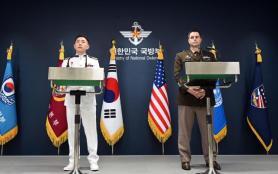
A ministry official declined to directly assess legislation still under consideration in Washington but said South Korea and the United States were closely consulting on the transfer of wartime operational control, or OPCON.
“The two sides are consulting closely based on a shared view that the transition should further strengthen the allies’ combined defense posture on the Korean Peninsula,” the official said.
“We are also actively explaining this position to the U.S. Congress,” the official added.
The Senate Armed Services Committee approved its version of the fiscal 2027 National Defense Authorization Act on June 11. The bill would require the U.S. defense secretary to submit reports every 90 days from March 1, 2027, through 2030 on progress in implementing the bilateral OPCON transfer roadmap.
The provision would require regular reports to Congress on how the allies are implementing their jointly agreed OPCON transfer plan, revised in 2018.
The reports would also include assessments from the commanders of U.S. Indo-Pacific Command and U.S. Forces Korea on South Korea’s progress toward meeting the conditions to assume OPCON.
Seoul plans to complete the full operational capability, or FOC, review of the future Combined Forces Command this fall and then propose a target year for the transfer.
The allies would then move to the final full mission capability, or FMC, evaluation to determine whether the command can carry out all of its assigned missions.
The proposed 90-day reporting requirement could take effect while that final evaluation is under way, potentially giving Congress a greater role in monitoring whether the required conditions have been met.
Some observers say the provision may reflect an effort within the Senate committee to give greater weight to the views of U.S. military commanders, who have emphasized that the transfer should proceed only after all agreed conditions are satisfied.
The NDAA still requires approval by the full Senate and House of Representatives, followed by reconciliation of the two chambers’ versions and the president’s signature.
Seoul is expected to stress to lawmakers that an early OPCON transfer is backed by the political leadership of both countries and is intended to strengthen, rather than weaken, the alliance’s combined defense posture.
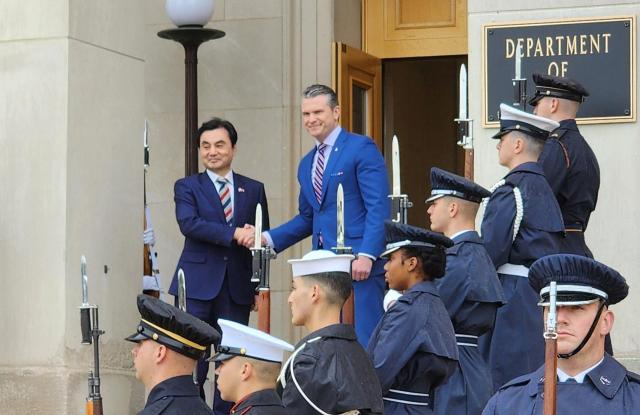
Defense Minister Ahn Gyu-back met U.S. senators and representatives on the sidelines of the Shangri-La Dialogue late last month and asked for bipartisan congressional support for the transfer.

Copyright ⓒ Aju Press All rights reserved.