

The South Korean financial industry is at a significant turning point. Beyond banks, credit cards, securities, and insurance, the capital sector is also being reshaped around AI and digital technologies. While the competitive edge of capital firms used to rely on funding capabilities and sales networks, the era has shifted to one where data, AI, and global networks determine competitiveness. At the forefront of this transformation is Jeong Hyung-jin, CEO of Hyundai Capital.
Jeong is a global finance expert recruited by Hyundai Motor Group from outside the company. After earning a degree in economics from Harvard University and a Ph.D. from Brown University, he spent nearly 25 years at Goldman Sachs before being appointed as the head of Hyundai Capital after extensive efforts by the group. The expectations placed on him by Hyundai Motor Group extend beyond mere financial management; they aim to combine AI, digital finance, and global capital markets to elevate Hyundai Capital into a global mobility finance company.
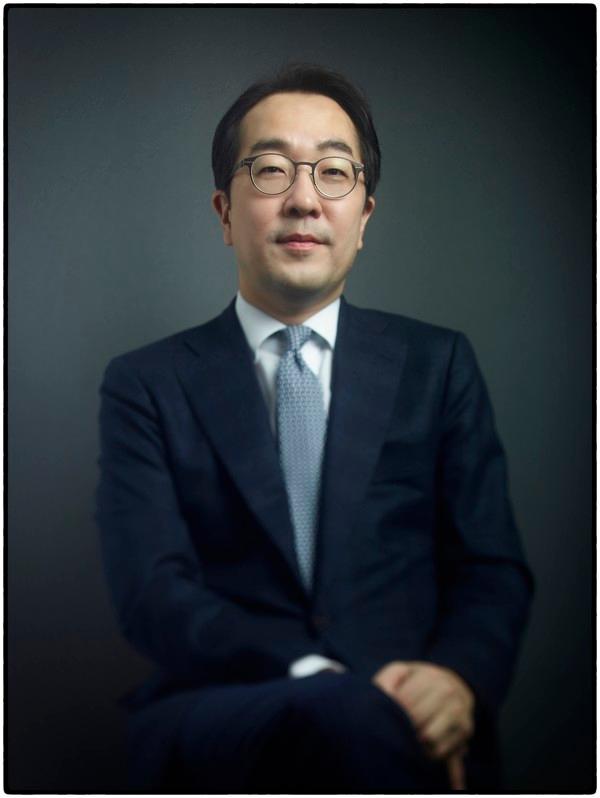
Jeong's management philosophy is clear: Hyundai Capital must evolve from being merely an auto financing company to a global mobility finance platform.
Since taking office, his focus has been more on international expansion than domestic operations. Hyundai Capital has launched a subsidiary in Australia and is working on establishing a presence in Indonesia. Currently, it operates in 14 countries with 20 subsidiaries, supporting the global sales expansion of Hyundai and Kia from a financial perspective.
Notably, last year, the net profit from overseas subsidiaries exceeded 300 billion won, marking a 57% increase from the previous year, and overseas assets have rapidly expanded. As a result, Hyundai Capital recorded a net profit of 511.4 billion won last year, surpassing the 500 billion won mark for the first time. The growth trend continued into the first quarter of this year.
However, Jeong's true strategic focus is not merely on international expansion but on building a global financial platform utilizing AI.
Auto finance is fundamentally a data-driven industry. Factors such as customer income, spending patterns, vehicle usage, maintenance history, and insurance information all influence financial decision-making. In the past, human judgment was paramount, but moving forward, AI will analyze and make decisions in real-time. Jeong understands this shift better than anyone. With experience in data analysis and capital markets from his time at Goldman Sachs, he believes AI will fundamentally change the structure of the financial industry.
Ultimately, the future Jeong envisions for Hyundai Capital is not just as an auto finance company but as an AI-driven mobility finance platform.
The most notable change under Jeong's leadership is digital innovation. Hyundai Capital plans to launch a new platform, 'Car & Asset,' in 2024. This platform aims to integrate automotive and financial services. It will feature an AI-based recommendation system designed to provide personalized vehicle and financial product offerings to customers. Clients will be able to explore vehicles, check estimates, and sign up for financial products all within a single platform.
In an official message, Jeong stated, "We will actively apply digital technologies led by AI at every customer touchpoint of Hyundai Capital." This is not merely a revision of a mobile app; it is a declaration to redesign the entire customer experience around AI.
As automotive finance becomes increasingly complex—with the rise of electric vehicles, autonomous cars, subscription services, used car platforms, urban air mobility, and robotics—the diversity of financial products will also grow. As areas requiring human judgment become more numerous, the role of AI will become even more critical.
For instance, AI can predict vehicle residual values, analyze customers' repayment capabilities, and recommend optimal leasing products. In the era of autonomous vehicles, operational and insurance data could be combined. Ultimately, the future of automotive finance will inevitably become AI finance.
Jeong is not just following these changes; he is aiming to lead them.
Another characteristic of Jeong's leadership is his emphasis on global standards. Hyundai Capital has obtained ISO certifications in various areas, including anti-corruption, information security, and data privacy. This reflects his belief that trust is as crucial as technology for growing into a global financial company.
The financial industry in the AI era faces two types of competition: technological competition and trust competition. As AI analyzes customer information and assesses loans, data protection and ethical usage become increasingly important. Globally, AI finance is also prioritizing transparency and accountability as core values.
Jeong, with his background in global investment banking, emphasizes the balance between technological innovation and risk management. Indeed, Hyundai Capital has received an A rating from all three major global credit rating agencies—Moody's, Fitch, and S&P—for the first time in its history. This recognition reflects the acknowledgment of Hyundai Capital's financial soundness and global competitiveness by overseas investors.
In an era where AI is transforming the financial industry, trust is more important than technology. Jeong understands this better than anyone as a global finance expert.
The essence of entrepreneurial spirit is to foresee the future.
Entrepreneurship is not solely the domain of founders. It also applies to leaders who discover new markets and prepare for the future ahead of others.
Although Jeong has been with Hyundai Capital for less than two years, he has already provided a clear direction. He is not limiting himself to competition in the domestic capital market but is pushing for expansion into the global market and transitioning from an auto finance company to an AI-based mobility finance platform.
This shift is ultimately connected to Hyundai Motor Group's future strategy. If Hyundai aims to transform from an automotive company into a mobility enterprise, Hyundai Capital must also evolve from a financial company into a mobility finance platform. Jeong is the architect of that change.
The future Jeong is creating for Hyundai Capital is not just as a financial institution that facilitates car purchases. It is a new financial ecosystem that connects customers' mobility and assets based on AI, data, and a global network. As the AI finance revolution unfolds over the next decade, all eyes are on whether Hyundai Capital can establish itself as a leader in global mobility finance and whether Jeong will become the first CEO to be reappointed at Hyundai Capital.
:SWOT Analysis:
Strengths:
Jeong is a global finance expert with experience as the representative of Goldman Sachs in Korea. His educational background includes a degree in economics from Harvard and a Ph.D. from Brown, providing him with extensive experience in global capital markets. Additionally, he can leverage the strong manufacturing base of Hyundai and Kia along with Hyundai Capital's global network.
Weaknesses:
He has relatively less experience in traditional consumer finance. Furthermore, the business structure linked to Hyundai's sales may be affected by fluctuations in the automotive industry.
Opportunities:
The spread of AI finance, growth in the electric and autonomous vehicle markets, and the expansion of global mobility finance present significant opportunities for Hyundai Capital. The growth of data-driven financial services in India and Southeast Asia is also positive.
Threats:
Global economic slowdown, decreased vehicle sales, increased interest rate volatility, and the entry of fintech and big tech companies into the financial market pose threats. As AI utilization expands, issues related to data privacy and financial regulation are expected to become increasingly important.
* This article has been translated by AI.
Copyright ⓒ Aju Press All rights reserved.