

The Korea Broadcasting Advertising Corporation (Kobaco), the National Park Service, and the Korea International Cooperation Agency (KOICA) received the lowest rating of very poor (E) in this year's public institution management evaluation. A total of 16 institutions received ratings of poor or below, an increase of three from the previous year. With warnings issued to many heads and auditors due to poor performance and serious accidents, pressure for improvement in public institutions is expected to rise.
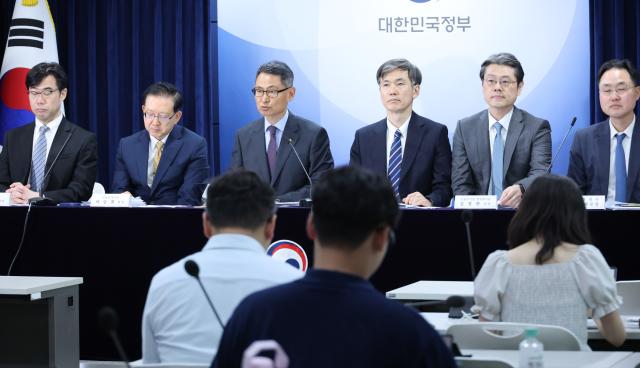
On June 19, the Ministry of Finance held the 7th Public Institution Operation Committee meeting, chaired by Deputy Prime Minister and Minister of Finance Gu Yoon-cheol, to review and approve the results of the 2025 public institution management performance evaluation and subsequent measures.
This evaluation covered a total of 88 institutions, including 31 public enterprises and 57 semi-government agencies. No institutions received an excellent (S) rating. There were 15 rated as good (A), 29 as fair (B), 28 as average (C), 13 as poor (D), and 3 as very poor (E).
The total number of institutions rated poor or below is now 16, up from 13 last year. The number of institutions rated good remained the same at 15, but the number rated average decreased from 31 to 28, while those rated poor increased from 9 to 13.
By type, public enterprises had 6 rated as good, 10 as fair, 10 as average, 4 as poor, and 1 as very poor. Semi-government agencies had 9 rated as good, 19 as fair, 18 as average, 9 as poor, and 2 as very poor.
The number of public enterprises rated poor or below decreased from 7 last year to 5 this year. In contrast, the number of semi-government agencies increased from 6 to 11 during the same period, indicating that the overall increase in poor ratings is driven by the underperformance of semi-government agencies.
The institutions rated very poor include: Kobaco, the National Park Service, and KOICA. Those rated poor include: SR Corporation, Jeju Free International City Development Center, Korea Sports Promotion Foundation, Korea Land Information Corporation, Korea Mine Rehabilitation and Mineral Resources Corporation, Korea Industrial Human Resources Corporation, Korea National Oil Corporation, Korea Elevator Safety Agency, Korea Research Foundation, Korea Internet & Security Agency, Korea Asset Management Corporation, Korea Maritime Traffic Safety Authority, and Korea Environmental Industry Technology Institute, totaling 13.
The public enterprises rated good are: Korea Southeast Power, Korea Southern Power, Korea Hydro & Nuclear Power, Korea Electric Power Corporation, Korea Minting and Security Printing Corporation, and KEPCO KDN, totaling 6. Among semi-government agencies, the following 9 received good ratings: Health Insurance Review and Assessment Service, National Pension Service, Korea Workers' Compensation and Welfare Service, Korea Trade-Investment Promotion Agency, Korea Deposit Insurance Corporation, Korea Gas Safety Corporation, Korea Transportation Safety Authority, Korea Trade Insurance Corporation, and Korea Industrial Technology Promotion Agency.
The government explained that institutions that effectively pursued major projects or actively implemented national tasks, achieved excellent results in preventing safety accidents for workers and partner companies, and demonstrated outstanding innovation using artificial intelligence (AI) received higher evaluations. Conversely, institutions that performed poorly in executing major projects or showed deficiencies in financial and safety management received poor ratings.
Follow-up measures will follow the management evaluation results. The 16 institutions rated poor or below must submit management improvement plans, and the government will provide management improvement consulting for these institutions. Their operational budgets for 2027 will also be cut by 0.5% to 1%.
Personnel actions for heads of institutions will also take place. Among the 7 heads of institutions rated very poor, 2 currently in office from the Government Employees Pension Service and KOICA are subject to dismissal recommendations. Heads from the National Railway Authority, SR Corporation, Korea Industrial Human Resources Corporation, Korea National Oil Corporation, and Korea Energy Agency are excluded from dismissal recommendations as they are no longer in office.
Warnings will also be issued for underperformance. Of the 17 heads rated poor, 12 currently in office are subject to warnings. The institutions involved include: National Ecology Institute, Grand Korea Leisure, Post Office Financial Development Institute, Post Office Logistics Support Group, Korea Employment Information Service, Korea Mine Rehabilitation and Mineral Resources Corporation, Korea Land Information Corporation, Korea Veterans Welfare Medical Corporation, Korea Oil Management Corporation, Korea Forest Service, Korea Internet & Security Agency, and Korea Employment Agency for the Disabled.
Among the 15 institutions where serious accidents occurred last year, 11 heads currently in office will receive warnings. These institutions include: National Park Service, Korea Gas Corporation, Korea Rural Community Corporation, Korea East-West Power, Korea Western Power, Korea Water Resources Corporation, Korea Asset Management Corporation, Korea Electric Safety Corporation, Korea Electric Power Corporation, Korea Environmental Corporation, and KEPCO KPS. Institutions such as Incheon International Airport Corporation, Korea Expressway Corporation, Korea Railroad Corporation, and Korea Land and Housing Corporation are excluded from warnings as their heads were not in office at the time.
One head from the Korea Industrial Human Resources Corporation, which received a poor (D) rating in the audit evaluation, is also subject to a warning. The institutions rated poor in the audit evaluation include: National Health Insurance Corporation, Korea Trade-Investment Promotion Agency, Korea Tourism Organization, Korea Broadcasting Advertising Corporation, Korea Industrial Human Resources Corporation, and Korea National Oil Corporation.
The government plans to distribute performance bonuses based on evaluation results. Employees of institutions rated average or above will receive bonuses according to their institution type and rating, while those in institutions rated poor or below will face disadvantages in bonus payments and budgetary measures. Heads of institutions rated poor or below will not receive performance bonuses.
Institutions recognized for their job-centered compensation system will receive an additional 0.1% of total personnel costs for the 2026 job-based salary fund. The institutions eligible for this are: Korea Housing and Urban Guarantee Corporation, Korea Southeast Power, Korea Railroad Corporation, Korea Trade Insurance Corporation, and Korea Atomic Energy Environment Corporation.
The Ministry of Finance stated that this evaluation placed significant emphasis on the efforts and achievements of institutions in carrying out their core responsibilities, including major projects and national tasks. It also highlighted the need to strengthen evaluations of social responsibilities such as safety and environmental sustainability, while comprehensively reflecting efforts to improve financial soundness and operational efficiency, as well as innovative achievements utilizing AI.
A government official stated, "For institutions with poor performance, we will encourage improvements through the establishment of management improvement plans and consulting, ensuring that public institutions fulfill their core responsibilities and achieve innovative results that the public can feel."
* This article has been translated by AI.
Copyright ⓒ Aju Press All rights reserved.