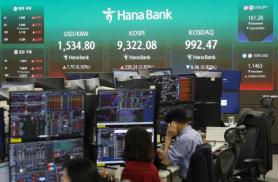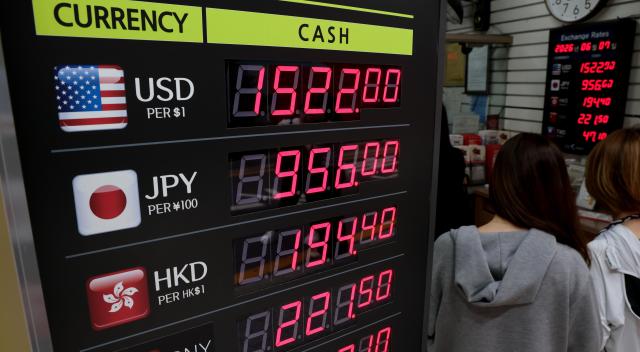
The won averaged 1,521 per dollar through June 19, based on weekly closing prices at 3:30 p.m., according to the Bank of Korea's Economic Statistics System.
That marks the highest monthly average since February 1998, when the rate stood at 1,626.7 during the height of the crisis, and sits about 70 won above the 1,453.3 average of March 2009, the worst stretch of the global financial crisis.
The currency has held above 1,500 for several consecutive sessions since June 15, when it closed at 1,500.8 — the longest such run since the crisis-era stretch from late December 1997 to March 1998.
Analysts attribute the slide to a mix of factors.
The dollar index, which measures the greenback against six major currencies, climbed as high as 101.123 on June 19, its strongest in about 13 months, after the Federal Reserve struck a hawkish tone at its June 18 meeting and flagged lingering inflation concerns.
Foreign investors have compounded the pressure, dumping a large volume of Korean shares this year even as their ownership share paradoxically rose to 41.03 percent by June 19 from 36.27 percent at the end of last year — a sign that the stocks they hold have rallied sharply.
The won's troubles come against a turbulent backdrop.
The currency had already breached 1,520 in early April after U.S. President Donald Trump's hardline remarks on Iran rattled markets, while Washington redesignated South Korea to its currency monitoring list in January, citing a current-account surplus that had widened to 5.9 percent of GDP.
Stalled working-level talks between Washington and Tehran have added further upward pressure on the rate.

Copyright ⓒ Aju Press All rights reserved.