

The novelty is drawing shoppers, but also closer scrutiny as Korean regulators flag bacterial contamination, high sodium and labeling problems in some imported products.
The Chinese packaged fish snack, bought from an unmanned store in downtown Seoul, looked as forceful as its smell. Small anchovies were tangled under a thick, dark-red coating of seasoning and oil that streaked the plate as they were lifted from the bag.
The first bite delivered salt, chili and seafood all at once. The fish were unusually firm and chewy, followed by a bitter finish that remained after the heat faded.
The experience was sensory, not scientific. Nothing about the smell, appearance or taste showed that the product was unsafe.
But the bag sits inside a much broader shift in Korean retail — and a growing food-safety question.
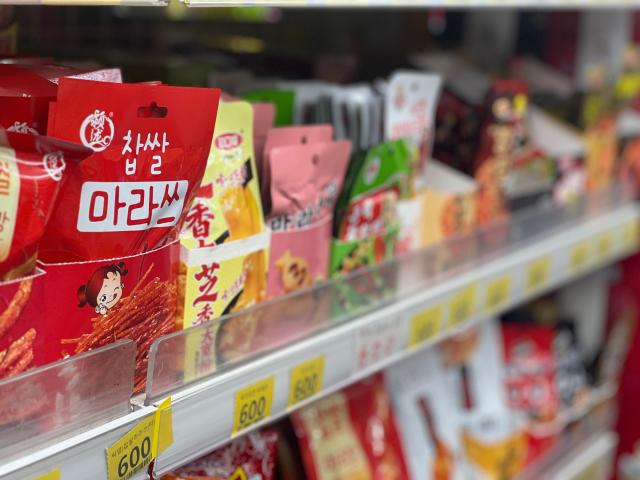
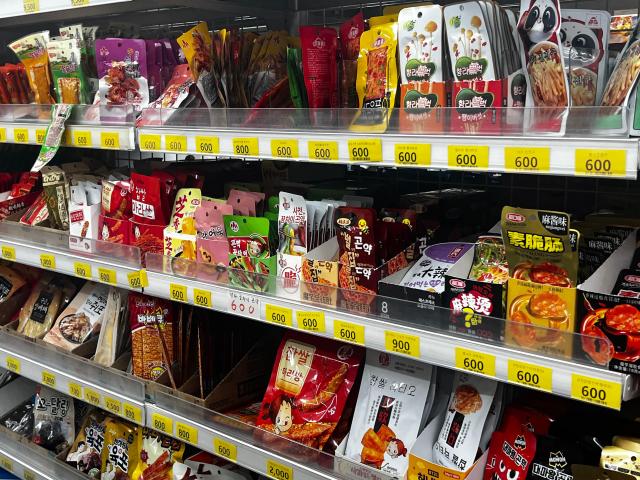
Chinese snacks that were rarely seen in Korea a few years ago are now increasingly common in unmanned stores, where mala-soaked konjac strips, latiao, spicy dried seafood, tofu snacks and brightly colored jellies sit beside Korean chips and candy, often with no employee present to explain what they contain or check the shelves.
Recent government testing has found that most products examined met key safety standards, but some showed problems ranging from bacterial growth and inaccurate nutrition labels to excessive sodium, sugar and potentially damaging hardness.
The findings do not establish that Chinese-made snacks as a category are unsafe. They instead highlight the challenge of policing a fast-growing imported-food market as unfamiliar products spread through a retail format built around minimal staffing.
On June 9, the Korea Consumer Agency released results from tests of 20 imported snacks sold around elementary schools.
Before selecting the products, the agency surveyed 36 unmanned ice cream and stationery stores in the Chungcheong region between
December 2025 and January 2026. It tested 10 mala-flavored snacks and 10 candies or drinks.
One product produced a clear safety failure.
A mala-flavored konjac snack called Hyangrawei Seol Gonyak showed bacterial growth despite being classified as a retort food, a category that must test negative for bacterial development under Korean food standards.
The Consumer Agency recommended that importer Yoonjin Trading halt sales and provide refunds. The importer told the agency in April that no inventory from the affected batch remained in circulation and that buyers would be eligible for refunds.
All 20 products met Korean standards for heavy metals and food additives.
The agency nevertheless found problems with nutrition, labeling and the physical characteristics of some snacks.
The 10 mala products contained between 120 and 674 milligrams of sodium per package. Two — Geumdaeju spicy enoki mushrooms at 674 mg and glutinous-rice latiao at 659 mg — contained enough that two packages would reach the recommended adequate daily sodium intake of 1,300 mg for children aged 9 to 11.
Fat content ranged from 1 percent to 13 percent of total product weight, averaging about 6 percent, reflecting the use of soybean oil and flavored oils in many mala products.
The Consumer Agency said that raised the need for closer monitoring of oxidation and rancidity during manufacturing and storage.
Another product posed a more physical risk.
An imported freeze-dried jelly sold as ASMR Crunchy Earth-Shaped Freeze-Dried Jelly reached a maximum hardness of 118 newtons in testing, compared with an average chewing force of 47.6 newtons for children aged 6 to 11 cited by the agency.
The agency warned that biting products that hard could damage teeth or strain the jaw. The importer subsequently agreed to stop importing and selling the product.
Sugar and calorie levels were another concern.
A 180-gram package of blueberry-flavored chewy jelly contained 642 calories and 55 grams of sugar. The sugar alone exceeded the agency's 45-gram daily added-sugar guideline for children aged 9 to 11.
Five of the 20 products also had measured nutrient levels outside permitted labeling tolerances, with some differing substantially from what was stated on the packaging.
The Consumer Agency called for tighter quality control by importers and stronger monitoring by the Ministry of Food and Drug Safety for newer categories of imported snacks.
"Consumers should be cautious of excessive sodium and sugar intake when eating imported snacks, and take care with hard freeze-dried jellies because of the risk of dental damage," a Consumer Agency official said.
For consumers, however, the questions begin well before laboratory testing.
A walk through unmanned snack stores in Seoul now reveals entire shelves of products whose names, ingredients and textures may be unfamiliar to many Korean shoppers.
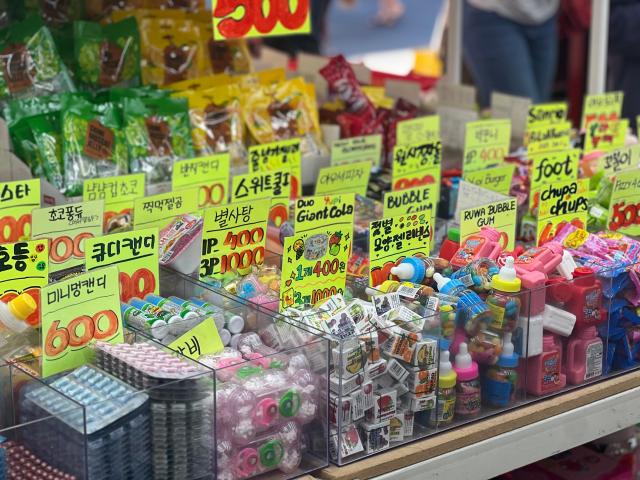
For some, that novelty is the attraction.
"There are way too many options for me to choose from," said Saige Greenley, 31, an American tourist on her fourth trip to Korea who has been staying in the Euljiro neighborhood and exploring the city by subway.
Greenley said she had noticed more international snack stores on this trip. Chinese snacks, however, were a harder sell.
"My friend tried one a couple of days ago and she had a hard time dealing with the spice and the smell," Greenley said.
She said the texture was unlike a conventional bag of chips and that she still preferred Korean snacks, which she described as "like American chips but in different, unique flavors."
Some Korean consumers are more cautious.
Kim Sun-young, a 28-year-old office worker in Seoul's Gangseo district, said she regularly eats mala hot pot but avoids packaged Chinese snacks.
"The packaging alone makes me reluctant to pick it up," Kim said. "I also read a news article about Chinese snacks a while back, and that's made it even harder for me to eat them."
Kim said tanghulu, the candied-fruit skewer, was about the only Chinese snack she still eats. She has never tried the packaged konjac products commonly displayed in unmanned stores.
Several of her friends, however, like the snacks precisely because they are cheap and strongly flavored, she said.
The consumer unease comes against a much larger flow of imported food.
South Korea received more than 874,000 import declarations for food and food-related products in 2025, up 3.3 percent from a year earlier, according to the Ministry of Food and Drug Safety. Their total value reached $36.6 billion.
Of those inspected, 1,420 cases were ruled noncompliant, equivalent to 0.16 percent.
Confectionery was among the categories most frequently involved, alongside fruit and vegetable products and certain food-contact materials. Violations included failures to meet ingredient or manufacturing standards, excessive pesticide residues and microbiological problems.
The low overall failure rate matters.
Regulators do find imported foods that fail Korean standards, but those cases are not evidence that imported food — or Chinese food in particular — is broadly unsafe.
The more immediate concern may be what happens after the products clear the border.
Data provided by the Ministry of Food and Drug Safety to lawmaker Lee Ju-young showed 45 cases in which unmanned food stores were caught selling products past their consumption dates between 2022 and September 2025. Thirty-nine resulted in fines and six in business suspensions.
The violations were not confined to Chinese imports.
They instead exposed a broader weakness of unmanned retail: there is no clerk continuously checking consumption dates, refrigeration equipment or damaged packaging.
That leaves more responsibility with consumers standing in front of shelves filled with products they may never have seen before.
The Jinzai anchovies bought by AJP were not laboratory-tested and cannot be judged unsafe from taste, smell or appearance.
But the bag helps explain why the category is drawing attention.
Chinese snacks are becoming cheaper, more visible and easier to buy across Korea. As their presence grows, so does the need to distinguish between unfamiliarity and actual risk — and to make sure the system catching the latter keeps pace.

Copyright ⓒ Aju Press All rights reserved.
