

Data is the oil of the AI era, and semiconductors are the engines that drive data. While the world seems to be in an AI race, it is actually engaged in a competition for semiconductor supremacy. The United States is leading with companies like NVIDIA and AMD, while China is mobilizing its national resources to catch up. South Korea is also positioning its semiconductor competitiveness as a national survival strategy. In this context, Yongin is emerging as a focal point.
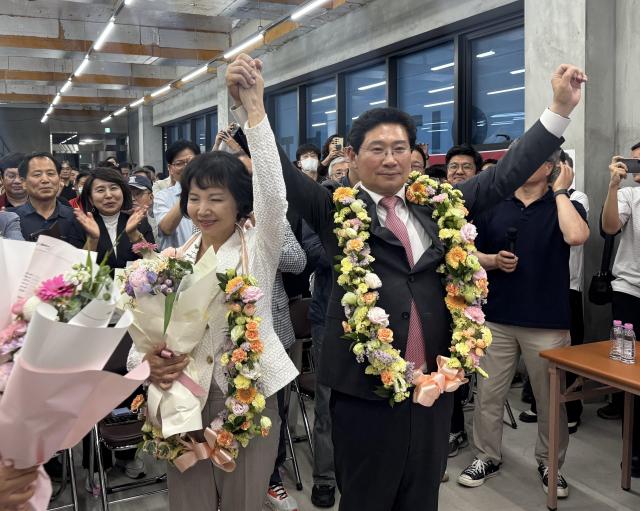
This city is home to both Samsung Electronics' advanced system semiconductor national industrial complex and SK Hynix's semiconductor cluster. Mayor Lee Sang-il, who has been re-elected, envisions transforming Yongin from a mere industrial complex into a vibrant 'Yongin Silicon Valley' that fosters an AI and semiconductor startup ecosystem. A key pledge includes the establishment of a 1 trillion won 'Silicon Yongin Fund' to support AI and semiconductor startups.
The question remains: Can Yongin leap from being the largest semiconductor city to becoming a global AI Silicon Valley?
In an era where semiconductors define national competitiveness, Yongin stands at the forefront.
If the automobile symbolized the 20th-century industrial revolution, semiconductors are the hallmark of the 21st-century AI revolution. As generative AI spreads, the demand for GPUs and memory semiconductors increases. The semiconductor requirements for a single AI server now surpass those of past supercomputers. Ultimately, the outcome of the AI competition is likely to hinge on semiconductor prowess.
Yongin is poised to be the biggest beneficiary of this shift. The simultaneous establishment of Samsung's national semiconductor industrial complex and SK Hynix's semiconductor cluster marks a significant development. This is not just a single industrial complex; it represents a vast ecosystem where design, production, materials, equipment, research and development, and workforce training converge.
Mayor Lee is actively leveraging this trend. He has stated his intention to develop Yongin into a global AI semiconductor hub, going beyond merely constructing factories to creating a structure where businesses, universities, research institutions, and startups can thrive together.
Historically, Ulsan's automotive industry and Pohang's steel sector drove the South Korean economy. In the future, Yongin's semiconductor industry is likely to play a pivotal role in shaping the nation's economic landscape.
Can the dream of a Yongin Silicon Valley and a startup city become a reality?
Among Mayor Lee's most notable pledges is the creation of a 'Yongin Silicon Valley.'
While many local governments talk about attracting businesses, he emphasizes the importance of a startup ecosystem. The strength of Silicon Valley in the U.S. is not due to the number of factories but rather the continuous emergence of new companies.
Mayor Lee has announced plans to expand the Yongin Industrial Promotion Agency and establish an incubating and accelerating system to focus on nurturing AI and semiconductor startups. He also plans to create a 1 trillion won 'Silicon Yongin Fund' and operate a separate youth fund to promote entrepreneurship among young people.
This approach is quite significant.
Although the semiconductor industry is often viewed as dominated by large corporations, innovation frequently stems from startups. NVIDIA, for instance, began as a small startup. In the AI era, innovative companies can create greater value than massive factories.
For Yongin to truly become a semiconductor city, it will need thousands of AI and semiconductor startups to emerge alongside Samsung and SK Hynix. Mayor Lee's vision of a Silicon Valley aims to address this need.
The key to the AI era is talent.
While semiconductor factories can be built with money, talent cannot be created solely through financial means.
The fiercest competition in the AI era is for talent acquisition. This is why major U.S. tech companies are offering exorbitant salaries to attract AI researchers.
Yongin has advantages in terms of talent as well. It is home to major universities such as Kyung Hee University's International Campus, Dankook University, Myongji University, and Hankuk University of Foreign Studies' Global Campus. Its geographical location in the metropolitan area is also a plus.
Mayor Lee has stated his intention to connect universities and businesses to cultivate AI and semiconductor specialists and strengthen the research and development ecosystem.
Ultimately, the competitiveness of the AI industry will stem from its people. No matter how advanced an industrial complex is, it cannot maintain competitiveness without skilled engineers and researchers.
The strength of Silicon Valley is partly due to the presence of Stanford and Berkeley. Boston's status as a biotech hub is also linked to MIT and Harvard.
For Yongin to evolve from a semiconductor city to an AI innovation city, it must become a place that attracts talent. The future of the semiconductor industry also depends on its people.
Transportation and living conditions are the final pieces of the puzzle for a global industrial city.
Industrial competitiveness cannot be achieved through factories alone.
It must become a city where global talent wants to live. This is why Mayor Lee emphasizes the expansion of the GTX and railway networks and improvements in regional transportation. Creating an environment where AI engineers and semiconductor researchers can move conveniently is essential for achieving global competitiveness.
Yongin is already one of the largest cities in the metropolitan area. However, in the future, the quality of the city will become more important than just population size. Education, culture, housing, and transportation must develop together for Yongin to grow into a world-class advanced industrial city.
Moreover, the semiconductor industry is a long-term endeavor. It requires continuous investment and the ongoing attraction of talent and companies over decades. To achieve this, a favorable living environment and urban competitiveness are essential.
Ultimately, Yongin's true competitors are not other domestic cities.
They are global innovation cities like Silicon Valley in the U.S., Austin in Texas, and Hsinchu Science Park in Taiwan.
Beyond being the AI semiconductor capital, Yongin aspires to become the capital of AI civilization.
So far, Yongin's success formula has been semiconductors.
However, in the future, AI must also play a role.
Semiconductors are the infrastructure of the AI era. But true industrial revolution begins when AI services, robotics, autonomous driving, and biotechnology are interconnected.
This is why Mayor Lee emphasizes the importance of establishing an AI and semiconductor startup city. To secure future competitiveness, it is crucial to build an ecosystem that fosters both semiconductor production and AI innovation.
A global city in the AI era is not merely a production base. It is an innovation platform where technology, capital, talent, and entrepreneurship continuously circulate.
If Yongin can become such a city, South Korea will take a significant leap in the AI semiconductor competition.
Yongin is currently the site of South Korea's most important industrial experiment.
With the dual pillars of Samsung Electronics and SK Hynix, AI, startups, research and development, and talent cultivation are being integrated.
Mayor Lee has declared his intention to make Yongin a world-class AI semiconductor city and a Silicon Valley-style startup city. The establishment of the 1 trillion won Silicon Yongin Fund and the creation of an AI and semiconductor startup ecosystem are at the core of this vision.
If this vision succeeds, Yongin could establish itself as the heart of South Korea's future industries, transcending its status as a mere special city.
In the AI era, the winners may not be the cities that produce the most semiconductors.
Rather, the cities where semiconductors, AI, startups, and talent grow together are more likely to emerge as the true victors.
:Mayor Lee Sang-il of Yongin:
A politician with a background in journalism, he has served as a member of the National Assembly and is now leading Yongin City for the second consecutive term. He has been recognized for his proactive administrative support during the establishment of Samsung Electronics' advanced system semiconductor national industrial complex and SK Hynix's semiconductor cluster, helping to elevate Yongin as the center of South Korea's semiconductor industry.
In this local election, he presented the creation of a 'Yongin Silicon Valley' as a core vision and promised to foster an AI and semiconductor startup city. Notably, he plans to establish a 1 trillion won 'Silicon Yongin Fund' to support youth entrepreneurship and technological startups, aiming to build an innovation ecosystem centered on AI and semiconductors. His goal is to grow Yongin into a world-class AI innovation city, not just a semiconductor production hub.
* This article has been translated by AI.
Copyright ⓒ Aju Press All rights reserved.