

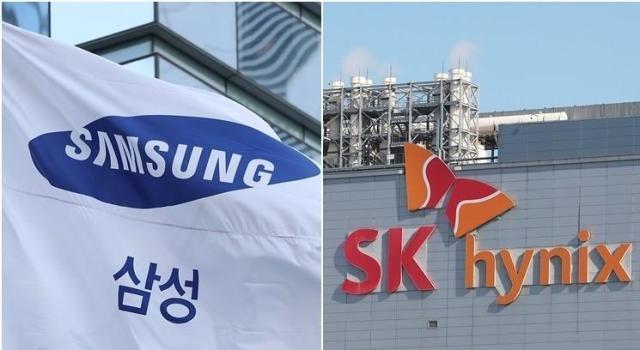
As the first half of the year comes to a close, Samsung Electronics and SK Hynix have significantly influenced the domestic stock market's performance. Indices that include either of these two stocks have seen returns more than double since the beginning of the year, while indices without them have recorded maximum returns in the 70% range. Analysts suggest that the market is increasingly focused on these semiconductor leaders, intensifying a trend of concentration.
According to the Korea Exchange on June 21, an analysis of the returns of 36 major KRX indices from January 2 to June 19 shows that all of the top 11 performing indices included at least one of Samsung Electronics or SK Hynix.
The top-performing index was the KRX SK Hynix index, which recorded a return of 324.58%. It was followed by the KRX Information Technology index at 224.79%, the KRX 300 Information Technology index at 214.35%, the KRX Samsung Electronics index at 195.25%, the KRX Semiconductor index at 193.38%, the KRX 100 at 144.38%, the Korea Value-Up index at 135.25%, the KRX 300 at 131.02%, the KRX Large and Mid Cap TMI at 125.16%, the KRX TMI at 119.17%, and the KTOP 30 at 111.09%. All of these top 11 indices exceeded 100% returns, with an average return of approximately 174%.
This surge is attributed to a global semiconductor rally driven by increased investments in artificial intelligence (AI) and expectations of improved conditions in the memory semiconductor sector.
In contrast, indices that do not include Samsung Electronics and SK Hynix have significantly underperformed. The highest return among these indices was recorded by the KRX Construction index at 73.77%, followed by the KRX 300 Industrials at 69.22% and the KRX Insurance index at 68.22%. Some sectors, such as KRX Healthcare (-17.36%) and KRX K-Content (-16.89%), reported negative returns, highlighting a stark contrast with the large-cap semiconductor stocks.
Amid this situation, the concentration of funds in the semiconductor sector has intensified this month. The average daily trading volume on the KOSPI market has decreased by 26.4% from last month, dropping to 514.27 million shares from 698.79 million shares. While the average daily trading volume for Samsung Electronics fell from 34.6 million shares to 32.1 million shares, and for SK Hynix from 6.21 million shares to 5.35 million shares, the overall market's decline in trading volume was more significant, leading to an increased share of trading volume for these stocks.
Samsung Electronics' trading volume share rose from 4.95% last month to 6.24% this month, while SK Hynix's share increased from 0.89% to 1.04%. The trading volume share for other large-cap stocks, such as Hyundai Motor, has decreased, while shares related to semiconductor giants like Samsung Life, Samsung C&T, and SK Square have increased.
Kim Rok-ho, a researcher at Hana Securities, stated, "General DRAM is expected to drive performance from the second half of this year into next year, and by 2027, HBM4 will lead to further improvements. There is a high likelihood of price negotiations reflecting the increase in average selling prices (ASP) due to the expanded share of HBM4 and the strong prices of general DRAM, which could lead to upward revisions in performance forecasts for 2027."
* This article has been translated by AI.
Copyright ⓒ Aju Press All rights reserved.