

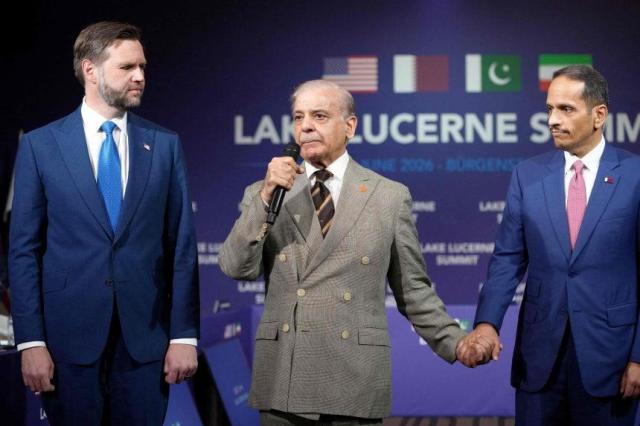
Negotiations between the United States and Iran regarding a peace agreement have encountered significant setbacks from the outset. Tensions escalated following remarks by President Donald Trump, which prompted a backlash from the Iranian delegation and confusion over their participation in the talks.
According to Reuters, Iranian news agency Tasnim reported on June 21 that the Iranian negotiating team left the talks in Switzerland in response to Trump's threatening comments. The Iranian state news agency IRNA also noted that the four-party meeting, which included Pakistan and Qatar as mediators, was suspended after 80 minutes, leading to the Iranian delegation's exit and a deadlock in negotiations.
However, AFP cited diplomatic sources familiar with the negotiations, stating that the Iranian team remained engaged and had not officially communicated any intention to withdraw to the mediators. This raises questions about whether the negotiations have completely halted or if separate discussions are still ongoing.
This round of negotiations marks the first high-level follow-up talks since the signing of a memorandum of understanding (MOU) between the US and Iran. The meeting took place at the Bürgenstock resort near Lucerne, with US Vice President JD Vance leading the American delegation. The Iranian side was represented by Mohammad Bagher Ghalibaf, the Speaker of Parliament, and Abbas Araghchi, the Foreign Minister.
The immediate trigger for the conflict was Trump's comments. On the same day, he warned via social media platform Truth Social that if Iran does not cooperate regarding issues involving pro-Iranian groups like Hezbollah, the US could take stronger military action. Iranian state television PressTV reported that the Iranian delegation officially protested these remarks to the US side.
Speaker Ghalibaf responded, stating, "We do not take the US threats seriously," adding that "our military is prepared to respond in other ways."
Iran has emphasized that stabilizing the Lebanon front and implementing the peace agreement take precedence over nuclear issues in the initial talks. A member of the Iranian negotiating team told local media, "If the war in Lebanon does not end, negotiations on other topics will not proceed."
In contrast, the US views limiting Iran's nuclear program, resuming inspections by international organizations, and ensuring stability in the Strait of Hormuz as key issues for follow-up negotiations. Vice President Vance stated before the talks that if Iran ceases actions that escalate tensions in the Middle East and ultimately abandons its nuclear weapons, the US could fundamentally change its relationship with Iran.
* This article has been translated by AI.
Copyright ⓒ Aju Press All rights reserved.