

According to the Canadian Press on June 21, the Canadian government is preparing to select a supplier for up to 12 submarines to replace its aging fleet. The project is expected to be worth up to 60 trillion won, and the government is anticipated to announce a preferred bidder soon, ahead of the NATO summit in July.
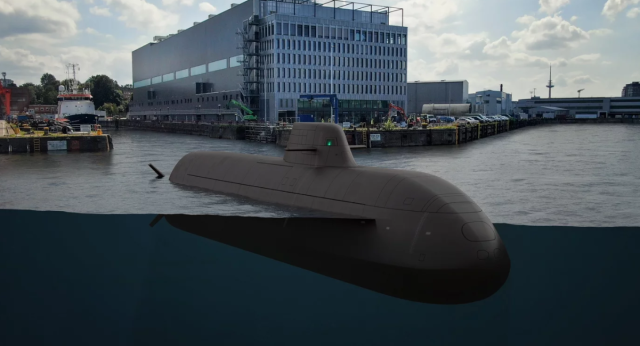
The competition features Hanwha's KSS-III submarine against TKMS's 212CD model. Oliver Burkhardt, CEO of TKMS, remarked at the CANSEC defense exhibition in May that Hanwha's advertising efforts were "honestly, this is crazy," adding, "We are not used to this kind of approach."
Hanwha has launched a major advertising campaign promoting the KSS-III submarine at key Canadian airports, on television, and streaming platforms. The campaign even features Canadian broadcasting icon Peter Mansbridge and has reached not only coastal areas but also inland cities like Winnipeg and Calgary.
Hanwha explained that the advertising goes beyond mere promotional efforts for the contract; it is part of a long-term branding strategy. Glen Copeland, CEO of Hanwha Canada, stated, "This is about brand awareness and helping people understand what our capabilities are," emphasizing that "Hanwha is a very strong company."
In response, Burkhardt pointed out that traditional submarine manufacturers in France, Spain, Italy, the UK, and Sweden do not engage in such advertising. He noted, "Submarines are not typically visible weapons," and that competition usually focuses on what submarines can actually do, targeting government rather than the public.
He added, "If they succeed, we can say it was a brilliant strategy thanks to the advertising, but if they fail, they become the most famous losers."
TKMS is highlighting that Germany and Norway are adopting the same 212CD model, arguing that interoperability among NATO member states enhances operational cooperation. The 212CD is a new design model that has not yet entered mass production, featuring a diamond-shaped hull to reduce sonar detection.
In contrast, Hanwha emphasizes its rapid delivery and large shipbuilding capacity. Reports indicate that Hanwha plans to deliver four submarines by 2035, with one additional submarine each year thereafter. The KSS-III is larger than the 212CD, offering more internal space and the capability to launch ballistic or cruise missiles from vertical launch systems.
The Canadian Press notes that the Canadian government is placing significant weight on the economic impact and strategic partnerships in this procurement process, alongside submarine performance. Canadian Industry Minister Mélanie Joly has publicly stated that she hopes bidding companies will propose ways to support the Canadian automotive industry.
Experts believe the competition is tight. However, Paul Mitchell, a defense studies professor at the Canadian Forces College, remarked, "South Korea has put in a tremendous effort to win this contract," adding that it would seem unusual for Hanwha to lose. He also cited NATO interoperability, operational language, and existing cooperation with European navies as strengths for the German side.
* This article has been translated by AI.
Copyright ⓒ Aju Press All rights reserved.