

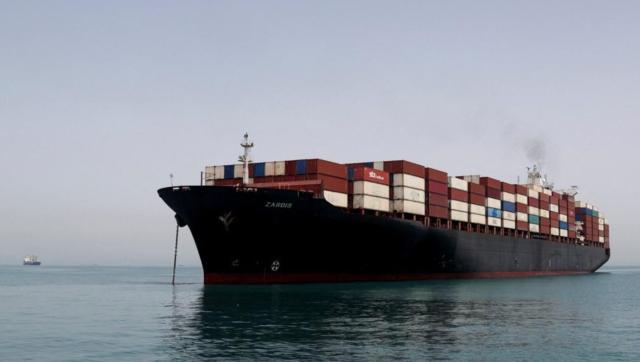
Despite ongoing peace negotiations between the U.S. and Iran, global shipping and air freight rates are expected to remain elevated for the foreseeable future. However, uncertainty looms over how long this wartime surge will last, prompting logistics companies to cautiously begin strategizing for the future.
As of June 18, the Shanghai Container Freight Index (SCFI), a key profitability indicator for container shipping, stood at 3,121, reflecting a more than 100% increase since the beginning of the year.
The freight index for Very Large Crude Carriers (VLCC) operating on the Middle East to East Asia route reached 439 as of June 17, marking a 9% increase from June 10, prior to the peace talks, and nearly double the figure from late February, just before the conflict escalated.
In addition to rising freight indices, charter rates for vessels are also on the rise. The daily charter rate for VLCCs of 270,000 tons or more was reported at $448,000 as of June 17. Although rates soared to $800,000 during the conflict, they remain more than double the pre-war levels.
The increase in logistics and energy transportation costs poses challenges for domestic companies heavily reliant on exports. In particular, if the strong freight rates persist through the second half of the year, there are concerns about soaring heating costs this winter. As of June 12, LNG shipping rates were around $80,000, nearly double the pre-war rates.
The rise in maritime freight rates, coupled with high oil prices, has also contributed to increasing air freight costs. As of June 15, the Baltic Air Freight Index (BAI) was at 2,715, up 34% compared to the same period last year. The logistics index for East Asia, particularly freight from Hong Kong, saw the largest increase at 42.2%.
Industry experts believe that even with a peace agreement, elevated freight rates will likely persist for some time. This is due to the complex factors influencing costs, including fuel prices, war risk insurance, and various surcharges, which require time for adjustments.
Given the soaring won-dollar exchange rate and the industry's preference for dollar transactions, logistics and air freight companies are expected to see continued growth through the second half of the year. A representative from Korea Ratings stated, "While individual performances among shipping companies will vary based on their main vessel types, we anticipate good results post-peace agreement due to the time lag in normalizing supply chains."
However, some industry insiders express concern that the current high-profit environment may not be entirely welcome. The global shipping and air freight sectors have historically experienced cycles of short-term booms followed by prolonged downturns.
A shipping industry representative noted, "The more money earned during boom periods, the faster the fleet capacity expands, leading to intensified competition among global shipping companies. Given that the logistics boom has lasted nearly five years due to the pandemic and the Houthi blockade in the Red Sea, the next downturn could be longer and harsher than ever."
* This article has been translated by AI.
Copyright ⓒ Aju Press All rights reserved.