

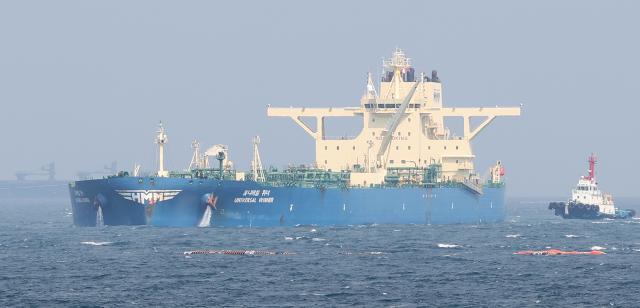
Despite a recent peace agreement between the United States and Iran signaling a potential normalization of the Strait of Hormuz, tensions remain in the shipping and energy sectors. Iran is considering imposing fees on vessel passage after a 60-day grace period for free navigation.
Industry experts warn that the implementation of these tolls could significantly increase costs for shipping companies and inevitably alter the domestic energy supply chain centered in the Middle East.
On June 22, sources reported that Iran communicated to the international shipping industry its intention to levy various fees on vessels using the Strait of Hormuz after the expiration of the 60-day free passage period. The shipping industry views these fees as effectively a toll.
One shipping industry official stated, "The Iranian authorities have already conveyed their fee imposition plans to shipping companies. While they are not immediately collecting fees, it is understood that additional costs will be imposed during future vessel operations."
The official added, "Since this is a measure agreed upon between nations, shipping companies will find it difficult to refuse. Ultimately, these additional costs will have to be reflected in shipping rates, likely passing the burden onto shippers and, subsequently, consumers through increased product prices."
Considering that Iran recently demanded approximately $2 million in passage insurance fees from the Universal Winner, a very large crude carrier (VLCC) that recently transited the Strait, it is likely that future fees will be set at a similar level.
In response, various alternatives to reduce dependence on the Strait of Hormuz are being discussed in the market. Some oil-producing countries, including the United Arab Emirates (UAE), are considering expanding port and export infrastructure outside the Strait.
However, for South Korea, which relies on the Middle East for nearly 70% of its crude oil imports, finding realistic alternative transportation methods is challenging. Most major oil export facilities in Middle Eastern countries are still located within the Strait, necessitating the passage of many oil tankers through it.
The Strait of Hormuz is a critical maritime route, accounting for about 20% of global oil and liquefied natural gas (LNG) maritime transport, with approximately 20 million barrels of oil and petroleum products moving through it daily.
Conversely, the restructuring of the LNG supply chain is expected to accelerate, as alternative suppliers such as the United States and Australia exist for LNG, unlike crude oil. Currently, South Korea depends on Qatar for about 30% of its LNG imports.
Market analysts believe that the toll controversy could lead to a broader reconfiguration of global energy supply chains and maritime logistics beyond just increased transportation costs. The Korea Shipping Association is also collaborating with international shipping organizations to address the issue. The association has reportedly expressed concerns to U.S. and Iranian officials about the potential violation of free navigation principles and is closely monitoring future negotiations and institutional developments.
One industry representative remarked, "The toll issue is not just a concern for specific shipping companies or countries; it affects the entire global logistics system. If the principles of free navigation are compromised, the burden on energy supply chains, including crude oil and LNG, will inevitably increase."
* This article has been translated by AI.
Copyright ⓒ Aju Press All rights reserved.