

[Editor’s Note] The special sacrifices of veterans deserve appropriate compensation and recognition. As part of our series for June, the Month of National Defense and Veterans, Aju Business Daily has prepared a three-part feature on the treatment of veterans. As of May, there are 25,040 surviving veterans of the Korean War and 159,540 veterans of the Vietnam War. Given that many of these veterans are in their 80s and 90s, enhancing policies for their welfare is an urgent issue.
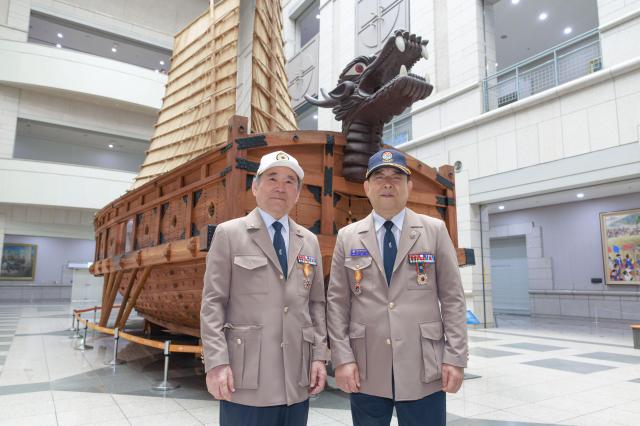
"In our country, the average lifespan shows that women live longer than men. I survived the battlefield, but at 81 years old, I don’t know when I might pass away. The thought of leaving my wife behind is quite concerning," said Choi Hak-tae, a Vietnam War veteran, during a recent interview at the War Memorial of Korea in Yongsan, Seoul.
Yoo Woong-sik, another Vietnam War veteran, 79, shared similar worries, stating, "While veterans receive benefits for medical expenses, my wife does not receive the same level of support."
The government provides veterans with significant medical benefits through six national veterans hospitals (in Seoul, Busan, Daejeon, Daegu, Gwangju, and Incheon) and designated local hospitals (1,025 as of May) where they can receive 90% reductions in out-of-pocket medical costs.
The dedication of veterans to their country is not just a memory; it continues today. Yoo, who serves as the head of the Dongjak District chapter of the Korean Vietnam War Veterans Association, is actively involved in community development and improving welfare for veterans and their families.
He regularly participates in cleanup and memorial activities at the National Cemetery in Seoul twice a month and has also been involved in traffic management for elementary school students to ensure their safe commute. He has worked to enhance welfare for veterans and their families through cooperation and communication with local governments.
In an effort to provide appropriate compensation for such special sacrifices, the Ministry of Veterans Affairs has been paying a veterans honorarium since 2002 to honor those who have dedicated themselves to the nation. As of 2026, the monthly amount is 490,000 won, with annual increases aimed at exceeding inflation rates.
In addition to the honorarium, local governments provide an average of 263,000 won in veterans' allowances. To address disparities in payments across municipalities, the government plans to establish new guidelines in the second half of this year to encourage uniformity in local support.
Furthermore, to enhance the stability and recognition of low-income and elderly veterans, a new livelihood support program has been established, providing 150,000 won monthly to those over 80 years old with incomes below 50% of the median.
Notably, starting March 17 of this year, the government has begun providing livelihood support (150,000 won monthly) to low-income spouses of veterans who face financial difficulties after their partner's passing.
The Ministry of Veterans Affairs plans to relax the current age requirement (80 years and older) to expand eligibility for support.
Professor Noh Seung-yong from Seoul Women's University stated, "Providing 150,000 won in livelihood support to low-income spouses of elderly veterans signifies the government's commitment to taking responsibility not only for the sacrifices of veterans but also for the lives of their families. Given that most veterans are in their 80s and 90s, supporting spouses is no longer a choice but a necessary policy task for veterans' welfare."
Minister of Veterans Affairs Kwon Oh-eul remarked, "The freedom and peace we enjoy today are built upon the great sacrifices of veterans who risked their lives. The government will continue to provide not only financial support but also healthcare and welfare services for a dignified and healthy old age, ensuring that we honor and support our veteran heroes until their last moments."
Yoo Woong-sik, another Vietnam War veteran, 79, shared similar worries, stating, "While veterans receive benefits for medical expenses, my wife does not receive the same level of support."
The government provides veterans with significant medical benefits through six national veterans hospitals (in Seoul, Busan, Daejeon, Daegu, Gwangju, and Incheon) and designated local hospitals (1,025 as of May) where they can receive 90% reductions in out-of-pocket medical costs.
The dedication of veterans to their country is not just a memory; it continues today. Yoo, who serves as the head of the Dongjak District chapter of the Korean Vietnam War Veterans Association, is actively involved in community development and improving welfare for veterans and their families.
He regularly participates in cleanup and memorial activities at the National Cemetery in Seoul twice a month and has also been involved in traffic management for elementary school students to ensure their safe commute. He has worked to enhance welfare for veterans and their families through cooperation and communication with local governments.
In an effort to provide appropriate compensation for such special sacrifices, the Ministry of Veterans Affairs has been paying a veterans honorarium since 2002 to honor those who have dedicated themselves to the nation. As of 2026, the monthly amount is 490,000 won, with annual increases aimed at exceeding inflation rates.
In addition to the honorarium, local governments provide an average of 263,000 won in veterans' allowances. To address disparities in payments across municipalities, the government plans to establish new guidelines in the second half of this year to encourage uniformity in local support.
Furthermore, to enhance the stability and recognition of low-income and elderly veterans, a new livelihood support program has been established, providing 150,000 won monthly to those over 80 years old with incomes below 50% of the median.
Notably, starting March 17 of this year, the government has begun providing livelihood support (150,000 won monthly) to low-income spouses of veterans who face financial difficulties after their partner's passing.
The Ministry of Veterans Affairs plans to relax the current age requirement (80 years and older) to expand eligibility for support.
Professor Noh Seung-yong from Seoul Women's University stated, "Providing 150,000 won in livelihood support to low-income spouses of elderly veterans signifies the government's commitment to taking responsibility not only for the sacrifices of veterans but also for the lives of their families. Given that most veterans are in their 80s and 90s, supporting spouses is no longer a choice but a necessary policy task for veterans' welfare."
Minister of Veterans Affairs Kwon Oh-eul remarked, "The freedom and peace we enjoy today are built upon the great sacrifices of veterans who risked their lives. The government will continue to provide not only financial support but also healthcare and welfare services for a dignified and healthy old age, ensuring that we honor and support our veteran heroes until their last moments."
* This article has been translated by AI.
Copyright ⓒ Aju Press All rights reserved.