

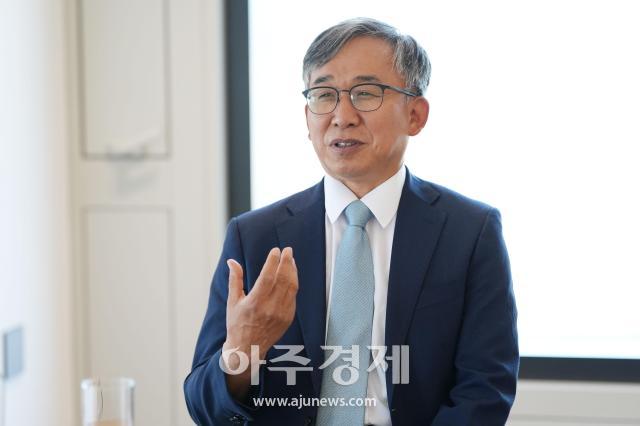
Stalking, crimes of unusual motivation, and digital sex crimes are on the rise. Criminal methods are becoming increasingly sophisticated, and artificial intelligence (AI) and digital forensic technologies have become integral to investigations. Scientific investigation is now a necessity rather than an option.
However, Yoon Oe-chul, a legal advisor at Jipyeong and the pioneer of Korea's first profiling system, emphasizes that the focus should first be on human relationships rather than technology.
Having spent over 30 years at the forefront of violent crime investigations, Yoon stated in an interview with Aju Economy on June 18, "Crime is ultimately a result created by society. If the community is not healthy, no matter how advanced investigative technology becomes, there will be limits to fundamentally reducing crime."
Yoon is regarded as a living testament to the evolution of scientific investigation in Korea. A graduate of the third class of the police academy, he has held various positions, including head of the scientific investigation division at the Seoul Metropolitan Police Agency, head of the violent crimes division, and the first director of the investigative research office at the National Police Agency. Notably, he established the scientific investigation division and introduced profiling at the Seoul Metropolitan Police Agency in 2000, laying the groundwork for Korea's criminal psychology analysis system.
While the role of a profiler is now familiar, the concept of criminal psychology analysis was relatively new at the time. Investigations often relied heavily on statements and confessions, and the idea of systematically analyzing criminal behavior to guide investigations was unfamiliar.
Yoon recognized the need for a scientific crime analysis system in Korea by studying international cases. He believed that analyzing physical evidence from crime scenes and criminal behavior patterns would be key to uncovering the truth behind incidents in future investigations.
This led to the establishment of the scientific investigation division and profiling organization at the Seoul Metropolitan Police Agency. He played a significant role in building Korea's profiling system, including selecting Kwon Il-yong, known as the country's first profiler.
Yoon identifies a major misconception about profiling as being equated with "instinctive investigation."
In dramas and movies, profilers often appear to instantly identify a suspect's characteristics after surveying a crime scene, but Yoon explains that reality is quite different. Actual profiling involves a comprehensive analysis of the crime scene, methods, victim characteristics, movement patterns, and post-crime behavior. It is the result of collaboration among investigators, scientific investigation personnel, and digital forensic experts.
He stated, "Profiling is not instinct; it is the accumulation of data and experience. Those who have experienced numerous cases and scenes can provide more accurate analyses."
Yoon has observed a significant change in the nature of crime over the years.
In the past, typical violent crimes faced by police included serial murders, serial robberies, and organized crime. Criminals targeted strangers, and society viewed them as dangerous exceptions.
In contrast, Yoon notes that current investigations are increasingly focused on relational crimes such as domestic violence, dating violence, stalking, school violence, and child abuse.
He remarked, "Crime has moved from outside the community to within it." Conflicts arising from close relationships—family, partners, friends, colleagues, and neighbors—are increasingly leading to criminal acts.
Yoon does not view this merely as a change in crime types but as a complex interplay of social structural changes and the weakening of community ties.
He pointed out, "In the past, criminals were seen as special individuals outside of society, but now anyone can find themselves in a conflict situation. As relationships break down and empathy diminishes, the likelihood of conflicts manifesting as violence increases."
He also expressed concern about the recent rise in crimes of unusual motivation, which have shocked society.
In previous studies of serial offenders, many had clear risk factors, such as family environment, experiences of abuse, economic deprivation, and social maladjustment.
However, Yoon analyzes that there are now cases where it is difficult to explain the causes of crime solely based on background. He noted, "In the past, we could identify commonalities in the growth processes of criminals, but that is not always the case now. There are instances where individuals who received good education and grew up without economic hardship still exhibit violent tendencies."
He cautioned against interpreting crime solely as an individual issue.
Yoon highlighted the interplay of a competitive social structure, disconnection in human relationships, and the weakening of community ties. He stated that crime prevention cannot be resolved solely by increasing arrest rates; community recovery must also occur.
He emphasized, "The experience of respecting and empathizing with others is a value that society members must cultivate together. Ultimately, crime prevention is linked to creating a healthy community."
The landscape of scientific investigation continues to evolve rapidly.
DNA analysis technology plays a crucial role in solving cold cases, while mobile phone forensics, CCTV analysis, and location tracking have become essential investigative tools. The introduction of AI technology is further transforming investigative methods.
However, Yoon stresses that technology cannot be the entirety of investigations.
He stated, "AI excels at analyzing vast amounts of data, but understanding criminal behavior and empathizing with victims' suffering ultimately falls within the human domain. The determination of investigators to relentlessly pursue the truth is what matters most."
His decision to join Jipyeong aligns with this awareness of the issues at hand.
Yoon asserts that scientific investigation and profiling are no longer the exclusive domain of law enforcement. As digital evidence and scientific analysis become central to criminal trials, defense attorneys must also understand scientific investigation.
He explained, "In the past, statements were the focal point of evidence, but now mobile phones, CCTV, and forensic materials explain cases. The ability to objectively review and analyze evidence secured by investigative agencies is crucial for defense attorneys as well."
Yoon cautioned that the role of scientific investigation should not be limited to proving guilt.
He remarked, "Scientific investigation is a means to catch criminals, but it is also a mechanism to protect the innocent. The process of approaching the substantive truth through objective evidence is a value that both investigative agencies and defense attorneys should pursue together."
Although three years have passed since he left the police force, Yoon's affection for it remains strong. He shared, "Even now, when I see a patrol car or traffic police while walking down the street, I feel a warmth and nostalgia. I always feel regret for not being able to provide better working conditions for my juniors during my tenure."
He quoted British politician Robert Peel to emphasize the importance of trust between police and citizens.
Yoon stated, "The police become a reflection of the level of the nation's citizens. Police that grow in the trust and affection of the public dedicate themselves to protecting the community in return for that faith."
He added, "Rather than focusing solely on the shortcomings, I hope people can extend warm support and recognition to the many police officers who quietly protect the community every day. I also hope their lives, shouldering the weight of their uniforms, are remembered."
Yoon concluded, "Understanding crime ultimately means understanding people. I want to contribute to uncovering the substantive truth in criminal cases based on the experiences I have accumulated so far."
* This article has been translated by AI.
Copyright ⓒ Aju Press All rights reserved.