

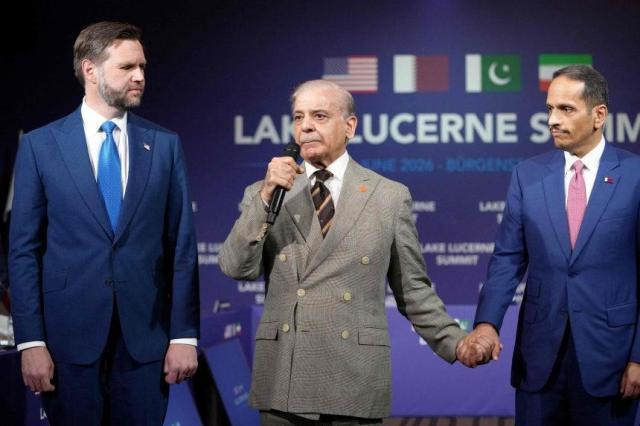
According to reports from Reuters, U.S. Vice President JD Vance stated on June 22, following a high-level meeting near Lucerne, Switzerland, that Iran has agreed to invite the IAEA inspection team back into the country.
Vance described this action as "an important event for the American people," calling it a first step toward the permanent denuclearization or termination of Iran's nuclear weapons program. He noted that the inspection team's activities could begin within the week, with procedures potentially starting as early as that day.
However, Iran has pushed back against the U.S. characterization, suggesting that the announcement exaggerates the agreement on the resumption of inspections. Iran clarified that its cooperation with the IAEA is not about accepting new obligations but is in accordance with existing procedures set by its parliament and the Supreme National Security Council.
Iran's state news agency IRNA reported that during the high-level talks in Switzerland, the Iranian delegation did not engage in negotiations regarding nuclear issues and did not accept any new obligations. Iran also stated that the initiation of nuclear negotiations is contingent upon the implementation of Article 13 of the previously agreed Memorandum of Understanding (MOU).
Article 13 of the MOU stipulates that the final negotiations can only commence after measures related to sanctions are implemented, including the cessation of hostilities on all fronts, lifting of U.S. maritime blockades, reopening of the Strait of Hormuz, allowing the export of Iranian crude oil and petrochemical products, and the release of frozen funds.
The differing interpretations between the two sides highlight that the key issues in subsequent negotiations will revolve around the order of resuming nuclear inspections and the easing of sanctions. While the U.S. sees the return of the IAEA inspection team as an initial success toward a final agreement, Iran maintains that sanctions relief and the lifting of maritime blockades must occur first.
As a result, the actual resumption of the IAEA inspection team's activities will likely depend on how the scope of inspections, targeted facilities, Iran's internal approval processes, and U.S. sanctions relief measures align.
* This article has been translated by AI.
Copyright ⓒ Aju Press All rights reserved.