

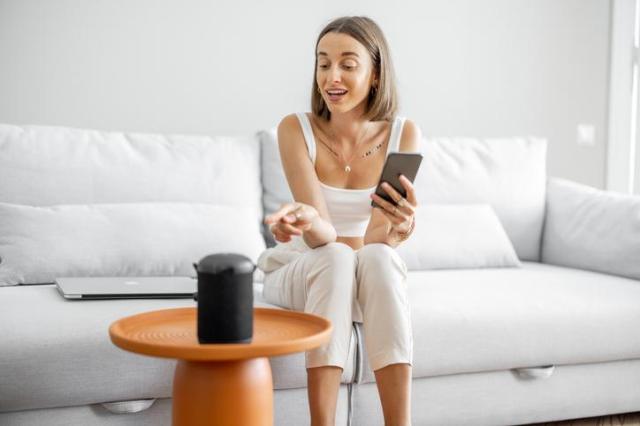
Once seen as a symbol of the artificial intelligence (AI) era and a next-generation platform, AI speakers are now facing obsolescence with the rise of generative AI.
Due to a failure to evolve technologically and provide differentiated services, new purchases have virtually halted, and existing users are either neglecting their devices or using them for basic functions only.
According to data from the Korea Media Panel Survey released on June 23 by the National Statistical Portal (KOSIS), the number of households owning AI speakers dropped sharply from 314.6 in 2023 to 284.6 in 2024, and further down to 223.4 last year. This marks a 29% decline in just two years, with new device inflows nearly ceasing.
The contraction in the market is attributed to the lack of unique utility that could replace or complement smartphones. Last year, the primary purposes for using AI speakers included connecting to TV and radio at 31.5%, followed by music streaming services at 23.4%, and weather updates at 21.3%.
In contrast, the anticipated functionalities such as web searches (2.1%) and foreign language conversation practice (0.4%) have seen minimal use as personal assistants.
Major domestic companies that had enthusiastically launched related services are now winding them down. LG Uplus has decided to terminate its AI speaker-based services, including 'Our Home AI' and 'U+ AI Avengers,' on June 30. While SK Telecom's 'Nugu,' KT's 'Giga Genie,' Naver's 'Clova,' and Kakao's 'Kakao Mini' continue to offer related services, they have not received any new feature updates.
Experts point out that AI speakers failed to establish the 'voice interface' during their initial market entry. Choi Byung-ho, a research professor at Korea University's Human-Inspired AI Research Institute, stated, "AI speakers have not provided new usage experiences beyond music playback and weather updates, failing to even serve as complementary devices to smartphones."
Looking ahead, even as generative AI technology advances, a revival of AI speakers seems unlikely.
Professor Choi added, "What users want is not just simple voice command execution but AI services that understand context and provide personalized information. The competition for next-generation form factors, such as more personalized smart glasses or earbuds, is expected to intensify."
* This article has been translated by AI.
Copyright ⓒ Aju Press All rights reserved.