

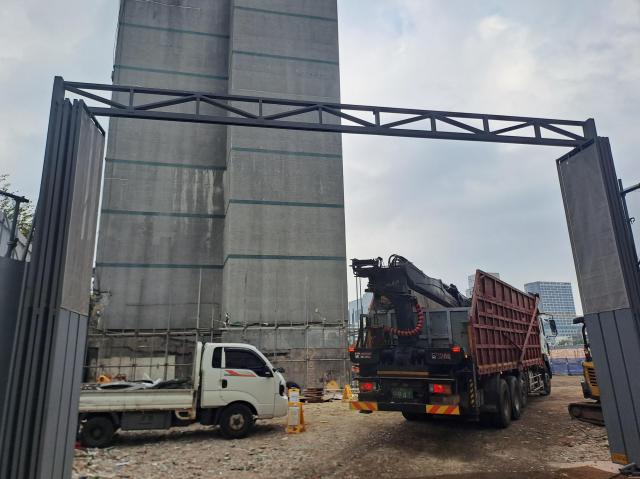
Domestic construction orders are projected to surpass 240 trillion won this year, raising hopes for recovery in an industry that has faced long-term stagnation. While leading indicators show improvement due to increased public contracts and growth in civil engineering and housing orders, challenges remain before these translate into actual construction starts and investments.
According to the Korea Construction Industry Institute on June 23, domestic construction orders are expected to reach 240.8 trillion won, an 8.9% increase from the previous year. Last year, construction orders totaled 221.1 trillion won, marking a 1.5% increase and halting a decline, with a clear recovery trend emerging this year.
From January to April, cumulative construction orders reached 70.8 trillion won, a 32.4% increase compared to the same period last year. Public orders rose by 50.6%, while private orders increased by 26.7%, indicating a simultaneous growth in both sectors. This shift away from a previous imbalance between public and private orders has been noted as significant.
The recovery in orders is being led by public housing, civil engineering, and infrastructure sectors. Public housing orders surged by 153.4%, while public civil engineering orders increased by 52.4% during the first four months. Orders related to infrastructure, including railways, power, and telecommunications, also saw substantial growth. The government's investment in social overhead capital (SOC) and the expansion of public contracts are revitalizing the construction market, and construction firms are reporting improved sentiment.
However, an increase in orders does not necessarily equate to a recovery in the construction market. The Korea Construction Industry Institute forecasts that construction investment will rise by only 0.3% this year compared to last year. Despite the increase in orders, factors such as rising construction costs, stricter project financing reviews, and declining project viability are preventing many projects from moving forward to groundbreaking.
Housing supply indicators reflect a similar trend. While there are signs of improvement in permits and sales, the recovery in groundbreaking is relatively slow. Recovery signals are emerging primarily in the metropolitan area and public sector, while local and private construction sectors continue to struggle. The backlog of unsold properties and worsening sales conditions in regional markets are also delaying the transition to groundbreaking for private projects.
Industry experts identify 'groundbreaking transition' as a key variable for the recovery of the construction market in the second half of the year. The increased orders must translate into actual site investments and construction volumes for the recovery effects to be felt.
To facilitate this, experts suggest selective financial support for viable projects, improvements in project financing review processes, and streamlining subsequent procedures after obtaining permits. There is also a call for a management system that oversees not only the volume of permits but also the rate of groundbreaking and the time required for it to expand supply.
Lee Ji-hye, a researcher at the Korea Construction Industry Institute, emphasized, "Resolving the bottlenecks in the field so that the recovery in orders translates into actual investment, supply, and job growth will be a core task for construction policy in the second half of the year."
* This article has been translated by AI.
Copyright ⓒ Aju Press All rights reserved.