

South Korea and Turkey are set to review the implementation of their free trade agreement (FTA) and discuss trade issues. Since the FTA took effect, trade between the two countries has surpassed $10 billion, reaching an all-time high. However, Turkey has increased its import restrictions on South Korean products.
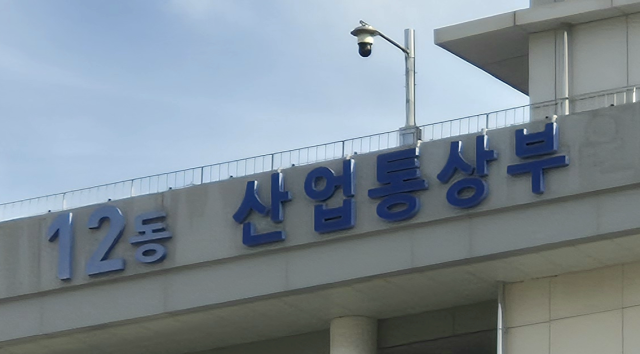
The Ministry of Trade, Industry and Energy will hold the sixth Korea-Turkey FTA Joint Committee meeting in Ankara from June 23 to 24. The meeting will be led by Lee Min-young, acting director of trade negotiation policy at the Ministry, and Hüsniye Dilekler, director of the EU and International Agreements Department at Turkey's Ministry of Trade.
Turkey serves as a strategic gateway from Asia to Europe and is geographically positioned near the Middle East and North Africa. Trade between the two nations has steadily grown since the FTA came into effect in 2013. Trade volume, which stood at $5.22 billion in 2012, exceeded $10 billion for the first time in 2023, reaching a record $10.66 billion last year.
The Korea-Turkey FTA is not limited to tariff reductions; it also serves as a platform for South Korean companies to expand into European and Middle Eastern markets. With both the EU customs union and geographic advantages, it holds significant strategic value as a production and logistics hub.
In terms of investment, South Korea's presence is substantial. As of December last year, South Korea had made 1,176 cumulative investments in Turkey, amounting to $4.59 billion. This is 38 times higher than Turkey's investment in South Korea, which stood at $120 million during the same period.
During the upcoming joint committee meeting, the implementation status of the FTA and related trade issues will be discussed. South Korea plans to express concerns over the increasing import restrictions on its products and request fair and objective investigations in line with international norms. Currently, Turkey has 19 anti-dumping and safeguard measures against South Korean products, with four investigations ongoing.
As trade expands, demands for protection of domestic industries and trade remedy measures may also increase. Given Turkey's emphasis on protecting its manufacturing sector and managing its trade balance, it is crucial for South Korean companies to manage risks associated with import restrictions while maximizing the benefits of the FTA.
Challenges faced by local companies regarding customs and certification will also be addressed. South Korean firms are leveraging production bases and sales networks in Turkey to target European and Middle Eastern markets, making customs delays and certification burdens critical to their competitiveness. The Ministry plans to raise these issues and seek improvements during the meeting.
Additionally, Turkey is expected to propose measures to reduce its trade deficit with South Korea. Other topics for discussion will include mutual cooperation in the areas of sanitary and phytosanitary measures (SPS).
* This article has been translated by AI.
Copyright ⓒ Aju Press All rights reserved.