

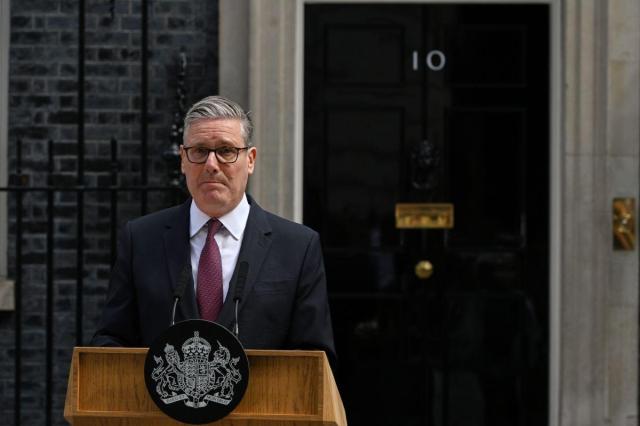
Keir Starmer's resignation marks the sixth change in UK prime ministers since Brexit. Analysts suggest that the root cause of ongoing political instability is a prolonged economic downturn.
On June 23, CNN published an article titled "Why Can't the UK Hold on to a Prime Minister? The Problem is the Economy," diagnosing that stagnant living standards and sluggish economic growth among UK voters have contributed to the frequent changes in leadership.
Starmer, leader of the Labour Party, is stepping down after just two years in office. He follows a line of predecessors, including Rishi Sunak, Liz Truss, Boris Johnson, and Theresa May, all of whom had brief tenures.
CNN noted that despite their differing political backgrounds, these leaders shared a common failure to address the issues of low growth and the cost-of-living crisis.
According to the UK Office for National Statistics, the average weekly wage (excluding bonuses) has remained stagnant at £494 since the Labour Party came to power in 2024, showing less than a 1% increase. Taxes are at their highest level in decades.
Raoul Luparrell, chief economist at Boston Consulting Group (BCG), told CNN, "Everything ultimately comes back to the economy," adding that the UK's poor economic performance has led people to feel that conditions are not improving.
Experts point out that the UK's chronic low growth is a key factor behind political instability. According to Capital Economics, since Theresa May took office in July 2016, the UK's GDP growth rate has averaged around 1% per year, with little improvement in per capita GDP, which reflects living standards.
This economic fatigue contributed to the Labour Party's decisive victory in the 2024 general election, where they successfully ousted the Conservative Party, which had been in power for 14 years, by promising change.
However, even after the change in government, the burden of living costs and economic stagnation persisted, leading to increased voter disappointment and a significant defeat for Labour in the local elections last May.
Ben Harrison, director of the Work Foundation at Lancaster University, stated to CNN, "The cost-of-living pressure is the biggest concern nationwide," suggesting it likely influenced many voters' decisions.
The challenge for the next prime minister is that they will inherit the same economic environment. The International Monetary Fund (IMF) projected the UK's economic growth rate for this year at 0.8%, a decrease of 0.5 percentage points from its January forecast.
Luparrell explained, "Achieving economic growth is not something that can be done in the short term," noting that policies like infrastructure development or reducing energy prices require time to take effect.
Rain Newton-Smith, CEO of the Confederation of British Industry (CBI), emphasized that the economic challenges facing the UK will not disappear with a change in prime minister, stating that the next leader must instill confidence in businesses and investors while presenting a viable growth strategy.
CNN concluded that the frequent leadership changes in UK politics are not merely the result of individual failures but rather a structural issue created by long-standing low growth and stagnant living standards.
* This article has been translated by AI.
Copyright ⓒ Aju Press All rights reserved.