

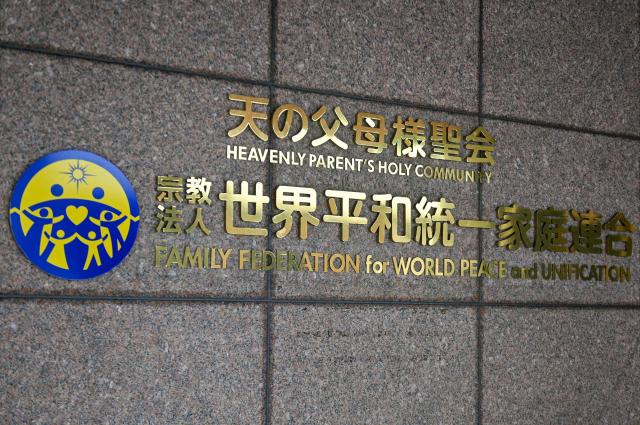
Japan's Supreme Court has upheld a dissolution order for the Unification Church, officially known as the Family Federation for World Peace and Unification. The court determined that the organization was systematically involved in soliciting large donations, which resulted in significant financial harm to numerous victims. This marks the first time in Japan that a religious corporation has been dissolved based on civil law violations.
According to the Yomiuri Shimbun, the Supreme Court maintained the Tokyo High Court's decision to dissolve the Unification Church in a ruling issued on June 22, rejecting the church's special appeal. The decision was unanimous among the four judges.
The dissolution order has already been in the execution phase since a March ruling by the Tokyo High Court. The Asahi Shimbun reported that a liquidator appointed by the court has begun the process of managing the church's assets to compensate victims, and the Supreme Court's decision has eliminated any possibility of halting this liquidation process. The Nihon Keizai Shimbun (Nikkei) noted that the church has lost its legal status as a religious corporation.
Under Japan's Religious Corporations Act, a court can issue a dissolution order if a religious corporation is found to have violated laws and significantly harmed public welfare. This is the third instance of a religious corporation being dissolved based on legal violations, following the Aum Shinrikyo cult responsible for the Tokyo subway sarin gas attack and the Kōmyō-ji temple fraud case. The previous two cases were based on the criminal liability of the leaders, while this is the first time a dissolution order has been grounded in civil law violations.
The Supreme Court noted that from 1973 to 2022, church members continued to solicit illegal donations, causing substantial financial damage to many individuals. According to the Yomiuri, the court found that these actions were carried out under the church's founders' directives to provide economic support to various countries, indicating the organization's systematic involvement. The court also observed that the church failed to take effective measures to prevent undue solicitation, raising the likelihood of continued harm in the future.
The Tokyo District Court recognized that since the 1980s, more than 1,500 victims have suffered from donation-related issues, with damages amounting to approximately 20.4 billion yen. The Tokyo High Court also noted that despite a "compliance declaration" in 2009, the church's donation targets remained nearly unchanged at around 50 billion yen, with actual collections reaching 80% to 90% of that target from 2015 to 2021, indicating ongoing illegal solicitation.
The church argued that the dissolution order violates Articles 20 and 21 of the Japanese Constitution, which guarantee freedom of religion and assembly. According to the Nikkei, the church expressed concern that if its properties, such as worship and meeting facilities, are disposed of and employees are laid off, it would be unable to continue its organizational religious activities.
However, the Supreme Court concluded that the dissolution order does not prohibit or restrict the religious practices of its members. While acknowledging that the disposal of worship facilities could impact religious activities, the court deemed such effects to be "indirect and factual". The court determined that revoking the church's legal status is "necessary and unavoidable" despite considering the potential psychological and religious impact on the church and its members.
The controversy surrounding the Unification Church gained prominence in Japanese society following the assassination of former Prime Minister Shinzo Abe in July 2022. The accused, Tetsuya Yamagami, reportedly harbored resentment towards the church due to his family's financial ruin caused by large donations made by his mother, a church member. This incident led to revelations of connections between the church and lawmakers, further escalating the situation.
In response to the assassination, the Japanese government investigated the Unification Church under the Religious Corporations Act, and the Ministry of Education, Culture, Sports, Science and Technology filed for a dissolution order with the Tokyo District Court in October 2023. The Tokyo District Court issued the dissolution order in March of the previous year, which was upheld by the Tokyo High Court in March of this year. The Supreme Court's decision finalizes the dissolution of the Unification Church as a religious corporation.
However, the dissolution order does not prohibit the church's religious activities. While the church loses its legal status and tax benefits, it can continue to operate as a non-legal religious organization. The Japanese judiciary recognized the impact on religious freedom but deemed the revocation of legal status necessary to address the issues related to large donation solicitations.
* This article has been translated by AI.
Copyright ⓒ Aju Press All rights reserved.