

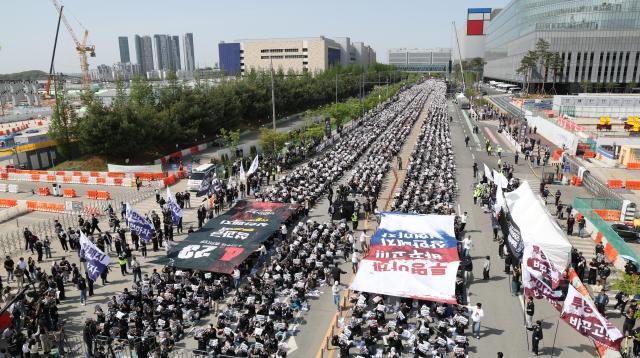
Tensions are rising in the automotive industry as labor disputes over wage conflicts deepen. While one side is preparing for a strike over performance bonuses, the other is proposing unconventional work systems to address employment insecurity stemming from a lack of orders. Analysts suggest that the labor disputes are evolving beyond simple discussions of bonuses to encompass structural issues such as the introduction of new technologies and employment types, potentially shifting the paradigm of corporate compensation systems.
According to industry sources, the Hyundai Motor Company labor union conducted a strike vote on June 24, with 39,000 members participating. The vote resulted in an overwhelming 86.65% in favor of a strike. Hyundai and the union have attempted negotiations 11 times since their initial meeting on May 6, but have failed to bridge their differences.
The union held an emergency delegate meeting on the same day, unanimously passing a resolution to prepare for a strike. They have also established a central strike committee and plan to discuss the direction, intensity, and schedule of the strike after receiving the results of a labor dispute application submitted to the Central Labor Relations Commission on June 25.
The Hyundai union's demands for this year's collective bargaining negotiations include a monthly base salary increase of 149,600 won (excluding seniority increases), a performance bonus equal to 30% of last year's net profit, and guarantees for employment and working conditions related to artificial intelligence (AI). They are also advocating for the implementation of a full monthly salary system, an increase in bonuses from 750% to 800%, reduced working hours without increased labor intensity, and an extension of retirement age linked to the national pension system (up to 65 years), along with new hires.
Meanwhile, the labor and management at GM Korea have also failed to reach an agreement after seven rounds of negotiations this year. On June 18, the union voted overwhelmingly in favor of a strike, with 86.5% (5,635 votes) supporting the action. The GM Korea union is demanding a base salary increase of 149,600 won, a performance bonus of approximately 30 million won per person, the introduction of a monthly salary system, an extension of retirement age, new hiring, and allocation of new models. However, the management has not provided a specific response to these demands.
In contrast, Renault, struggling with declining sales, is negotiating a new employment plan called the 'work accumulation system' with its union. This system aims to address employment issues that fluctuate monthly based on vehicle orders by allowing workers to accumulate non-working days and later offset them with overtime when production increases due to new model launches.
The company plans to pay 100% of wages even during factory shutdowns, allowing for greater production flexibility while alleviating workers' concerns about wage insecurity due to a lack of work. In fact, Renault has decided to shut down operations for 11 out of 21 working days this month due to decreased sales, but with the work accumulation system, workers will still receive full wages. Renault's sales in May fell to 5,913 units, a 40% decrease compared to the same period last year.
Industry observers note that the conflicts in collective bargaining are shaking the entire corporate compensation system, extending beyond simple performance bonus negotiations. Proposals for a 'full monthly salary system' that guarantees a fixed monthly wage regardless of working hours and calls for increasing the base bonus rate to mitigate risks associated with performance bonuses are becoming more prominent. Additionally, the impact of the Yellow Envelope Law, which expands the eligibility for performance bonuses to both internal and external partners, is complicating conflict resolution.
An industry insider expressed concern, stating, "As we urgently need astronomical investments in research and development (R&D) for future mobility transitions such as electric vehicles, autonomous driving, and software-defined vehicles (SDVs), calls to increase profit-sharing on a fixed basis each year could undermine companies' future competitiveness. The discussions in collective bargaining are expanding beyond the redistribution of excess profits to structural issues involving employment, wages, and the introduction of new technologies, making negotiations increasingly challenging."
* This article has been translated by AI.
Copyright ⓒ Aju Press All rights reserved.