

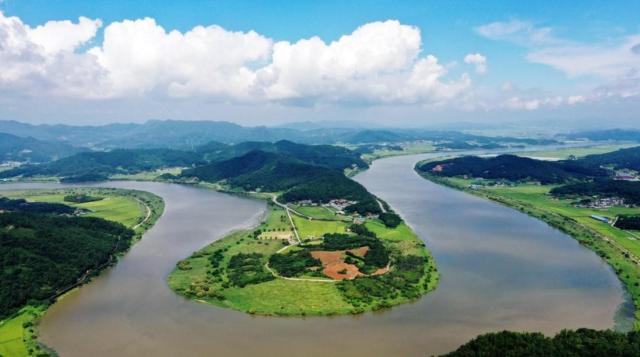
As concerns grow over power and water shortages due to the overdevelopment of semiconductor clusters in the Seoul metropolitan area, the infrastructure in Honam is gaining attention as a viable alternative. The region boasts abundant water resources from the Yeongsan River basin, combined with a stable power grid supported by large-scale renewable energy and the Hanbit Nuclear Power Plant, which could alleviate the overcrowding in the capital region.
According to local governments and Korea Electric Power Corporation, the potential power supply in Jeonnam as of last year includes 21.3GW from wind power and 34GW from solar power, totaling over 55GW. This is approximately 3.5 times the 15-16GW power demand of the Yongin semiconductor cluster. If the government's planned West Coast Energy Expressway project proceeds as scheduled, the renewable energy capacity in Honam is expected to double from 21.3GW in 2026 to 46.1GW by 2030.
The presence of substantial base-load power sources, such as the Hanbit Nuclear Power Plant, is also seen as a competitive advantage. This setup allows for the simultaneous achievement of RE100 (100% renewable energy) compliance and stable power supply. Park Sang-in, a professor at Seoul National University, stated, "If the Yongin cluster is developed as planned, it will require 15GW of power, which is realistically unattainable. Distributing industries closer to power generation sites, such as in the resource-rich Honam region, is the way to enhance overall national efficiency in the long run."
Currently, Samsung Electronics and SK Hynix plan to meet part of their power demand through LNG power plants, while sourcing the remainder from local transmission networks in Yeongnam and Honam. However, constructing ultra-high-voltage transmission lines involves significant costs and years of time, along with potential conflicts with local residents. The National Assembly's Legislative Research Service noted, "The existing centralized development approach, where the government first decides on locations and then establishes infrastructure plans, has reached its limits."
The Honam region also has a solid foundation for water infrastructure. It possesses diverse water resources from the Yeongsan River basin, as well as large freshwater sources in Saemangeum and the southwestern coastal area, including Yeongam Lake. In contrast, the Han River basin's multipurpose dams (Soyanggang Dam and Chungju Dam) currently have an average daily surplus of only 50,000 cubic meters, which is projected to increase to just 80,000 cubic meters by 2035. By 2050, a water shortage of approximately 1.097 million cubic meters per day is anticipated.
Some have raised concerns that the high salinity of coastal winds in the Honam region could negatively impact semiconductor precision equipment. Lee Un-joo, a member of the Democratic Party, argued in January, "Semiconductor factories should avoid coastal areas with high salinity," advocating for caution.
However, cleanrooms, which are essential for semiconductor production, are not directly exposed to outside air. Advanced air conditioning systems, ultra-precision filters, and dehumidification and dust control designs operate continuously to maintain a controlled internal environment. This structure ensures that external salinity or humidity does not affect production yields.
In fact, TSMC, the world's leading foundry company, has concentrated more than 11 major production sites in the western coastal industrial belt of Taiwan. Similarly, key U.S. semiconductor firms like GlobalFoundries are distributing their fabs along coastlines rather than concentrating them inland to mitigate geopolitical and natural disaster risks. Professor Park emphasized, "To prepare for risks related to water and power supply due to natural disasters, we should avoid concentrating the semiconductor ecosystem entirely in one specific area."
However, for the semiconductor industry distribution policy to yield tangible results, it is argued that companies' management decisions should be respected, and investment speeds should be moderated. Lee Byung-hoon, a professor in the Department of Electrical and Electronic Engineering at POSTECH, expressed concern that the current discussions on local relocation are progressing too rapidly, suggesting that it would not be too late to discuss gradual relocation after securing sufficient funding during the semiconductor supercycle and reaching saturation in demand at the Pyeongtaek and Yongin plants.
Considering these constraints, prioritizing the establishment of post-processing clusters is seen as a realistic alternative. Lee Jong-hwan, a professor in the Department of System Semiconductor at Sangmyung University, noted, "While moving all processes at once would certainly have a significant economic impact on the region, companies would face practical barriers such as securing specialized personnel and real-time collaboration with partners, highlighting the need for a phased approach."
* This article has been translated by AI.
Copyright ⓒ Aju Press All rights reserved.