

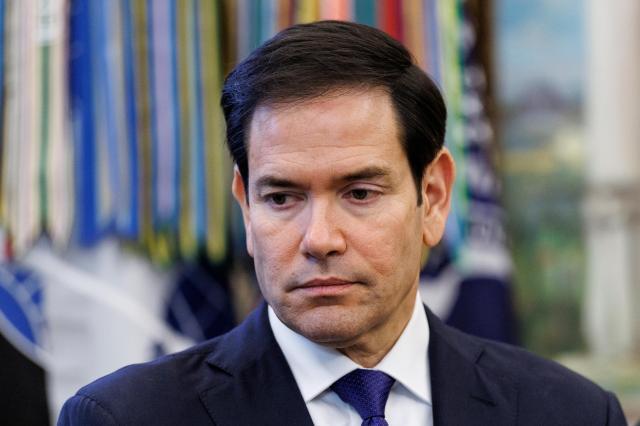
On June 24, during a visit to Kuwait, Rubio told reporters, "The only reason Israel is in Lebanon is because Hezbollah is launching rockets and drones at Israel from there."
He emphasized that the Lebanese military and the legitimate, sovereign Lebanese government must gradually gain control over more of their territory, stating, "As the Lebanese army secures more areas, Hezbollah's control will diminish, and Israel will reduce its occupied territories in Lebanon accordingly."
Israel and the Lebanese government are engaged in peace negotiations mediated by the U.S. State Department. The two sides resumed talks the previous day, and Rubio noted, "These negotiations will continue today and tomorrow."
Rubio indicated that discussions are underway regarding the establishment of a 'pilot zone.' He explained, "The Lebanese army would enter parts of the Israeli-occupied territory, secure control, maintain order, and then move to the next area."
The issue of Lebanon has become a key point in the follow-up negotiations for the implementation of the U.S.-Iran memorandum of understanding (MOU). Iran has demanded that Israeli forces withdraw from southern Lebanon.
Mohammad Bagher Ghalibaf, the Iranian negotiating representative, stated, "A ceasefire in Lebanon is as important to us as a ceasefire in Iran, and ending the war in Lebanon is as crucial as ending the war in Iran."
Rubio also pressed for the resumption of International Atomic Energy Agency (IAEA) inspections of Iran's nuclear program, asserting, "Accepting IAEA inspections is a promise Iran made and must keep. The return of the inspection team to Iran should happen 'as soon as possible.'"
Regarding the issue of tolls in the Strait of Hormuz, Rubio expressed opposition, stating, "The world will oppose any attempt by Iran to impose fees or charges for the use of international waterways."
The next working-level talks between the U.S. and Iran are scheduled to take place in Switzerland on June 29 or 30. Rubio mentioned, "The negotiating teams will be divided into thematic working groups focusing on topics such as nuclear issues and sanctions. The working groups will reconvene, and I believe it will be on the 30th."
Rubio described Iran's 60-day exemption from oil sales sanctions as part of a process of reciprocal commitments related to denuclearization. However, he cautioned, "If Iran does not keep its promises, the president has various options available," hinting at the possibility of revoking the exemption.
The U.S. and Iran signed the ceasefire MOU on June 14 and held high-level talks over the weekend in Bürgenstock, Switzerland. The two sides conducted their first working-level meeting by June 23 and plan to continue sector-specific follow-up negotiations at the end of the month in Switzerland.
* This article has been translated by AI.
Copyright ⓒ Aju Press All rights reserved.