

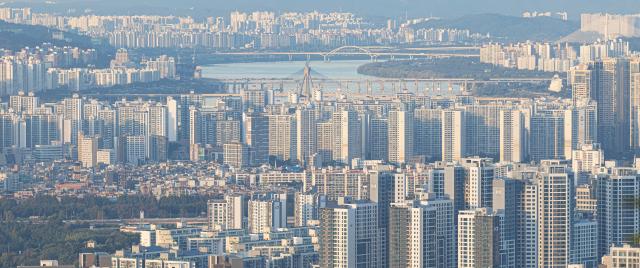
The methods for acquiring housing in Seoul's apartment market are diverging by region. In high-end areas, where expensive apartments are concentrated, gifting transactions are on the rise, while lower to mid-range neighborhoods show a higher reliance on loans. This trend indicates that the polarization in housing prices is extending beyond the market to the methods of home acquisition.
According to data from the Korea Real Estate Agency on June 25, the number of apartment gifts in Seoul decreased slightly from 434 in February to 418 in March but rebounded to 556 in April.
The increase in gifting transactions is particularly notable in affluent neighborhoods. In Seongdong-gu, the number of apartment gifts rose from just 2 in January to 4 in February, then to 14 in March, and surged to 52 in April. Gangnam-gu also saw an increase from 65 gifts in February and 55 in March to 70 in April, while Songpa-gu expanded from about 20 gifts in January and February to around 40 in April. This reflects a growing demand for housing ownership and transfer through family asset gifting in areas where housing prices have been rising.
Conversely, neighborhoods with lower to mid-range housing are showing a high dependency on loans. The loan index for May, compiled by the real estate platform Zipum, indicated that Geumcheon-gu had the highest index at 63.02, followed by Jungnang-gu at 57.54 and Guro-gu at 56.97. The loan index measures the extent to which loans are utilized in the home purchasing process.
In high-end housing areas, the reliance on loans is relatively low. Gangnam-gu recorded the lowest loan index in Seoul at 29.44, with Seongdong-gu at 34.94, Yongsan-gu at 35.68, and Seocho-gu at 37.72, all remaining in the 30s. This suggests that wealthier buyers or those benefiting from family gifting are more prevalent in high-end areas, while lower to mid-range neighborhoods continue to see a significant reliance on loans by actual homebuyers.
This divergence in housing acquisition methods within the same city indicates a growing divide. In high-end areas, the trend of inheriting assets from parents is increasing, while in lower to mid-range areas, actual buyers are relying on loans. As housing prices rise, wealthier individuals are able to enter high-end markets through gifting, while those without such means are increasingly dependent on loans to secure homes in lower-priced areas.
These differences may also impact future market volatility. High-end areas may see rising barriers to entry through family asset transfers, while lower to mid-range areas, with their high loan dependency, could be more sensitive to external factors such as interest rate changes or stricter loan regulations.
Yang Ji-young, head of the real estate team at Shinhan Investment Corp, stated, "The increase in gifting in high-end areas like Seongdong-gu should be viewed not just as a tax-saving measure but as a reflection of expectations for future value appreciation. The polarization in home purchasing methods is likely to expand further." She added, "In high-end areas, the proportion of asset holders is high, allowing them to own or gift homes without loans, while in lower to mid-range areas, actual buyers' reliance on loans makes them more vulnerable to external shocks such as interest rate hikes or loan regulations."
* This article has been translated by AI.
Copyright ⓒ Aju Press All rights reserved.