The satellite, an all-weather imaging-radar craft capable of distinguishing objects as small as 50 centimeters day or night, was due to fly this year aboard Europe's Vega-C rocket. Development delays in a co-passenger satellite slated for the same launch have forced repeated postponements.
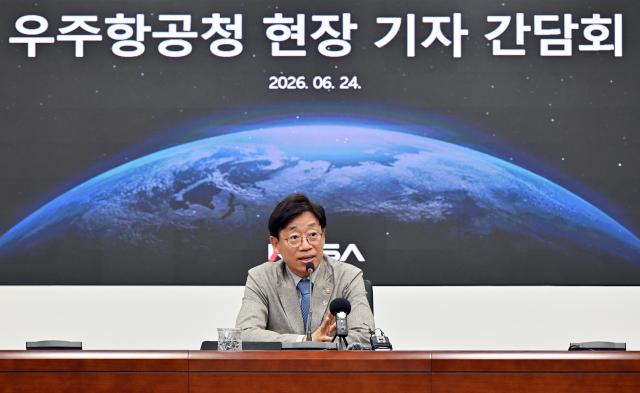
"We looked at various scenarios, and given the risks involved, shifting to the second quarter of 2027 is the next-best option," Korea AeroSpace Administration administrator Oh Tae-seok told reporters at the agency's Sacheon headquarters on Wednesday.
He said the agency was searching for ways to launch as soon as possible.
Completed in 2022, the satellite has languished in storage despite world-class specifications, its delays mounting as launch slots remain scarce. Oh said alternative rockets were effectively unavailable, with the global market booked solid through 2029.
The episode has sharpened calls for Seoul to secure independent access to space. Oh said the agency was feeling anew how vital it was to build a sovereign launch capability rather than wait in line for foreign vehicles.
To that end, the administration is budgeting for repeated flights of the homegrown Nuri space rocket at least once a year from 2028 through 2031, and plans to build a second spaceport to handle rising launch demand and the reusable rockets it targets for 2035.
The agency is also deepening cooperation with NASA on lunar communications, power and mobility infrastructure, and will host an Artemis workshop in Korea on July 29 to 31 to advance plans for a Moon base.
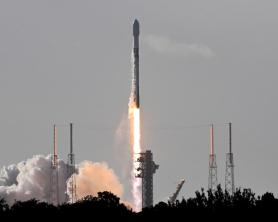
Separately, Oh said the next-generation mid-size satellite No. 4, a 500-kilogram Earth-observation craft, is set to launch July 9 aboard a SpaceX rocket, while the fifth Nuri flight remains on track for September.

Copyright ⓒ Aju Press All rights reserved.