

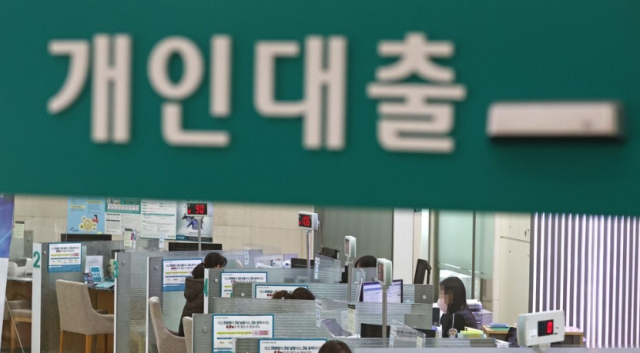
Despite ongoing loan regulations imposed by financial authorities, demand for debt investment remains strong, fueled by a bullish stock market. Overdraft accounts, which allow borrowers to access funds within existing limits at any time, have emerged as a blind spot in household loan management. Critics argue that even with new lending restrictions, it is challenging to reduce already established limits in the short term.
According to data submitted by Kakao Bank, Toss Bank, and K Bank to Kim Sang-hoon, a member of the National Assembly's Political Affairs Committee, the total limit for overdraft accounts as of the end of May was approximately 30.89 trillion won. Of this, the actual loan balance stood at 17.91 trillion won, leaving an unused limit of 12.99 trillion won. The utilization rate is 58%, meaning nearly 13 trillion won could be converted into loans at any time.
When factoring in the limits of the five major banks—KB Kookmin, Shinhan, Hana, Woori, and NH Nonghyup—the potential risk increases significantly. The total limit for overdraft accounts at these banks is estimated to be around 88 trillion won. Including the limits from internet banks and regional banks, the overall limit for overdraft accounts across the banking sector is projected to be close to 130 trillion won.
The recent increase in household loans from banks aligns with the domestic stock market's strong performance, primarily reflected in the rise of overdraft accounts. In May, household loans in the financial sector increased by 9.3 trillion won compared to the previous month, with the increase in overdraft and other limit loans accounting for 2.6 trillion won. This trend is attributed to borrowers utilizing overdraft accounts as funds for investment or short-term purchases amid a rising stock market.
The challenge with overdraft accounts is that they are more difficult to manage than standard credit loans. Once a limit is set, financial institutions find it challenging to unilaterally reduce it during the agreement period. Typically structured for annual renewal, if the limit is extended, it can remain in place for an extended period. Even if new lending is halted or maximum limits are lowered, existing borrowers can still access funds without additional scrutiny within their agreed limits. This means that even with tightened lending regulations, established limits can still be used for debt investment.
Financial authorities are closely monitoring this trend. Last week, they convened banks to review household loan management plans, particularly focusing on the increase in credit loans from internet banks, which have high accessibility for young borrowers.
In response to regulatory measures, internet banks are reducing overdraft limits and restricting new loans. Some banks are also implementing measures to reduce limits for borrowers with low usage rates upon renewal. However, these actions primarily focus on curbing new loans, and critics argue that they have limitations in quickly reducing already established limits.
Kim Sang-hoon stated, "Simply tightening new limits does not address the nearly 13 trillion won in unused limits already in place. More effective management strategies, such as reassessing limit usage for existing borrowers, are necessary to enhance oversight."
According to data submitted by Kakao Bank, Toss Bank, and K Bank to Kim Sang-hoon, a member of the National Assembly's Political Affairs Committee, the total limit for overdraft accounts as of the end of May was approximately 30.89 trillion won. Of this, the actual loan balance stood at 17.91 trillion won, leaving an unused limit of 12.99 trillion won. The utilization rate is 58%, meaning nearly 13 trillion won could be converted into loans at any time.
When factoring in the limits of the five major banks—KB Kookmin, Shinhan, Hana, Woori, and NH Nonghyup—the potential risk increases significantly. The total limit for overdraft accounts at these banks is estimated to be around 88 trillion won. Including the limits from internet banks and regional banks, the overall limit for overdraft accounts across the banking sector is projected to be close to 130 trillion won.
The recent increase in household loans from banks aligns with the domestic stock market's strong performance, primarily reflected in the rise of overdraft accounts. In May, household loans in the financial sector increased by 9.3 trillion won compared to the previous month, with the increase in overdraft and other limit loans accounting for 2.6 trillion won. This trend is attributed to borrowers utilizing overdraft accounts as funds for investment or short-term purchases amid a rising stock market.
The challenge with overdraft accounts is that they are more difficult to manage than standard credit loans. Once a limit is set, financial institutions find it challenging to unilaterally reduce it during the agreement period. Typically structured for annual renewal, if the limit is extended, it can remain in place for an extended period. Even if new lending is halted or maximum limits are lowered, existing borrowers can still access funds without additional scrutiny within their agreed limits. This means that even with tightened lending regulations, established limits can still be used for debt investment.
Financial authorities are closely monitoring this trend. Last week, they convened banks to review household loan management plans, particularly focusing on the increase in credit loans from internet banks, which have high accessibility for young borrowers.
In response to regulatory measures, internet banks are reducing overdraft limits and restricting new loans. Some banks are also implementing measures to reduce limits for borrowers with low usage rates upon renewal. However, these actions primarily focus on curbing new loans, and critics argue that they have limitations in quickly reducing already established limits.
Kim Sang-hoon stated, "Simply tightening new limits does not address the nearly 13 trillion won in unused limits already in place. More effective management strategies, such as reassessing limit usage for existing borrowers, are necessary to enhance oversight."
* This article has been translated by AI.
Copyright ⓒ Aju Press All rights reserved.